How to Conquer Spring Dryer Vent Cleaning Maintenance Challenges
Gray Duct
Discover essential spring dryer vent cleaning maintenance tips to boost safety, cut energy costs, and prevent fire hazards in your Twin Cities home this season.
Why Spring Dryer Vent Cleaning Maintenance Tips Belong on Every Twin Cities Homeowner’s Checklist
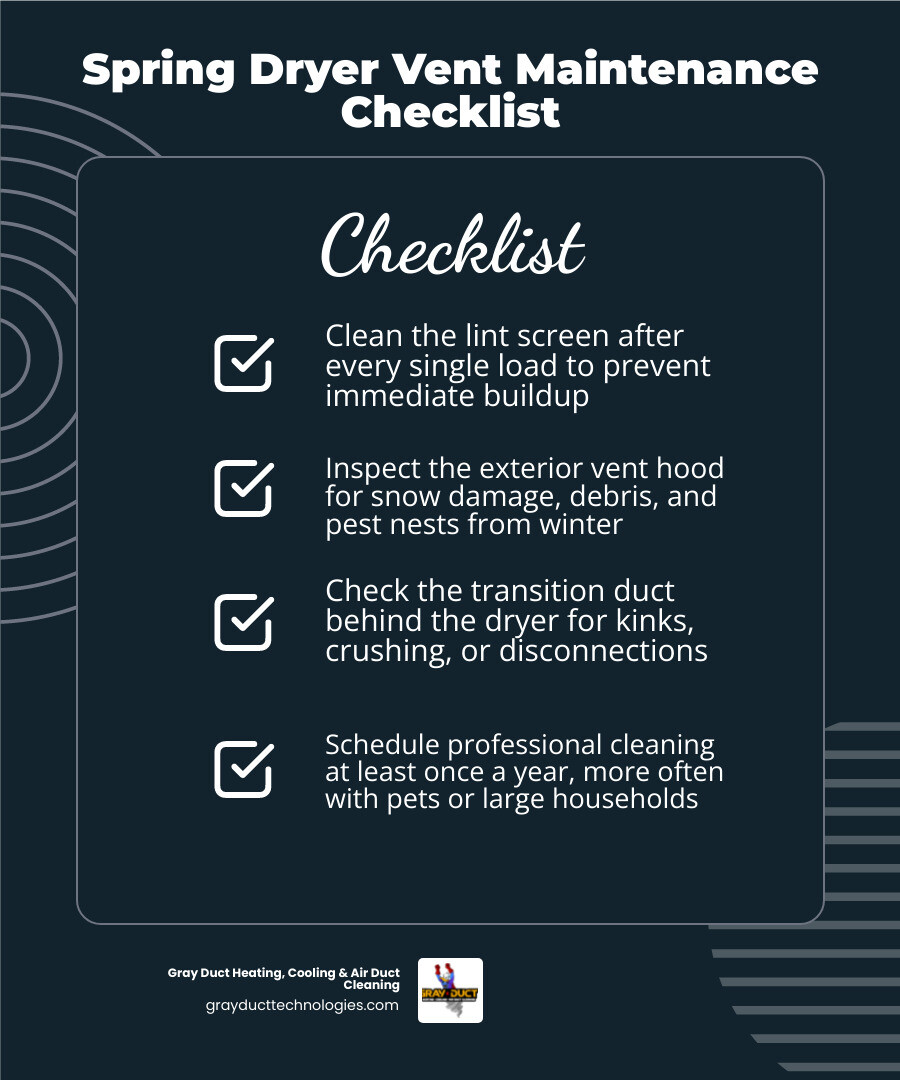
Following spring dryer vent cleaning maintenance tips is one of the most important — and most overlooked — things you can do to protect your home this season. Here’s a quick overview of what every Twin Cities homeowner should do:
- Clean the lint screen after every single load
- Inspect the exterior vent hood for blockages, debris, or pest nests left over from winter
- Check the transition duct behind the dryer for kinks, crushing, or disconnections
- Vacuum around and behind the dryer to remove loose lint buildup
- Watch for warning signs like longer drying times, a hot dryer exterior, or burning smells
- Schedule a professional dryer vent cleaning at least once a year — more often for large households or homes with pets
The stakes are real. According to the U.S. Consumer Product Safety Commission, roughly 15,500 residential dryer fires occur every year in the United States, resulting in approximately 10 deaths, 310 injuries, and more than $84 million in property damage. The U.S. Fire Administration identifies failure to clean as the leading cause — responsible for 31% of all dryer fires. Here in Minnesota, winters mean heavier laundry loads, more moisture, and more lint accumulation than any other time of year — making spring the perfect moment to address what’s built up inside your ductwork before it becomes a hazard.
I’m Jason Giandalia, founder of Gray Duct Heating, Cooling & Air Duct Cleaning, a certified NADCA (ASCS) and CSIA (C-Det) professional with years of hands-on experience helping Twin Cities homeowners apply spring dryer vent cleaning maintenance tips to keep their homes safer and their appliances running efficiently. In this guide, I’ll walk you through exactly what to check, what to do yourself, and when to call in a pro.
Why Spring is the Ultimate Time for Dryer Vent Maintenance
As the snow melts across Minnesota and we welcome the warmer weather of May 2026, homeowners from Woodbury to Minnetonka are busy drafting their annual spring cleaning checklists. We wash the windows, sweep out the garage, and prep our gardens. However, your laundry room’s exhaust system deserves a prominent spot on that list.
Spring represents the ultimate seasonal transition. Throughout the long winter months, your dryer is subjected to its heaviest usage of the year. This continuous cold-weather strain, combined with the sudden arrival of nesting pests in the spring, makes this season the absolute best time to prioritize Regular Dryer Vent Cleaning. By clearing out the accumulated debris now, you set your home up for a safe, energy-efficient summer.
Why Spring Dryer Vent Cleaning Maintenance Tips Matter After Winter
During a Minnesota winter, our laundry habits change dramatically. We wear thick wool sweaters, heavy fleece jackets, flannel sheets, and bulky blankets. These heavy fabrics shed significantly more fibers than light summer clothing, resulting in massive amounts of lint passing through your dryer.
While the lint trap catches a portion of these fibers, a substantial amount escapes into the transition duct and the main vent line. The cold winter air outside also creates a temperature differential inside the duct. As warm, moist exhaust air hits the freezing cold vent pipe, condensation forms on the interior walls. This moisture acts like glue, causing dry lint to stick to the sides of the ductwork rather than blowing out. Over several months, this sticky mixture builds up layer by layer, severely restricting airflow.
If you ignore this buildup, you risk running into serious hazards. Understanding how these factors compound can help you Avoid a Dryer Fire This Winter: How Often Should You Clean Your Dryer Vent? and keep your home safe year-round.
Inspecting for Winter Weather and Pest Damage
The exterior of your dryer vent line takes a beating during our harsh winters. Heavy snow piles, freezing ice, and gusty spring winds can crack, bend, or completely freeze exterior vent flaps shut. When a vent flap is stuck closed, hot air and carbon monoxide (for gas dryers) cannot safely escape your home.
Furthermore, spring is prime nesting season for local birds, squirrels, and mice. These small critters look for warm, protected cavities to build their nests, and an open or damaged dryer vent hood is an incredibly attractive target. A single bird’s nest can completely pack a 4-inch duct in a matter of hours, causing an immediate and severe blockage.
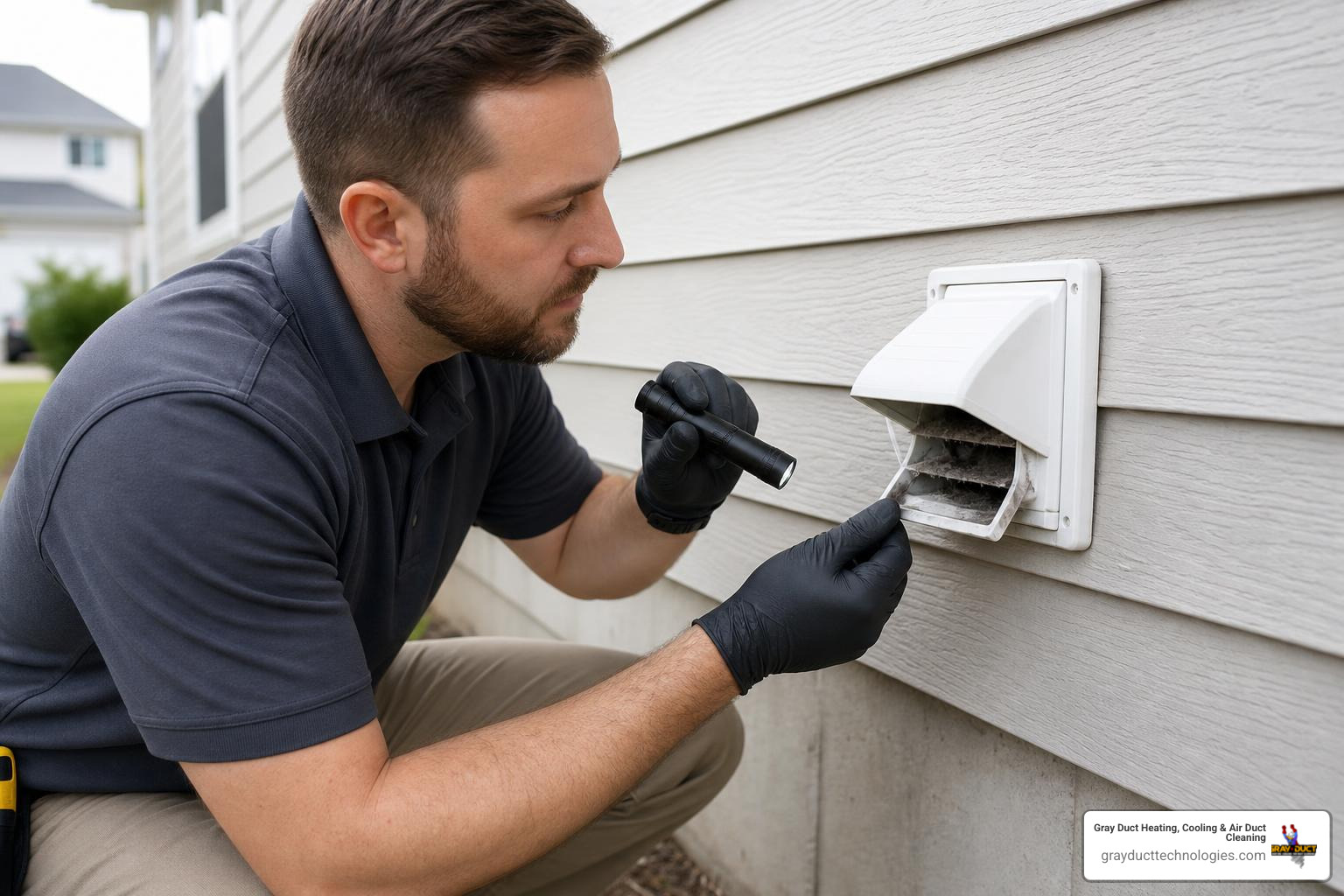
As part of your spring checklist, you must walk outside and inspect your exterior vent hood. Check that the damper flap swings freely and that there are no signs of twigs, leaves, or animal activity. Learning to Identify & Fix Dryer Vent Issues early in the spring prevents major headaches down the road.
The Hidden Dangers of Neglecting Your Dryer Ductwork
Many homeowners assume that if their dryer is spinning and eventually getting clothes dry, everything is fine. This is a dangerous misconception. The ductwork running from your appliance to the outside of your home is a critical exhaust system. When it becomes restricted, it triggers a chain reaction of safety risks, high utility bills, and premature appliance failure.
Fire Safety Risks and Flammable Lint Buildup
Lint is one of the most flammable substances found in a home. It is composed of tiny, dry cotton and synthetic fibers that ignite instantly when exposed to high heat. When a vent is clogged, the dryer cannot expel heat properly, causing the internal temperature of the heating element or burner chamber to spike. If a stray piece of lint contacts these superheated components, it can spark a fire that quickly spreads through the highly flammable lint lining the entire duct run.
The statistics are sobering. U.S. fire departments respond to an estimated 15,970 home fires caused by clothes dryers or washing machines annually. Neglecting to clean the exhaust system is the single leading cause of these fires. If you are wondering, Can a Clogged Dryer Vent Cause a Fire?, the answer is an absolute yes. Taking proactive steps and investing in Dryer Vent Cleaning for Fire Safety is a fundamental responsibility for every homeowner.
Reduced Efficiency and Skyrocketing Energy Bills
A clogged dryer vent doesn’t just threaten your safety; it also targets your wallet. When airflow is restricted, your dryer has to work twice as hard to push out moisture. This results in significantly longer cycle times.
In controlled testing, dryers with restricted ducts ran 20 to 30 minutes longer per load. For an average household doing five loads of laundry a week, this adds up to 100 to 150 extra run hours annually.
According to the U.S. Department of Energy, a standard electric dryer consumes roughly 782 kWh per year under normal operating conditions. When fighting a restricted or noncompliant duct, that energy usage spikes. Properly vented dryers can use 20% or more less energy than those struggling against a blockage. Over a year, this inefficiency adds up to substantial, unnecessary expenses on your monthly utility bills. Keeping your vents clean is a simple way to protect your budget, which is why Why Dryer Vent Cleaning Saves You Money is a key benefit of regular maintenance.
Essential Spring Dryer Vent Cleaning Maintenance Tips for Homeowners
A clean, safe laundry room requires a combination of routine homeowner habits and periodic professional deep cleanings. By understanding the physical layout of your system, you can easily perform basic maintenance to keep your home running smoothly.
Step-by-Step DIY Maintenance Checklist
If you want to tackle basic Dryer Vent Cleaning yourself, follow this safe, step-by-step process:
- Disconnect the Power and Gas: Always unplug your electric dryer from the wall outlet. If you have a gas dryer, turn off the gas supply valve before moving the appliance to prevent dangerous leaks.
- Pull the Dryer Out: Gently slide the dryer away from the wall to give yourself at least a foot or two of working space. Be careful not to pull too hard, as you don’t want to tear the transition duct.
- Detach the Transition Duct: Use a screwdriver or nut driver to loosen the clamps holding the flexible transition hose to the back of the dryer and the wall connection. Remove the hose entirely.
- Inspect the Transition Hose: If your transition hose is made of thin plastic or vinyl foil, replace it immediately. These materials are highly flammable and easily crushed. Upgrade to a UL 2158A-listed heavy-duty semi-rigid metal duct.
- Vacuum the Connections: Use a vacuum cleaner with a crevice attachment to clear out loose lint from the back of the dryer exhaust port and the wall entry point.
- Clean the Lint Screen Housing: Remove your dryer’s lint screen. Use a long, flexible dryer lint brush to gently scrape the interior walls of the lint screen housing, then vacuum up the dislodged debris.
- Inspect the Exterior: Go outside and ensure the vent cover is clean, undamaged, and opening fully when air blows through.
While these steps are excellent for routine maintenance, it’s important to understand the limits of DIY methods. To help you decide on the best approach for your home, review this comparison of DIY or Professional Dryer Vent Cleaning: Which is Best?:
| Feature | DIY Dryer Vent Cleaning | Professional Dryer Vent Cleaning |
|---|---|---|
| Tools Used | Standard household vacuum, basic brush kits | High-powered negative air vacuums, rotary brush systems, airflow meters |
| Reach | Typically restricted to the first 5–10 feet of the duct | Clears the entire length of the duct, regardless of bends or roof exits |
| Safety Inspections | Visual check of accessible parts only | Full inspection of connections, joints, and compliance with building codes |
| Pest Removal | Can remove surface debris | Safely clears compacted nests and installs professional pest guards |
| Time & Effort | High; requires moving heavy appliances and manual labor | Low; handled quickly and cleanly by a certified team |
How Often to Apply Spring Dryer Vent Cleaning Maintenance Tips
How often should you perform these checks? While a thorough spring cleaning is a perfect annual anchor, the ideal Dryer Vent Cleaning Frequency depends heavily on your household’s size and lifestyle:
- Single or Two-Person Households: An annual professional cleaning paired with basic DIY maintenance is usually sufficient.
- Large Families (4+ People): With multiple loads running daily, lint builds up twice as fast. We recommend professional cleanings every 6 to 12 months.
- Pet Owners: Dog and cat hair easily bypasses the lint screen and packs into the ductwork. If you have shedding pets, check your vents more frequently.
- Long Duct Runs: If your dryer is located in an interior room and vents through a long, winding duct to the roof, it is highly prone to clogging. These systems require professional attention at least once a year to prevent deep, unreachable blockages.
Recognizing the Warning Signs of a Clogged Vent
Your dryer will usually tell you when it is struggling. Learning to recognize these red flags can save you from a costly appliance breakdown or, worse, a devastating house fire. If you notice any of the following symptoms, do not ignore them.
Spotting Airflow Blockages and Moisture Issues
When a duct is blocked, hot, moisture-laden air cannot escape. This trapped humidity causes several noticeable issues:
- Longer Drying Times: If a standard load of laundry that used to take 40 minutes now requires two or three full cycles to dry, your vent is likely clogged. This is the most common warning sign.
- Excessive Heat: If your clothes, the dryer drum, or the exterior of the appliance feel burning hot to the touch at the end of a cycle, the system is trapping dangerous levels of heat.
- Musty Odors: Trapped moisture inside the ductwork quickly breeds mold and mildew, leading to a damp, musty smell in your laundry room or on your clothes.
- Visible Condensation: Water droplets forming on the wall behind the dryer, near the vent joints, or on the inside of the dryer door are clear signs that humid air is backing up.
If you are experiencing any of these issues, it is time to take action. Reviewing 7 Warning Signs Your Dryer Vent is Clogged and What to Do About It and cross-referencing them with other Signs Your Dryer Vent is Clogged will help you diagnose the problem before it escalates.
When to Seek Professional Dryer Vent Repair
Sometimes, a simple cleaning isn’t enough to solve the problem. Dryer vent lines can suffer physical damage over time. Sagging foil hoses can get crushed behind heavy machines, rigid metal pipes can separate inside walls, or joint tape can dry out and fail, venting humid air directly into your attic or crawlspace.
Furthermore, building codes have strict requirements for safety. The International Residential Code (IRC) dictates that dryer exhaust ducts must be constructed of minimum 28-gauge, 4-inch rigid metal with a smooth interior. The maximum allowable run is 35 feet, which must be reduced by 5 feet for every 90-degree elbow and 2.5 feet for every 45-degree bend.
If your system uses outdated, non-compliant plastic hoses, or if you suspect a physical break in the line, you should contact a specialist. Utilizing Professional Dryer Vent Repair Services ensures your system is brought up to code, properly sealed, and safely configured.
Frequently Asked Questions
What is the easiest sign of a clogged dryer vent?
The single most common and easiest sign to spot is extended drying times. If your clothes are still damp after a normal 45-minute cycle, or if you find yourself constantly running a second cycle for average-sized loads, your vent is restricting airflow.
Another quick indicator is checking the exterior vent hood while the dryer is running; if the flap isn’t opening or you only feel a weak, lukewarm breeze, you have a blockage. For more details on diagnosing this issue, check out this guide on How to Tell if Your Dryer Vent is Blocked.
Does cleaning the lint trap replace vent cleaning?
No, cleaning the lint trap after every load is a fantastic habit, but it does not replace professional vent cleaning. The lint screen only captures about 70% to 80% of the lint generated during a cycle. The remaining fine fibers bypass the screen, travel into the dryer’s internal cabinet, and settle along the entire length of your ductwork.
Over time, this fine dust accumulates at elbows, joints, and termination hoods, creating a severe fire hazard. Believing that a clean lint screen means a clean vent is a dangerous myth. You can learn more about this by reading about The Hidden Dangers of Lint Buildup and How to Spot Them.
Why should I hire a professional instead of doing it myself?
While basic DIY vacuuming is helpful for the ends of the duct, household vacuums and cheap drill-attached brush kits often cannot safely clean a long, winding duct run. In fact, DIY brush kits frequently get stuck or break apart inside wall cavities, creating a massive, expensive obstruction.
Professional technicians use specialized high-powered negative air vacuums and reverse-spinning rotary brushes that safely scour the entire length of the duct without damaging the joints. A professional service also includes a comprehensive safety inspection, checking for proper materials, secure connections, and optimal airflow velocity. Prioritizing safety is easy when you understand the Safety First: Essential Benefits of Regular Dryer Vent Maintenance.
Conclusion
Conquering your spring dryer vent cleaning maintenance challenges is one of the smartest moves you can make as a homeowner. By clearing out the heavy lint buildup left behind by winter, inspecting your system for pest nests, and ensuring your ductwork complies with local building codes, you protect your family from fire hazards, lower your monthly energy bills, and extend the lifespan of your appliance.
At Gray Duct Heating, Cooling & Air Duct Cleaning, we are proud to be a local, family-owned business serving our neighbors throughout the Twin Cities and South Metro area. From Bloomington and Edina to Lakeville, Eagan, Woodbury, and Plymouth, our in-house, certified team never uses third-party contractors. We treat your home with the care, security, and professionalism it deserves, helping you breathe easier and live safer.
Don’t let a clogged vent compromise your home’s safety and efficiency this spring. Schedule your professional dryer vent cleaning with Gray Duct Technologies today!
Need HVAC Help?
Our NADCA-certified technicians are ready to help with all your heating, cooling, and air quality needs.
Get Free EstimateMore Articles
 HVAC Tips
What to Do When Your AC and Furnace Share the Same Air Filter
 HVAC Tips
Addressing Drafty Rooms Before Winter: Duct Sealing vs. Window Replacement
 HVAC Tips
Dryer Vent Routing: Rigid Metal vs. Flexible Foil in Cold Climates
 HVAC Tips
Why We Inspect the Heat Exchanger So Closely During Fall Maintenance
 HVAC Tips
Upgrading to a Two-Stage Furnace: Is the Investment Worth It in Minnesota?
Related Articles
Ready to Get Started?
Whether you need a repair, maintenance, or a new system installation, our expert team is here to help.