Why Your Cold Climate Ducts Are Sweating and How to Stop It
Gray Duct
Stop duct condensation problems in cold climates: Learn causes, signs & proven fixes for Minnesota winters.
Why Duct Condensation Problems in Cold Climates Are More Serious Than You Think
Duct condensation problems in cold climates are one of the most common — and most overlooked — sources of hidden home damage during Minnesota winters. If you’ve noticed water stains near ceiling vents, dripping sounds when your heat kicks on, or a musty smell coming from your HVAC system, sweating ducts may be the culprit.
Here’s a quick summary of what causes it and how to fix it:
- Cause: Warm, humid indoor air contacts cold duct surfaces in unconditioned spaces (attics, crawlspaces, basements), reaching the dew point and releasing moisture as condensation
- Warning signs: Ceiling water stains near vents, dripping noises, musty odors, mold around registers, peeling paint
- Common misdiagnosis: Roof leaks or plumbing issues — when the real source is inside your HVAC system
- Key risks: Mold growth (within 24–72 hours of sustained moisture), structural damage, degraded insulation, reduced HVAC efficiency, and poor indoor air quality
- Prevention: Keep indoor humidity between 30–50%, insulate ducts properly, seal air leaks, replace filters regularly, and schedule professional HVAC maintenance
In cold-weather metros like Minneapolis–Saint Paul, this problem is especially common in homes over 20–30 years old, where duct insulation has aged, degraded, or was never adequate for Minnesota’s extreme winter temperatures.
I’m Jason Giandalia, founder of Gray Duct Heating, Cooling & Air Duct Cleaning, and I’ve seen how duct condensation problems in cold climates quietly cause thousands of dollars in damage before most homeowners even realize where the moisture is coming from. In the sections below, I’ll walk you through exactly why this happens, how to spot it early, and what it takes to fix it for good.
The Science Behind Duct Condensation Problems in Cold Climates
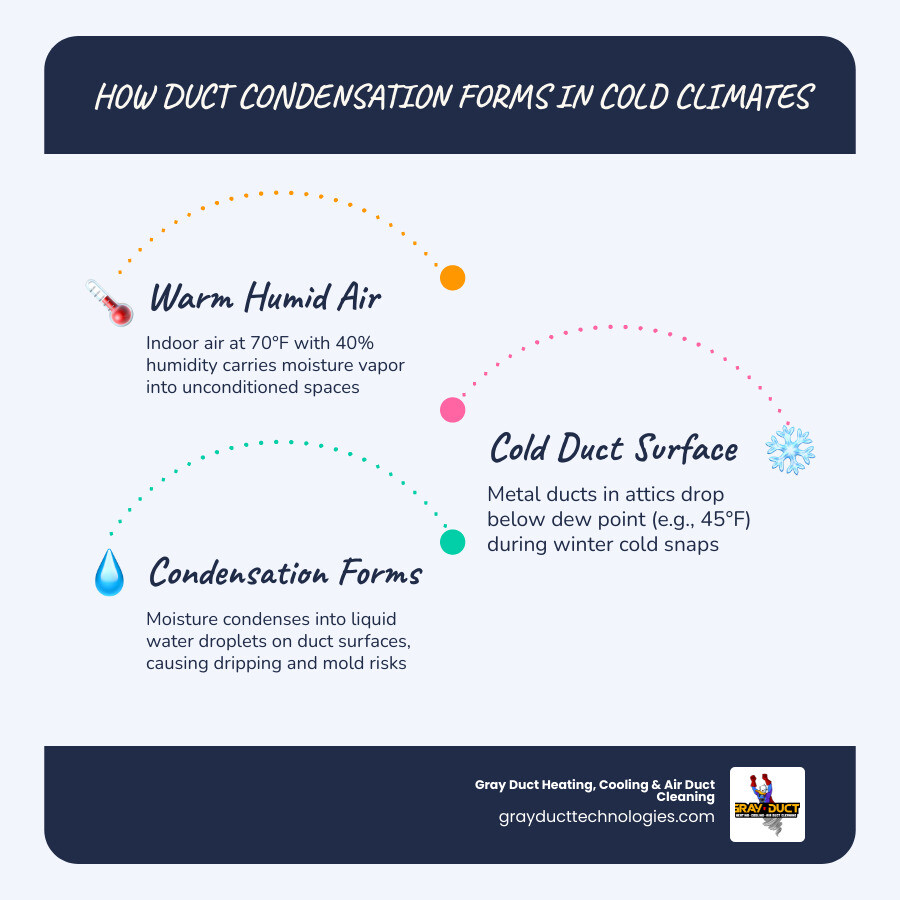
To understand why your ducts are “sweating,” we have to look at the physics of the dew point. Condensation occurs when air containing moisture hits a surface that is at or below the dew point temperature. In April 2026, as we navigate another brisk Minnesota spring, many homeowners are still dealing with the aftermath of winter moisture.
In our region, HVAC ducts often run through unconditioned spaces like attics, crawlspaces, and basements. During a cold snap in Bloomington or Lakeville, the temperature of a metal duct in an unheated attic can drop significantly. When the warm, moist air from your living space migrates into these areas—either through the ducts themselves or via air leaks—it hits that cold metal and instantly turns into liquid water.
This is a matter of vapor pressure and temperature differentials. The greater the difference between the air temperature and the duct surface, the more likely you are to see “sweating.” This is why Duct Insulation in Minneapolis MN is so critical. Without a thick, continuous thermal barrier, your metal ducts act just like a cold glass of iced tea on a humid July day, but the “drink” is your home’s structural integrity. Understanding Why Your Home Needs Better Duct Insulation Right Now is the first step in preventing long-term decay.
Why Indoor Humidity Triggers Winter Duct Sweating
While the cold ducts are one half of the equation, indoor humidity is the other. In the Twin Cities, we spend a lot of time indoors during the winter. Activities like cooking, long hot showers, and even breathing add moisture to the air. Furthermore, many families in Eden Prairie and Minnetonka use whole-home humidifiers to combat the dry winter air.
While some humidity is good for your skin and respiratory health, the EPA recommends keeping indoor relative humidity (RH) between 30% and 50%. If your RH creeps above 60%, you are essentially providing a buffet of moisture for those cold ducts to collect. This moisture-laden air eventually finds its way into your ventilation system. If the ducts are dirty, the moisture mixes with dust and debris, creating a sludge that is difficult to remove and perfect for microbial growth. Regular Air Duct Cleaning helps ensure that if moisture does form, it isn’t sitting on a layer of organic “food” for mold.
How Air Leaks Exacerbate Duct Condensation Problems in Cold Climates
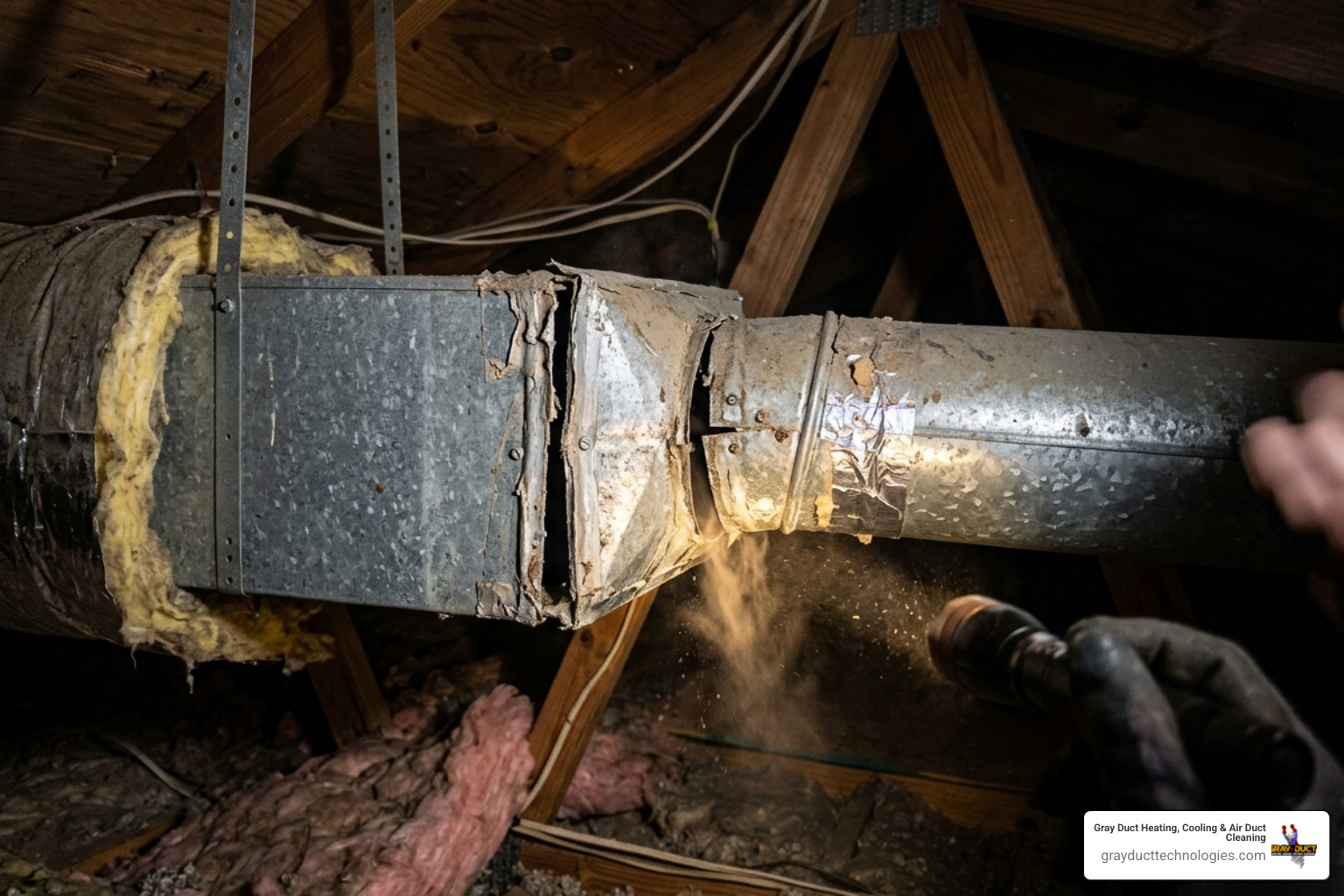
Air leaks are the “silent partners” of duct sweating. When duct joints aren’t sealed with mastic or professional-grade foil tape, warm air leaks out into the interstitial spaces (the gaps between your walls and ceilings). Conversely, in some systems, cold air from the attic can be sucked into the return ducts.
These leaks cause pressure imbalances. When a duct is leaky, it doesn’t just lose conditioned air; it allows humid air to infiltrate areas where it doesn’t belong. In older homes in Saint Paul or Edina, uninsulated sheet metal ducts hidden in joist cavities can become completely saturated because of these leaks. It is vital to Detect and Fix Ductwork Leaks to ensure your home remains pressurized correctly and moisture stays where it belongs.
Warning Signs: Is It a Roof Leak or Sweating Ducts?
One of the most frustrating aspects of duct condensation problems in cold climates is how often they are misdiagnosed. We frequently hear from homeowners in Plymouth or Woodbury who called a roofer because they saw yellow water stains on their ceiling. The roofer finds no missing shingles or ice dams, yet the stains keep growing.
If you see water spots specifically around your supply registers or along the path where a duct run is located, it’s likely not the roof. Other warning signs include:
- Musty Odors: A “wet basement” smell coming from your vents when the furnace starts.
- Peeling Paint: Moisture behind the drywall causes the paint to bubble or flake near the ceiling.
- Dripping Noises: Hearing a rhythmic “tick-tick-drop” inside the walls during a heating cycle.
These are Dirty Ductwork Common Problems that indicate water is pooling inside or on top of your ductwork.
Identifying Mold and Structural Risks from Duct Condensation Problems in Cold Climates
The risks of ignoring a sweating duct go far beyond a simple stain. Mold growth can begin within 24 to 72 hours of sustained moisture exposure. Fungal spores are always present in the air; they just need water and a food source (like the paper backing on drywall or the dust inside a duct) to germinate.
Furthermore, wet insulation is useless. When fiberglass insulation gets wet, it loses its R-value—its ability to resist heat flow—because the air pockets are filled with water. This creates a “snowball effect”: the duct gets colder because the insulation failed, which leads to even more condensation. If you’re wondering What Happens If You Don’t Clean Your Air Ducts?, the answer often involves expensive mold remediation and structural repairs to saturated ceiling joists.
Proven Solutions to Stop Duct Sweating in Minnesota Winters
Stopping the sweat requires a multi-pronged approach: sealing, insulating, and ventilating.
| Insulation Type | R-Value | Best Use Case |
|---|---|---|
| Fiberglass Wrap | Moderate | Standard attic runs; must have a vapor barrier. |
| Rigid Foam Board | High | Rectangular ducts in basements or crawlspaces. |
| Spray Foam | Highest | Hard-to-reach areas; provides a perfect air seal. |
For most homes in the Twin Cities, we recommend a combination of mastic sealant for the joints and high-R-value insulation with a built-in vapor barrier. The vapor barrier must be on the “warm” side (facing the room air) to prevent moisture from reaching the cold duct. Proper Duct Sealing in Minneapolis MN ensures that your heated air actually reaches your rooms instead of feeding a mold colony in your attic.
Homeowner Maintenance and Humidity Control
There are several steps you can take today to Prevent Long-Term Ductwork Issues:
- Use Exhaust Fans: Always run bathroom and kitchen fans during and after use to vent moisture outside.
- Check Your Humidifier: If you see frost on your windows, your humidity is too high. Turn the dial down.
- Replace Filters: A dirty filter restricts airflow. This makes the air inside the ducts move slower and get colder, increasing the risk of condensation.
- Seal Registers: If you have an AC-only system in the attic that isn’t used in winter, consider sealing the registers with plastic sheeting to prevent warm house air from rising into those cold pipes.
When to Call a Professional for HVAC and Duct Remediation
Sometimes, DIY fixes aren’t enough. If your HVAC system was oversized when it was installed, it might be “short-cycling.” This means it turns on and off so quickly that it never has a chance to properly dehumidify the air.
Professional intervention is necessary if you notice active mold, standing water in your ducts, or if your energy bills are skyrocketing despite your best efforts. Our team can perform a full diagnostic to see if you need a Duct Cleaning vs Duct Sealing Comparison for a Healthier Home. We don’t just clean the surface; we look at the system’s integrity to ensure the problem doesn’t return next winter.
Frequently Asked Questions about Winter Duct Moisture
Can closing registers cause more condensation in cold climates?
Yes, it can. When you close registers, you increase the static pressure in the system and reduce airflow. Slower-moving air stays in the cold sections of the ductwork longer, allowing it to drop below the dew point more easily. It’s generally better to keep all registers open to maintain balanced airflow.
What is the ideal indoor humidity for a Minnesota winter?
While the EPA suggests 30-50%, in the extreme cold of a Minnesota January, you may need to drop it to 25-30% to prevent window icing and duct sweating. If you see condensation on the glass of your windows, it’s a warning sign that the same thing is happening inside your walls.
Why does my AC duct drip even when the furnace is running?
This is common in homes with separate heating and cooling ducts. If your AC ducts are in a cold attic and aren’t sealed tightly, warm air from your home rises into them via convection. Since there is no “active” heat moving through those AC ducts to keep them warm, the rising warm air hits the cold metal and drips back down through your ceiling.
Conclusion
Duct condensation problems in cold climates are a serious threat to your home’s health and your family’s comfort. From Roseville to Savage and across the entire Twin Cities metro, the combination of extreme cold and indoor humidity creates the perfect storm for “sweaty” ducts.
At Gray Duct Heating, Cooling & Air Duct Cleaning, we are a family-owned business that believes in doing the job right the first time. Our in-house certified technicians don’t use third-party contractors, ensuring that every inspection and repair meets our high standards for quality and safety. Whether you need a simple cleaning or a total ductwork overhaul, we are here to help you breathe easier.
If you’re worried about moisture in your walls or vents, don’t wait for the mold to move in. Visit us at our services to schedule an inspection today.
Need HVAC Help?
Our NADCA-certified technicians are ready to help with all your heating, cooling, and air quality needs.
Get Free EstimateMore Articles
 HVAC Tips
What to Do When Your AC and Furnace Share the Same Air Filter
 HVAC Tips
Addressing Drafty Rooms Before Winter: Duct Sealing vs. Window Replacement
 HVAC Tips
Dryer Vent Routing: Rigid Metal vs. Flexible Foil in Cold Climates
 HVAC Tips
Why We Inspect the Heat Exchanger So Closely During Fall Maintenance
 HVAC Tips
Upgrading to a Two-Stage Furnace: Is the Investment Worth It in Minnesota?
Related Articles
Ready to Get Started?
Whether you need a repair, maintenance, or a new system installation, our expert team is here to help.