The Definitive Guide to How Minnesota Humidity Affects Your AC and Ducts
Gray Duct
Discover how Minnesota humidity affects your AC and ducts with expert tips to boost efficiency and prevent mold in Twin Cities homes.
Why Minnesota Humidity Is Quietly Wrecking Your AC and Ductwork Right Now
How Minnesota humidity affects your AC and ducts is one of the most underestimated home comfort problems in the Twin Cities — and one of the most damaging if left unchecked. Here’s the short answer:
How Minnesota Humidity Affects Your AC and Ducts — Quick Summary
| What Happens | Why It Matters |
|---|---|
| AC must remove both heat and moisture simultaneously | Reduces cooling capacity and efficiency |
| High dew points push supply duct humidity above 70% RH | Creates ideal conditions for mold and microbial growth |
| Oversized or poorly maintained AC units short-cycle | Home feels cool but stays clammy and damp |
| Excess moisture settles in ductwork | Causes musty odors, airborne mold spores, and allergy flare-ups |
| AC runs longer under humidity load | Increases energy bills and accelerates system wear |
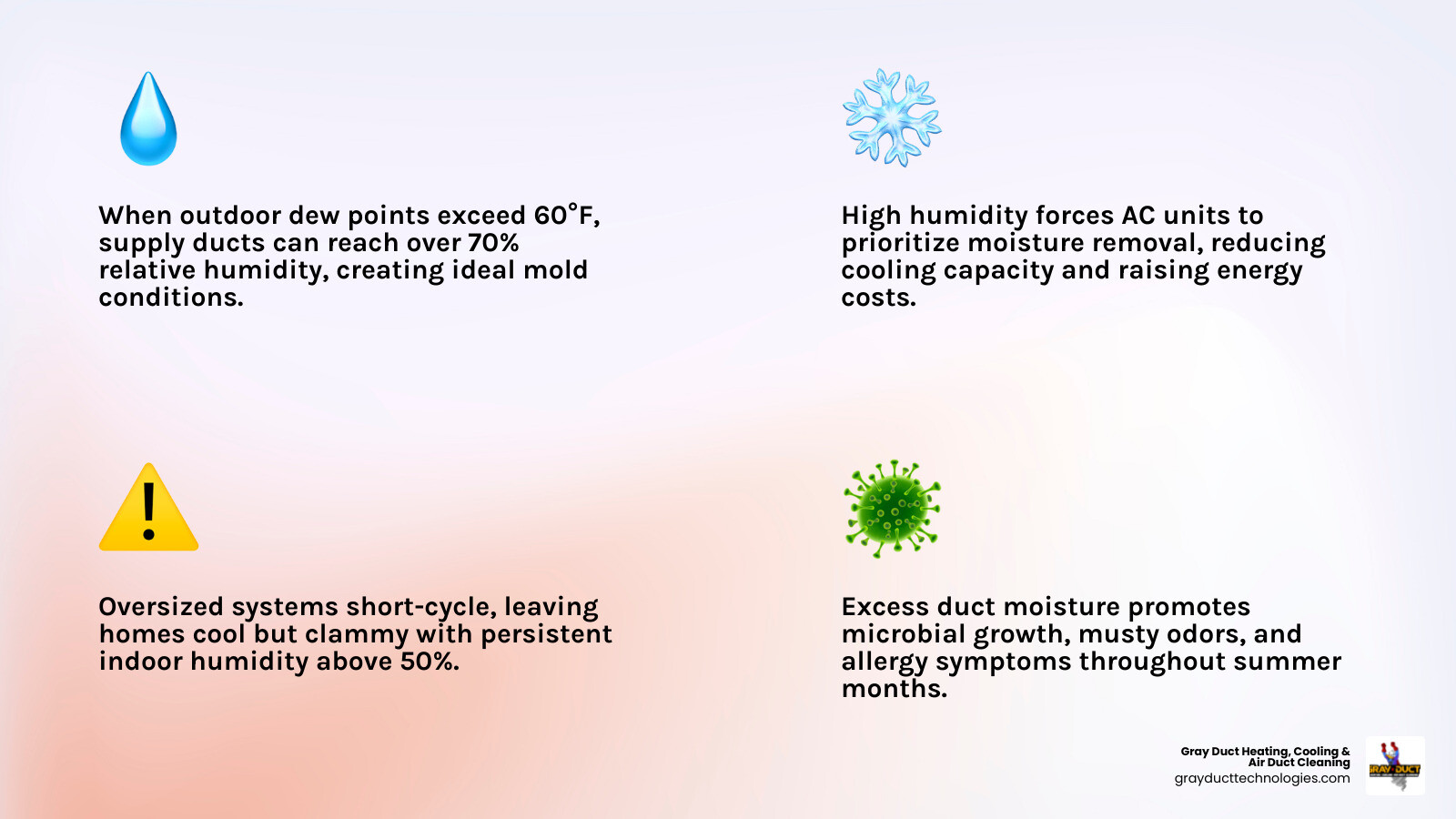
Minnesota summers are genuinely unlike most of the country. The state’s thousands of lakes and rivers pump significant moisture into the air, and when outdoor dew points climb above 60°F — which happens regularly from June through August — the relative humidity inside your supply ductwork can spike above 70%. That’s the threshold where mold and microbes don’t just survive; they thrive. Meanwhile, your air conditioner is working overtime trying to pull that moisture out of the air, leaving it with less capacity to actually cool your home. The result? A house that feels sticky and uncomfortable even when the thermostat reads 72°F, rising energy bills, and ductwork that may be quietly growing a mold problem you can’t yet see or smell.
This isn’t a minor inconvenience. High indoor humidity can warp wood, degrade indoor air quality, trigger allergy and asthma symptoms, and shorten the lifespan of your HVAC equipment — all while your system runs harder and costs more to operate.
I’m Jason Giandalia, founder of Gray Duct Heating, Cooling & Air Duct Cleaning, and I’ve spent years diagnosing exactly how Minnesota humidity affects your AC and ducts in Twin Cities homes — from mold-laced ductwork discovered in late summer inspections to short-cycling systems that never quite dehumidify properly. In this guide, I’ll walk you through everything you need to know to protect your home, your air quality, and your equipment.
Glossary for how minnesota humidity affects your ac and ducts:
The Science Behind How Minnesota Humidity Affects Your AC and Ducts
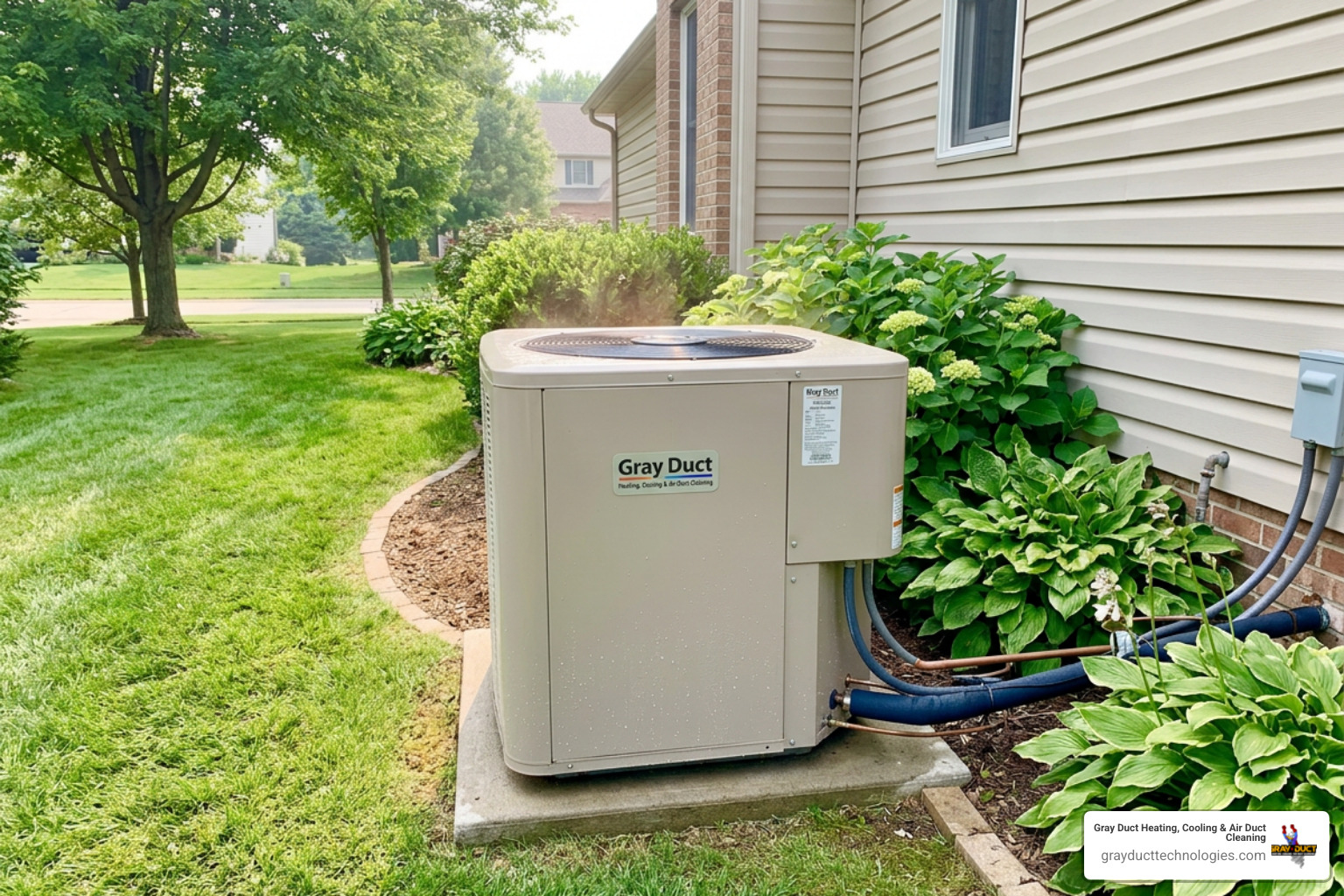
To understand how high humidity taxes your home’s mechanical systems, we have to look at the physics of air conditioning. Your air conditioner does not actually “create” cold air. Instead, it acts as a heat and moisture sponge, absorbing thermal energy from indoor air and transferring it outside.
In the HVAC world, we divide this heat removal into two distinct categories:
- Sensible Heat Removal: This is the cooling you can feel on your skin and read on a thermometer. It is the process of lowering the actual air temperature.
- Latent Heat Removal: This is the energy required to condense water vapor out of the air. When the air is thick and muggy, your air conditioner must spend a massive amount of its energy removing this “latent heat” before it can effectively lower the sensible temperature.
When indoor moisture levels are high, your cooling system has to work twice as hard. The presence of excess water vapor in the air reduces the overall cooling capacity of your system. Instead of focusing its mechanical energy on lowering the indoor temperature, the system is forced to run extended cycles just to wring the moisture out of the air. This massive latent load significantly reduces system efficiency, resulting in longer run times, higher wear and tear on sensitive components, and a noticeable spike in your summer energy bills.
Understanding How Minnesota Humidity Affects Your AC and Ducts via System Efficiency
When an air conditioner is forced to run under a heavy latent load day after day, it experiences accelerated physical degradation. The compressor—the heart of your outdoor unit—must operate under elevated pressures for extended periods. This continuous, overtime operation can lead to overheating and premature compressor failure.
In other scenarios, high humidity can cause a phenomenon known as short cycling. This occurs when the air conditioner turns on and off rapidly. Because moist air holds heat so effectively, an AC unit might quickly cool down the air immediately surrounding your thermostat, shut off, and then turn back on just a few minutes later as the dense, humid air redistributes throughout the living space.
Short cycling is incredibly hard on your electrical components and compressor, and it prevents the system from running long enough to pull moisture out of the air. If you suspect your system is struggling to keep up with the summer mugginess, scheduling professional Air Conditioning Services in Minneapolis, MN is the best way to diagnose efficiency drops before they lead to complete system failure.
The Dual Role of Cooling and Dehumidification
Your air conditioner’s indoor component houses the evaporator coil. As warm, humid return air is pulled across this cold coil, the moisture in the air naturally condenses on the metal fins—much like condensation forming on a cold glass of iced tea on a hot July afternoon. This water drips down into a condensate pan and flows out of your home through a drain line.
However, if your evaporator coil is dirty, this process breaks down entirely. Dust, pet dander, and pollen act as an insulating blanket on the coil, preventing the refrigerant from absorbing heat and restricting airflow. When humid air hits a dirty coil, the moisture cannot drain properly. Instead, it gets trapped in the dust layer, creating a thick, muddy sludge that further restricts airflow and can cause the coil to freeze over. Understanding the mechanics of this process highlights why routine maintenance is so critical; you can read more about this in our guide to Understanding AC Coil Cleaning.
The Hidden Risks of Excess Moisture in Twin Cities Ductwork
While your air conditioner battles moisture at the coil, your ductwork faces its own silent battle. Your air ducts are responsible for carrying conditioned air to every room in your home. However, when humid air travels through metal or fiberglass ducts that are routed through unconditioned spaces—like crawlspaces, uninsulated attics, or damp basements—the temperature difference can cause the ducts to “sweat.”
This condensation is more than just a structural nuisance; it is a catalyst for poor indoor air quality. When moisture accumulates inside dark, dusty ductwork, it creates the perfect breeding ground for biological contaminants.
How Minnesota Humidity Affects Your AC and Ducts by Promoting Mold Growth
Mold spores are naturally present in the air, but they require moisture to settle, germinate, and grow. In Minnesota summers, when outdoor dew points climb, the relative humidity inside supply ductwork can easily spike above 70%. This 70% threshold is widely recognized by indoor air quality experts as the “danger zone” for mold and microbial growth.
Once mold takes root on the dust and organic debris inside your ducts, every single cycle of your air conditioner sends millions of microscopic mold spores and airborne particles directly into your living spaces. This can lead to persistent musty odors and a noticeable increase in allergy, asthma, and respiratory symptoms for everyone in the household. Keeping your ductwork clean is a vital step in breaking this cycle; learn more about protecting your family through Air Duct Cleaning for Improved Indoor Air Quality.
Condensation and Structural Damage in Basements
Minnesota basements are uniquely vulnerable to humidity-related issues. The soil surrounding local foundations in cities like Bloomington, Plymouth, and Woodbury maintains a cool year-round temperature of roughly 45°F to 55°F. This makes basement walls and floors incredibly cold.
When warm, humid summer air sneaks into your basement, it immediately condenses on these cold surfaces, as well as on any uninsulated metal ductwork running along the basement ceiling. This basement condensation can drip onto ceiling drywall, carpet, and structural wood framing. Over time, this chronic moisture leads to:
- Wood rot and structural weakening of floor joists
- Warping of hardwood floors on the main level above
- Peeling paint and deteriorating drywall
- Persistent, heavy musty odors that migrate upstairs
If moisture is allowed to pool inside floor vents or low-lying duct runs, it can ruin the physical integrity of the duct system itself. Discovering what can happen when these issues are ignored is a sobering reminder of the value of proactive care; read about What Happens If You Don’t Clean Your Air Ducts to protect your home’s structural health.
Signs Your Cooling System is Struggling with High Humidity
It can be difficult to tell whether your air conditioner is simply working hard on a hot day or if it is actively losing the battle against high humidity. To help you identify issues early, we have put together this comparison table:
| Normal AC Operation | Humidity-Struggling AC Symptoms |
|---|---|
| Indoor air feels crisp, light, and dry | Indoor air feels heavy, sticky, or “clammy” |
| Thermostat matches the actual indoor temperature | Thermostat reads a cool temperature, but you still feel hot |
| Windows and registers remain clear and dry | Windows are foggy; condensation drips from ceiling vents |
| System runs consistent 15-to-20-minute cycles | System runs continuously or turns on/off every few minutes |
| Energy bills are predictable and stable | Energy bills spike dramatically during humid weeks |
Physical Indicators in Your Living Space
The most immediate sign of a humidity problem is how your home feels. If you walk inside and your skin instantly feels sticky or clammy, your AC is failing to extract enough moisture. You might also notice a damp, musty smell—often described as a “wet dog” or “dirty basement” odor—whenever the air conditioner kicks on.
Another telltale physical sign is visual moisture. If you notice foggy windows, water droplets pooling on your metal supply registers, or damp spots on the drywall surrounding your ceiling vents, your ductwork is actively sweating. This moisture is a direct threat to your home and your health; you can read more about how these conditions impact your family in our article on How Indoor Air Quality Affects Health.
Mechanical Red Flags in Your HVAC System
Beyond physical comfort, your HVAC system will exhibit clear mechanical warning signs when it is overwhelmed by moisture. Continuous running is a major red flag; if your system runs for hours without a break on a 85°F day, it is likely struggling with the latent heat load.
You may also experience a clogged condensate drain line. When the air is highly humid, your system pulls gallons of water out of the air daily. If your drain line is restricted by dust, algae, or rust, this water will back up, potentially flooding your basement or triggering a safety switch that shuts your system down entirely. If you live in the South Metro and notice these warning signs, it is time to seek professional Air Conditioning Maintenance in Eden Prairie, MN to get your system back in balance.
Practical Solutions for Managing Humidity in Minnesota Homes
Fortunately, you do not have to accept a sticky, uncomfortable home. There are several highly effective ways to manage indoor humidity, protect your ductwork, and lower your energy costs.
Whole-Home Dehumidification Systems
For many homes in the Twin Cities, a standard air conditioner simply does not have enough dehumidification capacity to handle our peak summer weeks. This is especially true in homes with large basements, where dampness is a constant battle.
Installing a whole-home dehumidifier is the ultimate solution. These units are integrated directly into your existing ductwork. They pull air from your return ducts, extract the moisture, and send dry, comfortable air back through your supply vents. By keeping your indoor relative humidity strictly within the ideal 30% to 50% range, you prevent basement condensation, eliminate musty smells, and allow your AC to run shorter, more efficient cycles. To explore your options, check out our dedicated page on Dehumidifiers in Minneapolis, MN.
The Importance of Regular Duct and Coil Maintenance
The foundation of good humidity control is keeping your HVAC system clean and clear.
- Coil Cleaning: Having your outdoor condenser coil and indoor evaporator coil professionally cleaned every spring ensures maximum heat transfer and smooth moisture drainage.
- Duct Sealing: Leaky ducts in unconditioned spaces can pull humid, dusty air into your system, bypassing your air filter and overloading your AC. Sealing these leaks keeps moist air out.
- High-Quality Filters: Upgrading to a MERV 11 or MERV 13 pleated filter helps capture fine dust and mold spores before they can settle in your ductwork. Just be sure to change them regularly, as a clogged filter restricts airflow and can cause your system to freeze up.
To keep your system running at peak efficiency year-round, check out our guide on The Importance of Regular HVAC Maintenance.
Frequently Asked Questions about Minnesota HVAC Systems
What is the ideal indoor humidity range for a Minnesota home in the summer?
For optimal comfort, health, and structural protection, you should aim to keep your indoor relative humidity between 30% and 50%. Keeping it below 50% is critical for mold prevention, as mold spores struggle to grow in drier conditions. If your home’s humidity climbs above 55% or 60%, you will likely begin to feel clammy, and you run the risk of condensation forming inside your ductwork and on basement walls.
Why does my home feel cool but damp when the AC is running?
This “cool but clammy” feeling is almost always caused by an oversized air conditioner. If an AC unit is too large for the home it serves, it will cool the air down incredibly fast and shut off before it has completed a full, proper cycle. Because latent heat removal (dehumidification) takes time, the short-cycling system lowers the temperature but leaves all the heavy moisture behind in the air.
How often should I clean my air ducts to prevent mold growth?
We recommend having your air ducts professionally cleaned every 3 to 5 years. However, if you have pets, suffer from severe allergies, have recently completed a home renovation, or live in an area with high outdoor humidity and dust, you may benefit from more frequent cleanings. Regular cleanings remove the organic dust that mold uses as a food source, ensuring your indoor air stays fresh and healthy. Discover more about the long-term advantages of this service in our post on Regular Air Duct Cleaning Benefits.
Conclusion
Minnesota’s summer humidity is a powerful force, but with the right knowledge and proactive maintenance, you can keep your home cool, dry, and healthy. From protecting your system’s compressor to preventing mold growth in your supply vents, managing moisture is essential for long-term comfort and safety.
At Gray Duct Heating, Cooling & Air Duct Cleaning, we are proud to be a local, family-owned business serving the entire Twin Cities and South Metro area. Our certified, in-house team of technicians is dedicated to helping you achieve pristine indoor air quality and reliable system performance—without ever relying on third-party subcontractors. Whether you need a comprehensive duct cleaning, an AC coil tune-up, or a whole-home dehumidifier installation, we are here to help.
Contact Gray Duct Technologies today to schedule your service and take control of your home’s comfort and air quality!
Need HVAC Help?
Our NADCA-certified technicians are ready to help with all your heating, cooling, and air quality needs.
Get Free EstimateMore Articles
 HVAC Tips
What to Do When Your AC and Furnace Share the Same Air Filter
 HVAC Tips
Addressing Drafty Rooms Before Winter: Duct Sealing vs. Window Replacement
 HVAC Tips
Dryer Vent Routing: Rigid Metal vs. Flexible Foil in Cold Climates
 HVAC Tips
Why We Inspect the Heat Exchanger So Closely During Fall Maintenance
 HVAC Tips
Upgrading to a Two-Stage Furnace: Is the Investment Worth It in Minnesota?
Related Articles
Ready to Get Started?
Whether you need a repair, maintenance, or a new system installation, our expert team is here to help.