The North Star State Guide to HVAC and Duct Best Practices
Gray Duct

Why Understanding How Minnesota Climate Affects Your HVAC and Ducts Could Save Your Home Comfort This Year How Minnesota climate affects your HVAC and ducts is something every…
Why Understanding How Minnesota Climate Affects Your HVAC and Ducts Could Save Your Home Comfort This Year
How Minnesota climate affects your HVAC and ducts is something every Twin Cities homeowner should understand before the next polar vortex hits — or before summer humidity quietly turns your ductwork into a breeding ground for mold. Here’s a quick breakdown:
- Extreme winter cold forces furnaces to cycle more frequently, accelerating wear on heat exchangers, blower motors, and condensate lines
- Low indoor humidity (5–40% in winter) causes dry air to circulate through ducts, damaging wood floors, irritating airways, and building up static electricity
- Heat pumps can struggle in sub-zero temps and temporarily blow cooler air during defrost cycles — which is normal, but can signal a problem if it persists
- Summer dew points above 60°F push relative humidity inside supply ductwork above 70%, creating conditions where mold and microbes thrive
- High winds and seasonal storms drive pollen, cottonwood seeds, and fine debris into outdoor air intakes, clogging filters and reducing airflow
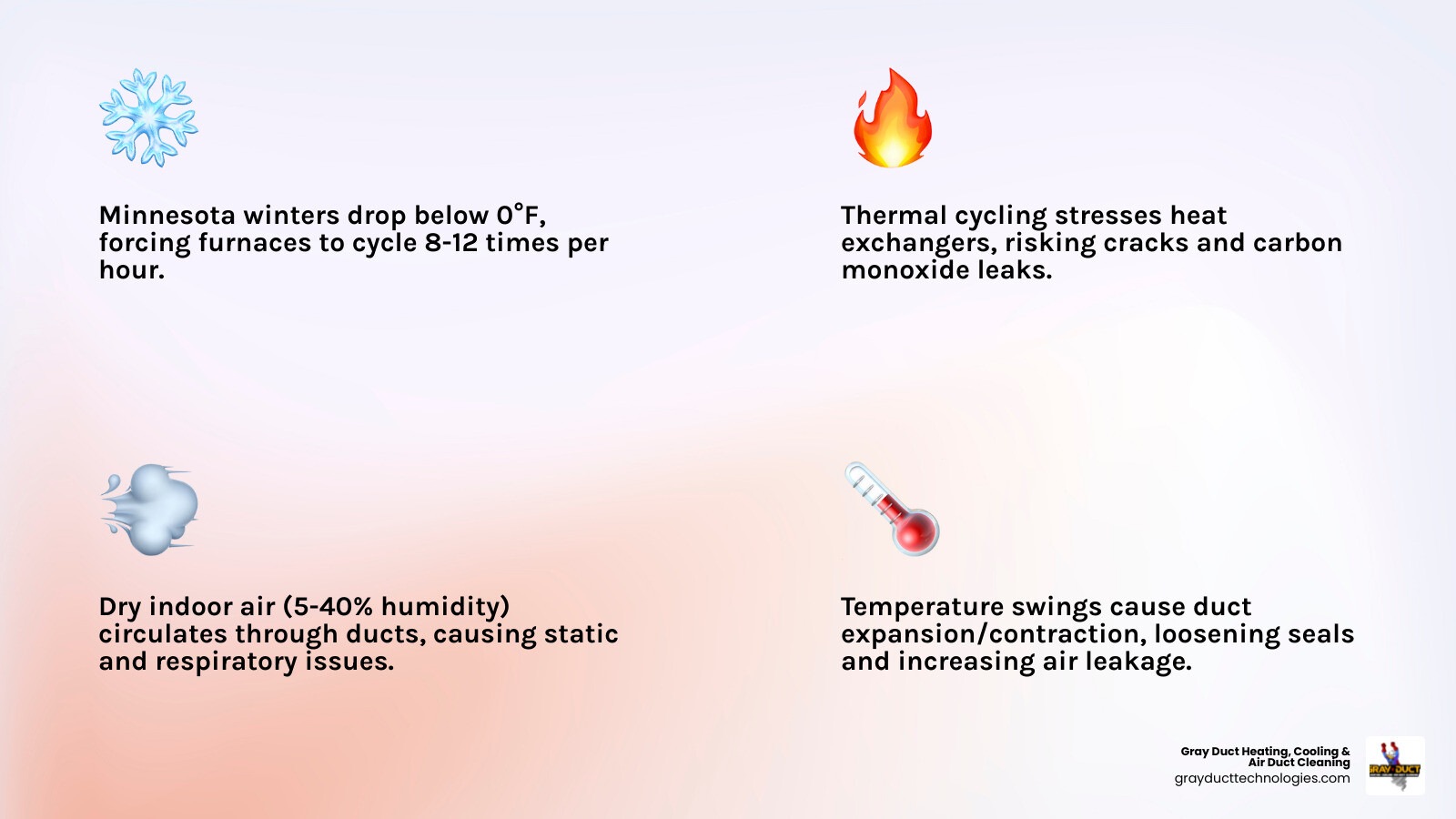
- Dramatic temperature swings between seasons cause thermal expansion and contraction in duct materials, loosening seals and increasing air leakage over time
Minnesota’s climate isn’t just uncomfortable — it actively works against your HVAC system and ductwork year-round, in ways that most homeowners don’t see until efficiency drops or air quality suffers.
I’m Jason Giandalia, founder of Gray Duct Heating, Cooling & Air Duct Cleaning, and I’ve spent years diagnosing exactly how Minnesota climate affects your HVAC and ducts in Twin Cities homes — from frozen condensate lines during January cold snaps to mold-laced ductwork discovered in late summer. In this guide, I’ll walk you through every seasonal pressure your system faces and what you can do about it.
How Minnesota Climate Affects Your HVAC and Ducts During Winter
When the mercury drops below zero in April 2026, your HVAC system becomes the most important machine in your home. In Minnesota, our winters are characterized by relentless, bone-chilling cold that forces furnaces to work overtime. This constant operation leads to significant mechanical stress.
Thermal cycling is the primary culprit. During extreme cold events, a furnace may cycle on and off 8 to 12 times per hour. This rapid heating and cooling causes the metal in your heat exchanger to expand and contract repeatedly. Over time, this stress can lead to cracks, which pose a serious safety risk by allowing carbon monoxide to leak into your living space.
The constant airflow also accelerates dust and debris buildup. As your furnace runs nearly non-stop, it pulls in skin cells, pet dander, and lint, depositing them deep within your supply and return vents. This is why dirty vents affect heating performance—the more “gunk” in the system, the harder the blower motor has to work to push air through, leading to premature motor failure.
Furthermore, high-efficiency condensing furnaces (those with an AFUE of 90% or higher) produce acidic water as a byproduct. In Minnesota, we often see these condensate lines freeze when outdoor temperatures stay below 32°F. A frozen line causes a backup that triggers a pressure switch lockout, leaving you without heat exactly when you need it most. Following a winter furnace maintenance checklist is essential to catch these issues before they turn into midnight emergencies.
Understanding How Minnesota Climate Affects Your HVAC and Ducts via Heat Pump Performance
Many homeowners in cities like Plymouth and Woodbury are switching to heat pumps, but there is often confusion about how they handle a “North Star” winter. Modern cold-climate heat pumps are incredible pieces of technology, often featuring variable-speed compressors and vapor injection to maintain capacity even when it’s -13°F outside.
However, you might notice your heat pump occasionally blowing “cold” air. Usually, this is just the unit entering defrost mode. To melt ice buildup on the outdoor coils, the system temporarily reverses its cycle. During this time, it might blow cooler air into the house. While this is normal, modern systems use auxiliary electric heat or a backup furnace to bridge the gap. If you’re curious about the tech, check out our guide on the best HVAC systems for cold climates. If the air stays cold for hours, it’s a sign your auxiliary heat isn’t engaging or the system is struggling with the extreme sub-zero efficiency drop.
The Impact of Low Winter Humidity and Static Electricity
In Minnesota, the “dryness” of winter is just as impactful as the cold. Cold outdoor air holds almost no moisture. When that air enters your home and is heated to 70°F, its relative humidity plummets—often to between 5% and 40%. For context, the Sahara Desert averages about 25% humidity.
This ultra-dry air is why indoor air quality gets worse in winter. Low humidity causes:
- Static Electricity: That annoying “zap” when you touch a doorknob is a sign your air is too dry.
- Material Damage: Wood floors, furniture, and even musical instruments can shrink and crack.
- Health Issues: Dry nasal passages and itchy skin make you more susceptible to respiratory irritation.
We often recommend whole-home humidifiers integrated directly into your ductwork to maintain a healthy 30–60% humidity range, protecting both your family and your home’s structural integrity.
Summer Humidity and the Risk of Mold in Twin Cities Ductwork
While winter is dry, Minnesota summers are notoriously “sticky.” When outdoor dew points rise above 60°F, the environment inside your air conditioning system changes drastically. As air passes over the cooling coils, it is typically chilled to 50–60°F. At these temperatures, the relative humidity of that air can exceed 90%.
If your ducts are dirty or poorly insulated, this moisture creates a perfect breeding ground for microbes. In fact, when outdoor humidity is high, the relative humidity inside supply ductwork in Minnesota buildings can frequently spike above 70%. This is the “danger zone” for mold growth.
| Season | Typical Indoor Humidity (MN) | Impact on Ducts/HVAC |
|---|---|---|
| Winter | 5% – 40% | Static buildup, dust circulation, wood shrinkage |
| Summer | 40% – 70%+ | Condensation, mold risk, microbial growth |
| Ideal Range | 30% – 60% | Optimal comfort and system health |
If you are looking for HVAC in Minneapolis, MN, it is vital to ensure your system is sized correctly to dehumidify the air, not just cool it. An oversized AC unit will “short cycle,” cooling the room too fast without removing enough moisture, leaving your home feeling clammy and your ducts damp.
Managing Airflow and Moisture to Prevent Mold Growth
Mold is a major concern for anyone living in Minneapolis, MN. When moisture from humid summer air meets the dust and organic debris sitting in your vents, mold spores can activate. These spores then become airborne every time the fan kicks on.
One of the hidden costs of a dirty HVAC system during winter and how to fix them is the lingering moisture that can get trapped in debris. In unconditioned spaces like crawlspaces or attics, ductwork must have a proper vapor barrier and at least R-8 insulation. Without these, the temperature difference between the cold air inside the duct and the hot, humid air outside causes “sweating,” which leads to water damage and mold.
Wind, Storms, and Indoor Air Quality Challenges
Minnesota isn’t just cold and humid; it’s also windy. High winds and seasonal storms act like a giant fan, pushing outdoor pollutants toward your home. These winds introduce pollen, agricultural dust, and fine allergens into your HVAC system through outdoor air intakes and tiny gaps in your home’s envelope.
Once these particles enter the system, they circulate repeatedly. This is why we advocate for high-quality filtration. Standard 1-inch fiberglass filters are “rock catchers”—they protect the equipment but do little for your lungs. Upgrading to a MERV 11 or MERV 13 pleated filter can capture the fine dust and allergens that Minnesota storms kick up.
How Minnesota Climate Affects Your HVAC and Ducts Through Seasonal Debris
Every Minnesotan knows “cottonwood season.” Those fluffy white seeds can wreak havoc on your outdoor AC condenser, coating the coils like a thick blanket. This prevents the unit from releasing heat, causing it to run longer and hotter, which eventually leads to a burned-out compressor.
In the fall, leaf debris can block furnace intake and exhaust pipes. If your furnace isn’t ready for freezing temps, a simple blockage from a stray leaf or a bird’s nest can trigger a pressure switch lockout. Keeping the area around your outdoor units clear is a simple but critical part of Minnesota homeownership.
Essential Maintenance and Building Code Standards for Local Homeowners
The Minnesota State Mechanical Code and Energy Code are some of the strictest in the country, and for good reason. Our climate zones (6A and 7A) demand high performance. For example, any ductwork located in unconditioned spaces must have a minimum of R-8 insulation to prevent energy loss and condensation.
Building codes also focus heavily on ventilation. Because modern Minnesota homes are built “tight” to save energy, they can trap pollutants inside. This makes HVAC maintenance to prevent breakdowns more than just a luxury—it’s a health requirement. Proper duct sealing is also mandatory for new construction to ensure that the air you pay to heat or cool actually reaches your rooms rather than leaking into your walls.
Proactive Steps for Year-Round System Longevity
To combat how Minnesota climate affects your HVAC and ducts, we recommend a mix of homeowner diligence and professional service:
- Monthly Filter Checks: During peak heating and cooling months, check your filter every 30 days. If it’s grey or fuzzy, replace it.
- Annual Coil Cleaning: Have your outdoor AC coils professionally cleaned every spring to remove cottonwood and dirt.
- Duct Inspections: Every few years, have a professional look inside your vents. If you see visible dust buildup or evidence of moisture, it’s time for a cleaning.
- Smart Thermostats: Use a smart thermostat to monitor for unusual temperature drops, which could indicate a system failure during a cold snap.
- Clear the Vents: Ensure all supply and return registers are unobstructed by furniture or rugs to maintain proper static pressure.
Frequently Asked Questions about Minnesota HVAC Systems
Why is my heat pump blowing cold air during a Minnesota winter?
In most cases, this is either the “defrost cycle” (clearing ice from the outdoor unit) or the fact that heat pumps move heat rather than generate it, so the air feels “lukewarm” compared to a 120°F gas furnace blast. However, if the air is truly cold for long periods, your auxiliary heat strips may be broken.
How often should I clean my ducts in the Twin Cities to combat seasonal dust?
While there is no one-size-fits-all answer, most Minnesota homes benefit from professional duct cleaning every 3 to 5 years. If you have pets, allergies, or have recently completed a home renovation, you should consider more frequent cleanings to remove the increased particulate load.
What is the ideal indoor humidity range for a home in the North Star State?
The “sweet spot” is between 30% and 50%. In the dead of winter, you may need to keep it closer to 30% to prevent frost and condensation from forming on your windows, but anything below 20% will start causing physical discomfort and static issues.
Conclusion
Minnesota’s weather is beautiful, but it is undeniably hard on your home’s mechanical “lungs.” From the mechanical strain of -30°F nights to the mold-inducing humidity of a July afternoon, your HVAC system never truly gets a day off. Understanding how Minnesota climate affects your HVAC and ducts is the first step in ensuring your home remains a safe, comfortable sanctuary.
At Gray Duct Heating, Cooling & Air Duct Cleaning, we are a family-owned team of Twin Cities experts dedicated to helping our neighbors navigate these local challenges. Our certified, in-house technicians handle everything from deep duct cleaning to full HVAC system replacements in communities like Eagan, Lakeville, and Maple Grove. We don’t use third-party contractors, so you can trust that the job is done right the first time.
Ready to ensure your system is prepared for the next season? Whether you need a dryer vent cleaning to prevent fire hazards or a full HVAC diagnostic, we are here to help.
Contact Gray Duct Technologies today to schedule your service and breathe easier knowing your home is North Star State strong.
<div class="elementor-element elementor-element-b5c55cb elementor-position-left elementor-widgetwidth-initial elementor-widget-tabletwidth-initial elementor-vertical-align-top elementor-widget elementor-widget-image-box" data-id="b5c55cb" data-elementtype="widget" data-e-type="widget" id="post-call-text" data-widgettype="image-box.default">Need HVAC Help?
Our NADCA-certified technicians are ready to help with all your heating, cooling, and air quality needs.
Get Free EstimateMore Articles
 HVAC Tips
What to Do When Your AC and Furnace Share the Same Air Filter
 HVAC Tips
Addressing Drafty Rooms Before Winter: Duct Sealing vs. Window Replacement
 HVAC Tips
Dryer Vent Routing: Rigid Metal vs. Flexible Foil in Cold Climates
 HVAC Tips
Why We Inspect the Heat Exchanger So Closely During Fall Maintenance
 HVAC Tips
Upgrading to a Two-Stage Furnace: Is the Investment Worth It in Minnesota?
Related Articles
Ready to Get Started?
Whether you need a repair, maintenance, or a new system installation, our expert team is here to help.