Stop the Slime with These Summer HVAC Tips
Gray Duct
Stop summer mold risk in your HVAC system with expert tips on coil cleaning, humidity control & pro duct maintenance.
The Summer Mold Risk in Your HVAC System Is Real — Here’s What You Need to Know
The summer mold risk in your HVAC system is one of the most overlooked threats to indoor air quality in Twin Cities homes. When outdoor temperatures climb and humidity rises, the dark, damp interior of your air ducts and cooling components can quietly become a breeding ground for mold — one that pumps spores into every room of your home every time the fan runs.
Here’s a quick breakdown of what drives that risk and how to stop it:
Key Facts About Summer HVAC Mold Risk
- Mold spores can activate in as little as 24–48 hours once indoor humidity exceeds 60%
- The ideal mold growth temperature is 70–90°F — exactly where most homes sit in summer
- Mold can spread into your ducts within 2 weeks under peak summer conditions
- Keep indoor humidity below 50% to significantly reduce the chance of mold taking hold
- Warning signs include musty odors when the AC runs, visible dark spots near vents, and worsening allergy symptoms indoors
- Your AC system itself contributes — condensation on evaporator coils and clogged drain lines create standing moisture inside the unit
- Professional cleaning removes hidden colonies that DIY methods miss, preventing spores from recirculating through your home
If you’re noticing a musty smell every time your air conditioning kicks on, or your family’s allergy symptoms seem worse indoors than outside, your HVAC system may already have a mold problem developing out of sight.
The frustrating part? Most of it is invisible. Mold thrives in the dark corners of your ductwork, on evaporator coils, and inside drip pans — places you can’t easily inspect without professional tools. By the time you see or smell something, a colony may already be circulating through your entire home.
I’m Jason Giandalia, founder of Gray Duct Heating, Cooling & Air Duct Cleaning, and I’ve spent years helping Twin Cities homeowners identify and eliminate the exact sources of summer mold risk in your HVAC system — from dirty coils to contaminated ductwork. In this guide, I’ll walk you through exactly how mold takes hold in summer, the warning signs to watch for, and the practical steps you can take to protect your home and your family’s health.
Understanding the Science of Summer Mold Risk in Your HVAC System
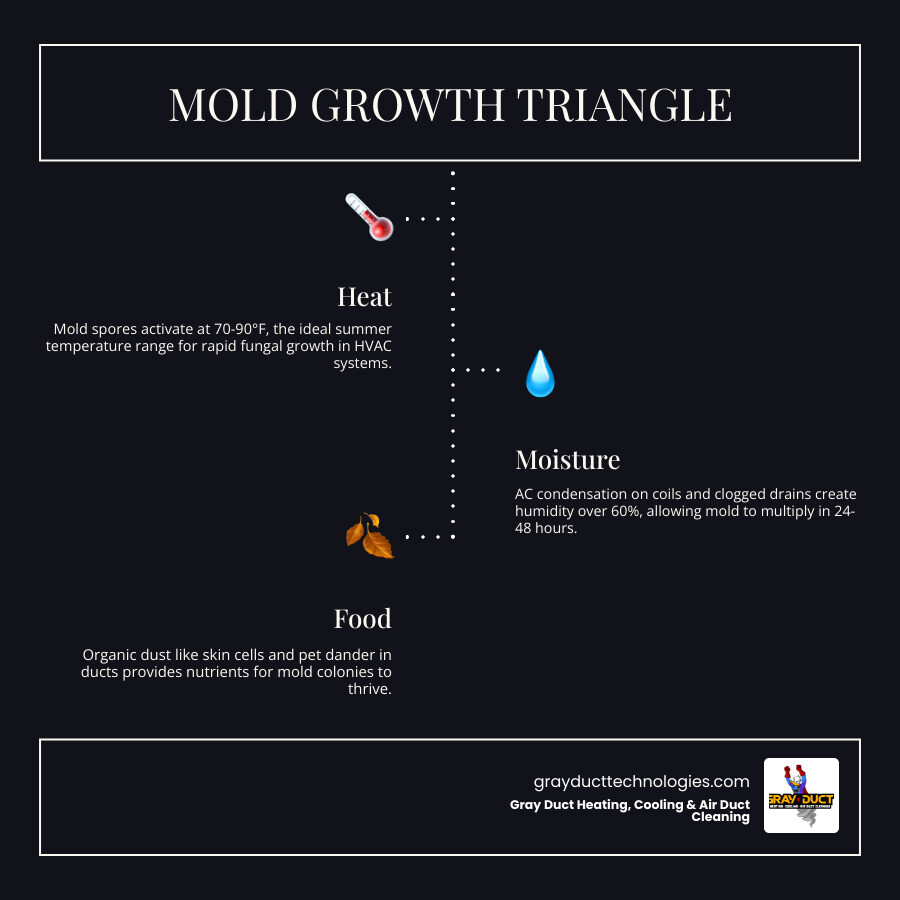
To effectively combat mold, we first have to understand why it loves our air conditioners so much. Mold isn’t just a “dirt” issue; it’s a biological event that requires three specific ingredients to occur: heat, moisture, and a food source. In the industry, we call this the “Mold Growth Triangle.”
During a typical Minnesota summer in May 2026, our homes provide all three in abundance. Inside your ductwork, dust (which is mostly organic matter like skin cells and pet dander) serves as the food. The summer heat provides the energy. But the real catalyst is the moisture created by your air conditioner.
Why summer heat accelerates fungal activity
Mold is a living organism, and like most living things, its metabolism speeds up when it’s warm. The peak temperature range for mold activity is between 70°F and 90°F. When outdoor temperatures spike, the areas of your home that aren’t perfectly insulated—like attics or crawl spaces—experience “thermal bridging.” This is where heat transfers through building materials, creating warm spots inside your cool ductwork.
When this warmth meets the stagnant air in a system that isn’t running constantly, mold spores (which are always present in the air in a dormant state) receive the “go” signal. They can activate and begin to multiply in as little as 24 to 48 hours. If you want to dive deeper into the biology, check out our post on Understanding the Science of Mold Growth in Ductwork.
The role of AC condensation in moisture buildup
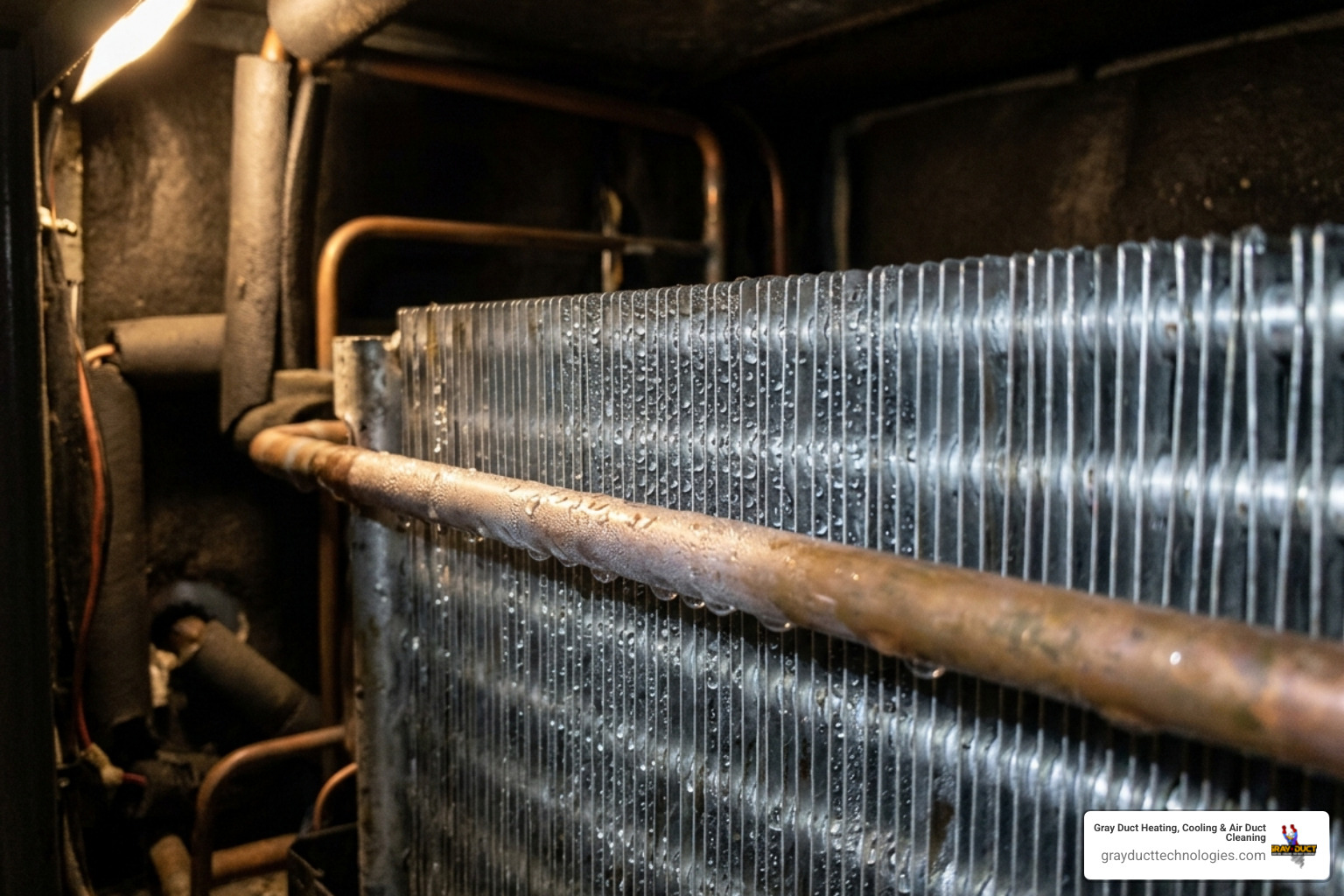
Your air conditioner’s primary job is to remove heat, but its secondary job—dehumidification—is what creates the summer mold risk in your HVAC system. As warm air passes over the freezing-cold evaporator coils, moisture in the air condenses into liquid water.
In a perfect world, this water drips into a pan and flows out a drain line. However, if your coils are dirty or your drain line is clogged with biofilm (a slime made of bacteria and fungus), that water sits. Standing water in a dark, 80-degree metal box is essentially a five-star resort for mold. This is why Understanding AC Coil Cleaning is so critical for prevention.
| Humidity Level | Mold Growth Risk | Spore Activation Time |
|---|---|---|
| Below 50% | Low / Inhibited | Dormant |
| 50% – 60% | Moderate | 48 – 72 Hours |
| Above 60% | High / Rapid | 24 – 48 Hours |
Identifying the Warning Signs of a Hidden Infestation
Because most of your HVAC system is hidden behind drywall or inside metal cabinets, you have to rely on your senses to detect a problem. Mold doesn’t always announce itself with a giant green fuzzy patch on the wall; usually, it’s much more subtle.
How to spot summer mold risk in your HVAC system vents
One of the first physical signs is discoloration around your supply registers (the vents where the air comes out). Look for:
- Black streaks or “dust” that won’t wipe away: This is often not dust at all, but mold colonies feeding on the condensation that forms when cold air hits the warm vent cover.
- Fuzzy textures: If the “dust” on your vents looks like it has hair or a velvet-like texture, it’s likely fungal growth.
- Slimy residue: If you see a wet, splotchy substance near the duct joints, you may have a leak that is fueling a colony.
We often see these signs during our Air Duct Cleaning Process, where we use high-definition cameras to show homeowners what’s lurking just a few feet inside the pipe. Taking action early is the best way to ensure AC Duct Cleaning Prevent Mold Growth from spreading to your furniture and carpets.
Physical symptoms and health indicators
Sometimes, your body knows there is a mold problem before your eyes do. Mold releases microbial volatile organic compounds (mVOCs), which create that signature “earthy” or musty “dirty sock” smell. More importantly, mold releases mycotoxins and spores that can cause:
- Unexplained allergy spikes: If you feel better at the office or while running errands in Bloomington than you do at home, your HVAC might be the culprit.
- Respiratory irritation: Sneezing, coughing, or itchy eyes that intensify when the AC kicks on.
- Vulnerability in high-risk groups: Children, the elderly, and those with respiratory conditions like asthma or COPD are often the “canaries in the coal mine.”
Understanding Regular AC Duct Cleaning Importance is about more than just equipment longevity; it’s about protecting the breath of everyone in your home.
Step-by-Step Prevention Strategies for Homeowners
Prevention is always more cost-effective than remediation. In the Twin Cities, where our summers can go from bone-dry to swamp-like in a single afternoon, staying proactive is key.
Reducing summer mold risk in your HVAC system through coil care
The evaporator coil is the heart of your cooling system and the most common site for mold. When dust bypasses your filter and settles on a damp coil, it creates a “biofilm” that insulates the coil, making your system work harder and providing a feast for fungi.
By keeping these coils clean, you optimize airflow and remove the primary breeding ground. We’ve put together a comprehensive Guide to A/C Coil Cleaning to help you understand what this entails. The Importance of A/C Coil Cleaning cannot be overstated—it’s the difference between a healthy system and one that circulates “slime” through your home.
Routine maintenance habits for May 2026
As we move through May 2026, set a recurring reminder on your phone for these simple tasks:
- Monitor Humidity: Use a hygrometer (they are inexpensive and available at any hardware store in Eagan or Eden Prairie) to ensure your indoor relative humidity stays below 50%.
- Filter Changes: Replace your air filters every 1–2 months during high-use summer months. A clogged filter restricts airflow, which leads to colder coils and more condensation.
- Flush the Drain Line: A cup of white vinegar down the condensate drain line can help prevent the buildup of “algae” and mold that leads to clogs and overflows.
- Use Exhaust Fans: Always run your bathroom and kitchen fans for at least 20 minutes after showering or cooking to prevent that moisture from being sucked into the HVAC return vents.
If you aren’t sure where to start, reading about the Importance of A/C Coil Cleaning will show you how these small steps add up to big protection.
Why Professional Intervention is Necessary for Twin Cities Homes
While DIY habits are great for maintenance, they aren’t enough to eliminate an established mold colony. Mold is tenacious; if you leave even a small percentage of a colony behind, it will grow back to its original size within days under the right summer conditions.
The limitations of DIY cleaning methods
Many homeowners try to clean their own vents with a household vacuum. Unfortunately, this often does more harm than good. Standard vacuums don’t have the “lift” to remove deep-seated debris, and if they don’t have high-grade HEPA filtration, they may actually catch the large dust particles while exhausting the microscopic mold spores back into your living room air.
Furthermore, mold often hides in the “plenum” (the main distribution box) or behind the blower motor—areas that are difficult to access without specialized tools. Professional technicians use negative pressure systems and antimicrobial fogging to ensure the entire system is sanitized, not just the parts you can see. This is why the Importance of Regular Air Duct Cleaning is a staple of professional home care.
Seasonal timing for optimal system protection
The best time to address the summer mold risk in your HVAC system is right now. However, many of our clients in Saint Paul and Minneapolis prefer a late-summer inspection. Why? Because the system has been running hard for months, and any moisture that has “brewed” during the humid July weeks can be cleared out before you seal the house up and turn on the furnace for the winter.
Regular Air Duct Cleaning ensures that your system doesn’t just switch from blowing cool mold spores to blowing warm mold spores when the seasons change.
Frequently Asked Questions about HVAC Mold
What is the ideal humidity level to prevent mold?
We recommend keeping your indoor relative humidity between 30% and 50%. Once you cross the 60% threshold, the risk of mold spore activation increases exponentially. If your AC unit is oversized, it may “short cycle,” cooling the air quickly without running long enough to remove the moisture. In these cases, a supplemental whole-home dehumidifier might be necessary.
Can mold in my AC make my energy bill go up?
Absolutely. Mold and the “slime” (biofilm) it creates act as an insulator on your cooling coils. This prevents the refrigerant from efficiently absorbing heat from your air. Your system has to run longer and work harder to reach the temperature set on your thermostat, leading to a noticeable spike in utility bills in places like Woodbury or Plymouth.
How quickly can mold spread in my ducts?
Under peak summer conditions—high humidity and temperatures between 70-90°F—mold spores can germinate in 24-48 hours. Once a colony is established, it can spread across the interior surfaces of your ductwork and reach a “colonization” state within about two weeks. This is why immediate action is required if you suspect a leak or a musty odor.
Conclusion
The summer mold risk in your HVAC system isn’t something to ignore. It impacts your health, your home’s scent, and your monthly energy costs. At Gray Duct Heating, Cooling & Air Duct Cleaning, we are a family-owned business dedicated to keeping Twin Cities homes safe and efficient.
Our certified, in-house team serves the entire South Metro and beyond—from Lakeville and Burnsville to Minnetonka and Roseville. We don’t use third-party contractors; we use our own experts to perform every Air Duct Cleaning, coil scrub, and HVAC inspection.
Don’t let your AC blow “slime” through your home this summer. Take control of your indoor air quality today and breathe easier knowing your system is clean, clear, and mold-free.
Need HVAC Help?
Our NADCA-certified technicians are ready to help with all your heating, cooling, and air quality needs.
Get Free EstimateMore Articles
 HVAC Tips
What to Do When Your AC and Furnace Share the Same Air Filter
 HVAC Tips
Addressing Drafty Rooms Before Winter: Duct Sealing vs. Window Replacement
 HVAC Tips
Dryer Vent Routing: Rigid Metal vs. Flexible Foil in Cold Climates
 HVAC Tips
Why We Inspect the Heat Exchanger So Closely During Fall Maintenance
 HVAC Tips
Upgrading to a Two-Stage Furnace: Is the Investment Worth It in Minnesota?
Related Articles
Ready to Get Started?
Whether you need a repair, maintenance, or a new system installation, our expert team is here to help.