A Practical Guide to NADCA Standards for Your Home
Gray Duct
Discover what NADCA standards mean for your home with certified air duct cleaning that improves indoor air quality and protects your HVAC system.
Concerned About Indoor Air Quality in Your Twin Cities Home? Here’s What NADCA Standards Mean
Understanding what NADCA standards mean for your home starts with one simple idea: not all air duct cleaning is created equal. NADCA – the National Air Duct Cleaners Association – is the global trade association that sets the benchmark for how HVAC systems should be inspected, cleaned, and restored. It exists to help protect homeowners and to support a higher standard for the air circulating through your home.
Here’s a quick breakdown of what NADCA standards mean in practice for homeowners:
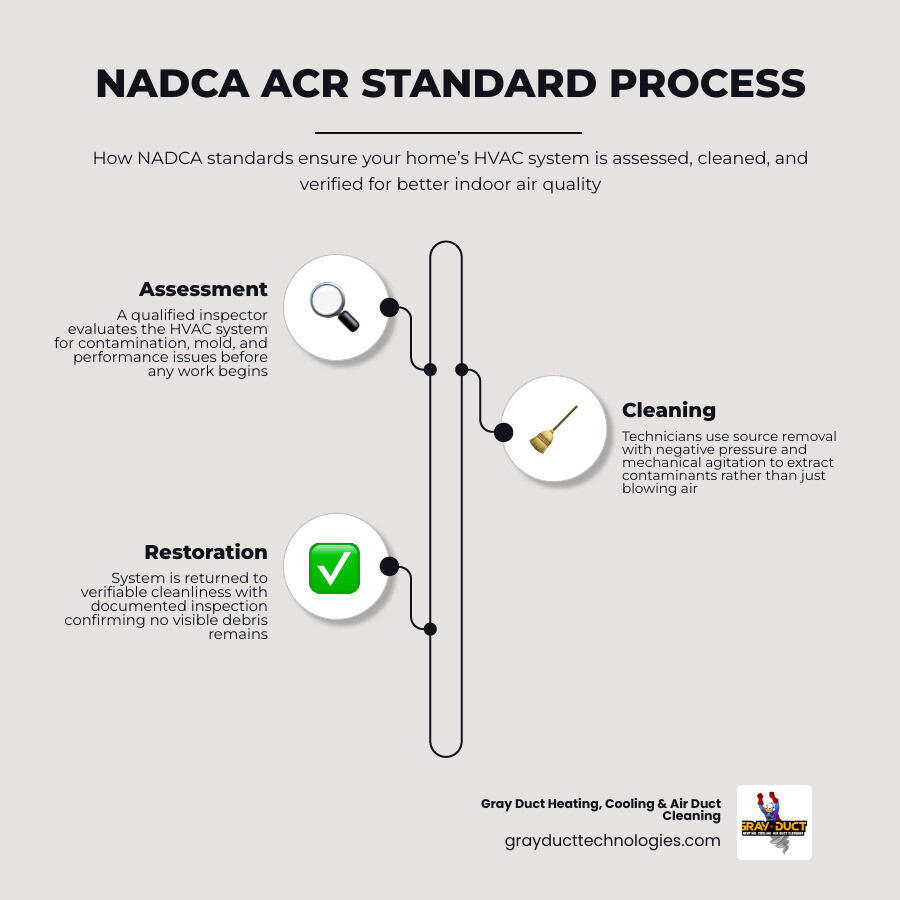
- Assessment – A qualified inspector evaluates your HVAC system for contamination, mold, and performance issues before any work begins
- Cleaning – Technicians should use source removal, physically extracting contaminants using negative pressure and mechanical agitation, not just blowing air through ducts
- Restoration – The system is returned to a documented level of cleanliness – not just “looks okay”
- Verification – Post-cleaning inspection confirms no visible debris remains, using methods like visual checks or the NADCA Vacuum Test
- Ethics – NADCA member companies are expected to follow a formal Code of Ethics, giving homeowners added confidence in the process
For Twin Cities homeowners dealing with allergy symptoms, musty odors, or rising energy bills, these standards can help separate a thorough cleaning from a superficial one.
At Gray Duct Heating, Cooling & Air Duct Cleaning, we help Minnesota homeowners understand what NADCA standards mean for your home so they can make informed decisions about indoor air quality. In this guide, we’ll walk through what to look for, what a proper process includes, and why standards matter for your home’s HVAC system.
Understanding the ACR Standard
The main residential standard homeowners should know is ACR, which stands for Assessment, Cleaning, and Restoration. It is NADCA’s core standard for HVAC system hygiene. In plain English, ACR explains how a professional should inspect a system, determine whether cleaning is actually needed, perform the work safely, and verify the result afterward.
That matters because NADCA is not built around the idea of “clean it because it exists.” It is built around evidence. If contamination, debris buildup, mold concerns, odors, pest activity, or performance issues are present, then cleaning may be justified. If not, a good contractor should say so.
For homeowners in Minneapolis, Saint Paul, Lakeville, Eden Prairie, Plymouth, and the rest of the Twin Cities and South Metro, this is helpful because it turns a confusing service into a process you can actually evaluate.
A NADCA-guided residential project generally includes:
- Pre-cleaning assessment of the HVAC system and accessible components
- Inspection of contamination levels and system condition
- Written scope of work before cleaning begins
- Source removal methods that loosen debris and collect it under negative pressure
- Cleaning of the full HVAC system as needed, not just visible vents
- Post-cleaning verification to confirm acceptable cleanliness
What “source removal” really means
Source removal is one of the most important ideas in ACR. It means contaminants are physically dislodged and removed from the system, rather than simply stirred up or blown around. Proper cleaning uses mechanical agitation tools along with negative pressure so loosened dust and debris are captured instead of redistributed into your living space. Think of it as the difference between vacuuming a rug and just smacking it with a broom in your living room. One removes the mess; the other makes a dramatic scene.
NADCA-compliant cleaning vs. basic vacuuming
| Area | NADCA-compliant approach | Basic vacuuming approach |
|---|---|---|
| Inspection | System assessed before work begins | Little or no real inspection |
| Cleaning method | Source removal with agitation and negative pressure | Surface-level suction only |
| Scope | Addresses the HVAC system components, not just vents | Often limited to registers or easy-to-reach areas |
| Containment | Designed to prevent cross-contamination | Can release debris into the home |
| Verification | Post-cleaning inspection and documentation | Little proof of result |
Why Homeowners Should Insist on Qualified Professionals
When homeowners ask what qualifications matter most, the best place to start is with a company that follows NADCA standards and can clearly explain its process from inspection through verification. The point is not memorizing industry abbreviations; it is knowing that your inspection and cleaning should be guided by someone who understands the standard, contamination assessment, proper procedures, and post-cleaning verification.
Just as important, NADCA member companies are expected to follow a Code of Ethics. That helps set expectations around honesty, scope, and professionalism. For more background, read Choosing Between NADCA and Non-Certified Cleaners for Your Home.
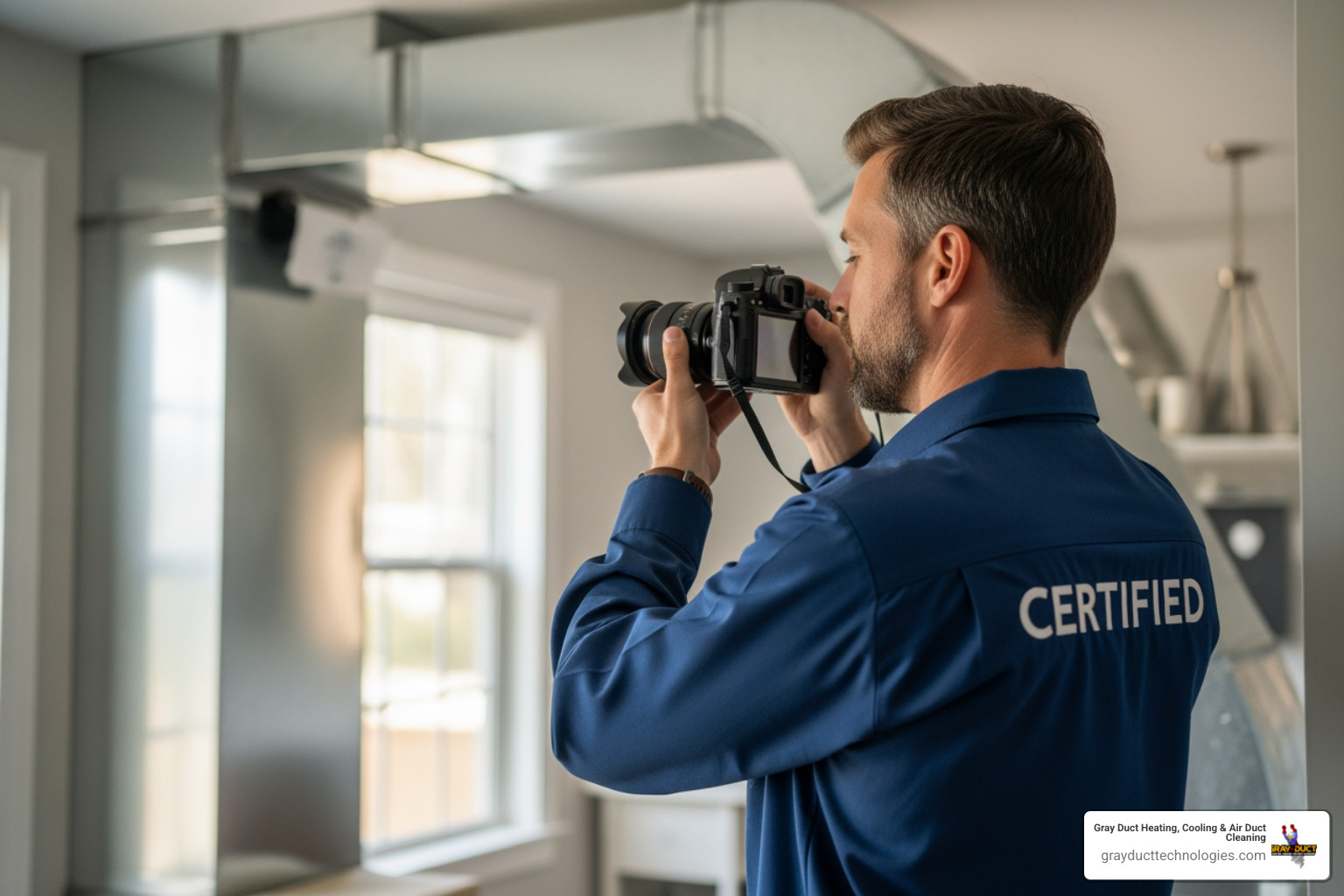
A qualified professional should be able to explain why cleaning is or is not recommended, what parts of the system are included, how contamination will be contained, how cleanliness will be verified afterward, and what documentation you will receive. If someone cannot explain the process clearly, that is usually not a great sign.
Improving Indoor Air Quality Through Rigorous Standards
The reason most homeowners care about all of this is simple: they want cleaner air and a healthier home. A dirty HVAC system can contribute to circulating particulate matter, dust, renovation debris, pest-related contamination, and in some cases mold-related concerns. NADCA standards help reduce those risks by requiring inspection, proper containment, and verifiable cleaning methods rather than guesswork.
That does not mean every cough or dusty shelf is caused by ducts. Indoor air quality is influenced by filtration, humidity, pets, cleaning habits, outdoor air conditions, and overall HVAC maintenance. But when contamination is present inside the system, a standards-based cleaning can be one important part of the solution. This is especially relevant in Minnesota homes where we keep windows closed for long stretches during heating season and rely heavily on forced-air systems.
NADCA standards support indoor air quality by emphasizing inspection-based decisions, contaminant containment, negative pressure to stop debris from spreading, HEPA-filtered collection equipment where appropriate, cleaning of relevant HVAC components, and verification that visible debris has been removed.
When to Schedule an Inspection According to NADCA Guidelines
A common question is, “How often should we clean our air ducts?” The better question is, “When should we inspect the system?” NADCA guidance supports routine inspections for residential systems, often at intervals of about 1 to 2 years depending on the component and the home’s conditions. Inspection is the key step because cleaning should be based on what is actually found.
Situations that may justify a professional inspection sooner include:
- Visible dust or debris blowing from supply registers
- Musty or unusual odors when the system runs
- Recent remodeling or construction debris
- Water damage or fire/smoke events
- Suspected pest infestation
- Noticeable airflow or performance problems
- Visible mold growth on HVAC components
A good rule of thumb: if your home has had a major event, a visible contamination issue, or recurring air-quality concerns, schedule an inspection. If not, keep air duct evaluation as part of your overall HVAC maintenance plan.
Post-Cleaning Verification and Documentation
One of the best parts of the NADCA framework is that it does not stop at “trust us, it is clean now.” Homeowners should expect post-cleaning verification, which may include visual inspection of cleaned components, photographic documentation, a written summary of what was cleaned, notes on any inaccessible or damaged areas, and verification that no visible debris remains. Documentation is also helpful for your records, especially after remodeling, water intrusion, smoke damage, or mold-related concerns.
Frequently Asked Questions about NADCA Standards
What does NADCA stand for in the HVAC industry?
NADCA stands for National Air Duct Cleaners Association. It is a non-profit trade association founded in 1989 and recognized as the leading authority for HVAC inspection, cleaning, and restoration standards. It is best known for setting the benchmark for how air duct and HVAC system cleaning should be assessed, performed, and verified.
How do NADCA standards address mold and safety?
NADCA standards address mold by requiring inspection and condition assessment before work begins. Mold contamination is typically evaluated by condition level (Condition 1, 2, and 3). When contamination reaches Condition 2 or 3, cleaning and remediation measures become much more important. Safety is addressed through containment barriers where needed, negative pressure to prevent cross-contamination, equipment maintenance, protection of occupied spaces, and careful use of any chemical products according to label directions.
What qualifications should I look for in a professional?
Look for a company that follows NADCA standards with qualified oversight (an Air Systems Cleaning Specialist involved in project oversight), active NADCA membership, a clear explanation of the cleaning process, general liability insurance, and a written scope of work with post-cleaning verification. Ask whether the company cleans the full HVAC system as needed rather than only the visible vents.
Conclusion
For homeowners across Minneapolis, Saint Paul, Apple Valley, Burnsville, Lakeville, Woodbury, Rochester, and the surrounding Twin Cities and South Metro communities, NADCA standards offer something valuable: clarity. At Gray Duct Heating, Cooling & Air Duct Cleaning, we believe homeowners deserve that clarity. As a family-owned company serving Minnesota, we focus on careful inspection, thorough cleaning, clear documentation, and practical recommendations that support healthier indoor air. Learn more about our air duct cleaning services and take the next step toward a cleaner, better-performing HVAC system.
Need HVAC Help?
Our NADCA-certified technicians are ready to help with all your heating, cooling, and air quality needs.
Get Free EstimateMore Articles
 HVAC Tips
Troubleshooting the First Fall Furnace Smell: When to Consider Air Duct Cleaning
 HVAC Tips
Why Your Furnace Filter Isn't Enough: A Deep-Dive Into Air Duct Cleaning
 HVAC Tips
Why We Check Gas Pressure During a Fall Furnace Tune-Up
 HVAC Tips
Navigating Utility Rebates for High-Efficiency Furnaces in the Twin Cities
 HVAC Tips
How Mice and Pests Invade Ductwork in Early Fall
Related Articles
Ready to Get Started?
Whether you need a repair, maintenance, or a new system installation, our expert team is here to help.