Why Your Vents are Growing a Fur Coat
Gray Duct
Discover how pet dander accumulates in your air ducts. Combat allergies, boost HVAC efficiency, and schedule Twin Cities cleaning now.
Why Pet Dander Quietly Takes Over Your Home’s Air Ducts
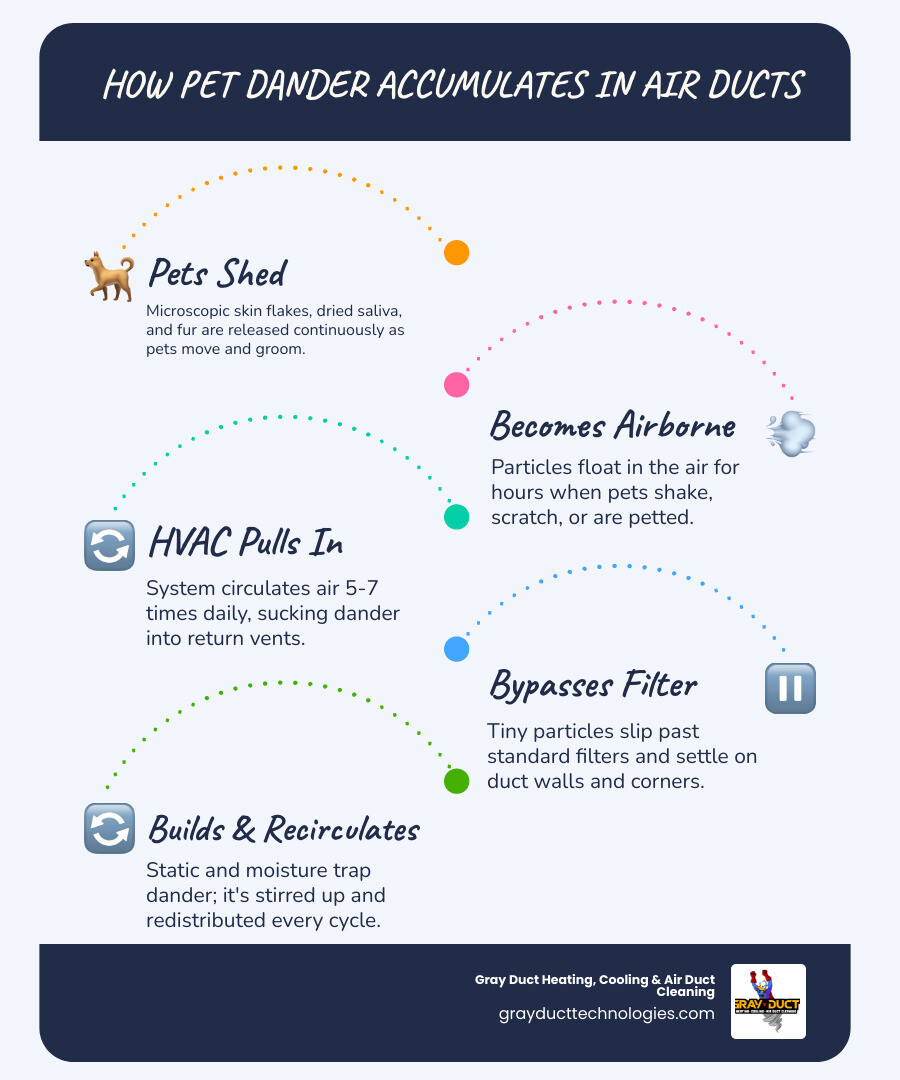
Understanding how pet dander accumulates in your air ducts comes down to one simple process: your HVAC system pulls air — and everything floating in it — through return vents, traps some particles in the filter, and sends the rest deeper into your ductwork. Here’s the short version:
- Pets shed microscopic skin flakes (dander), dried saliva, and fur continuously throughout the day.
- Dander becomes airborne when pets move, shake, scratch, or get petted — and stays suspended for hours.
- Your HVAC system circulates air through your home several times daily, pulling airborne dander into the return vents with each cycle.
- Particles that bypass the filter settle on duct walls, collect in bends and corners, and build up into dense layers over time.
- Static electricity and moisture inside ducts attract and hold dander particles, making them even harder to dislodge.
- Every time your system runs, that settled dander gets stirred back up and redistributed through every room.
The result is a slow but steady buildup that most homeowners in the Twin Cities never see — until allergy symptoms, lingering pet odors, or reduced airflow make it impossible to ignore.
If you share your home with a dog, cat, or any furry companion, this invisible cycle is running in the background every day. Pet dander is not the same as visible fur — it’s made up of microscopic skin proteins small enough to drift through the air for hours and slip past filters not designed to catch them. Once inside your ductwork, it mixes with dust, clings to surfaces, and keeps recirculating.
I’m Jason Giandalia, founder of Gray Duct Heating, Cooling & Air Duct Cleaning, and after years of inspecting duct systems across the Twin Cities, I’ve seen how dramatically pet dander accumulates in your air ducts — and how much of a difference a thorough, professional cleaning makes for both air quality and system efficiency.
Understanding the Science of Pet Dander Buildup
When we talk about pet dander, we aren’t just talking about the hair you find on your sofa. Dander is a biological byproduct that is much smaller and far more persistent than fur.
The composition of dander vs. fur
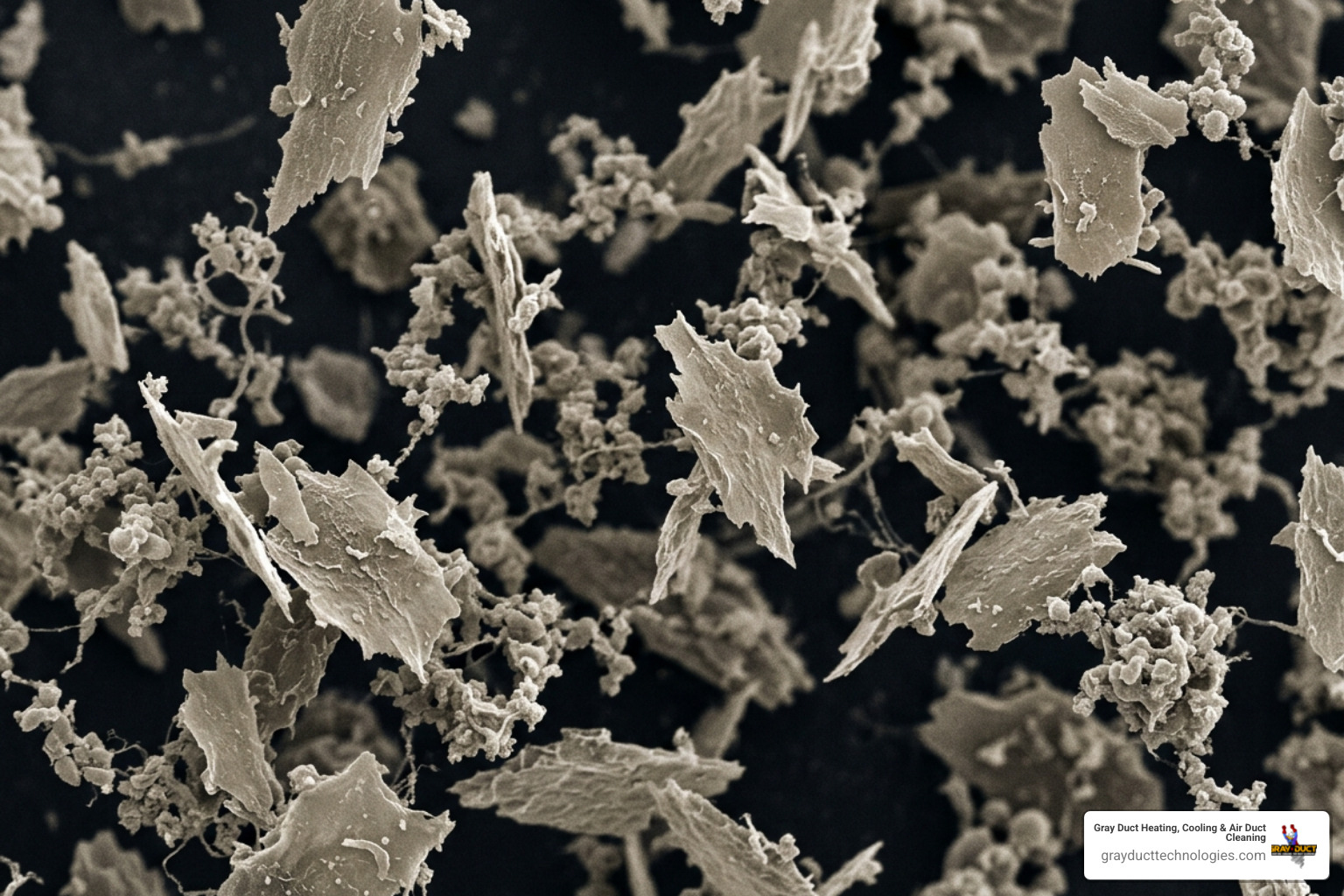
Many of our clients in Bloomington and Eagan are surprised to learn that pet hair itself isn’t actually the primary allergen. Instead, hair acts as a vehicle. The real culprit is pet dander — microscopic flecks of skin shed by animals with fur or feathers. These skin cells contain specific proteins that trigger immune responses, and dander often hitches a ride with dried saliva particles that become airborne when your pet grooms itself. Because dander is microscopic, it is incredibly lightweight, allowing it to stay suspended in the air for hours, unlike heavy fur which settles on the floor quickly.
Why dander lingers in Minneapolis homes
In the Twin Cities, our homes are built to be airtight to survive the harsh winters. This seasonal sealing is great for your heating bill but tough on indoor air quality. Without frequent fresh air exchange, pet dander has nowhere to go. It remains suspended in the indoor air until it is pulled into your return vents. Because these particles are so small (often between 1 and 10 microns), they can stay airborne for a remarkably long time.
The Mechanics of HVAC Contamination
Your HVAC system is essentially the “lungs” of your home. It breathes in air from your rooms, conditions it, and breathes it back out. If that air is full of pet debris, the system becomes a giant collection device for allergens.
The role of HVAC recirculation
The average home’s air is circulated through the HVAC system several times every day. Each time, the suction from the return vents acts like a vacuum, pulling in pet hair, dander, and dust. While a high-quality filter should catch much of this, the sheer volume produced by shedding pets can lead to filter bypass or simply overwhelm standard filters. Once particles get past the filter, they enter the supply ducts. Because airflow slows as it moves through the branching ductwork, these particles settle on the interior walls, creating a fur coat inside your vents.
Static electricity and moisture traps
Ductwork is often a breeding ground for static electricity. As air moves through metal or plastic pipes, it creates a static charge that acts as a magnet for lightweight dander. Additionally, the area near your A/C evaporator coils is naturally moist. When pet dander and fur mix with this moisture, they create a sticky sludge that can lead to mold growth and bacterial odors. Maintaining humidity between 30% and 50% is critical to reducing these sticky conditions.
Health and System Performance Impacts
Signs of excessive dander buildup
- Visible Dust: A fuzzy or gray buildup on your vent covers or return grilles.
- Lingering Odors: A doggy or musty smell that persists even after you’ve cleaned the house.
- Allergy Flare-ups: Increased sneezing, itchy eyes, or respiratory irritation when the furnace or A/C kicks on.
- Frequent Dusting: Wiping down surfaces every day, only for a thin layer of dust to return almost immediately.
Why filtration matters
Your air filter is the first line of defense. However, pet owners often use low-MERV fiberglass filters, which are designed to protect the HVAC motor from large debris but let microscopic dander sail right through. As these particles accumulate on the evaporator coil and blower motor, they restrict airflow, forcing your system to work harder, increasing energy consumption, and shortening the lifespan of your equipment.
Proactive Strategies for Twin Cities Pet Owners
| Filter Type | Efficiency Level | Recommended for Pets? |
|---|---|---|
| MERV 8 | Low | No (captures only large debris) |
| MERV 11 | Medium | Yes (good for single-pet homes) |
| MERV 13 | High | Best (captures dander and fine allergens) |
Professional removal vs. DIY cleaning
While regular vacuuming and changing filters are essential, they cannot reach the deep-seated debris inside your ductwork. Standard household vacuums often lack the suction power to dislodge dander that has bonded to duct walls via static electricity. Professional air duct cleaning uses high-powered, truck-mounted vacuums and specialized brushes to physically scrub the interior of the ducts. Our certified in-house team follows NADCA standards to ensure every inch of your system is cleared of the fur coat that builds up over time.
Maintenance schedules for multi-pet households
If you live in a home with multiple pets or heavy shedders (like Huskies or Golden Retrievers), a standard cleaning schedule may not be enough. While most homes benefit from cleaning every 3 to 5 years, pet-owning households in areas like Minnetonka or Plymouth should consider a 2 to 3-year cycle. We also recommend changing your high-quality pleated filters every 30 to 60 days during peak shedding seasons.
Frequently Asked Questions about Pet Dander in Vents
How often should air ducts be cleaned in homes with pets?
For most Twin Cities pet owners, we recommend professional cleaning every 2 to 3 years. If you have multiple pets, or if family members suffer from severe allergies or asthma, an every-other-year schedule keeps the air significantly fresher.
Can pet dander in air ducts cause HVAC failure?
Indirectly, yes. When dander bypasses the filter, it settles on sensitive internal components like the evaporator coil and blower fan. This creates resistance, causing the motor to run hotter and longer than intended. Over time, this system strain leads to premature component failure and higher repair bills.
What is the best way to prevent dander from entering vents?
The most effective prevention is a layered defense: use a MERV 11 or 13 pleated filter and change it frequently; brush pets outdoors to remove loose fur and dander before it enters the home; use standalone air purifiers to capture airborne particles; and vacuum the floor areas around your return air grilles regularly.
Conclusion
Your home should be a sanctuary for both you and your pets, but the invisible accumulation of dander can turn your ventilation system into a source of discomfort. Understanding how pet dander accumulates in your air ducts is the first step toward reclaiming your indoor air quality.
At Gray Duct Heating, Cooling & Air Duct Cleaning, we are a family-owned business dedicated to helping our neighbors in Minneapolis, Saint Paul, and the surrounding suburbs breathe easier. Our certified, in-house team doesn’t just blow out your vents; we provide a comprehensive cleaning that removes the root of the problem. Restore your home’s air quality with professional air duct cleaning today — whether you are in Lakeville, Maple Grove, or Woodbury, we’re ready to help.
Need HVAC Help?
Our NADCA-certified technicians are ready to help with all your heating, cooling, and air quality needs.
Get Free EstimateMore Articles
 HVAC Tips
What to Do When Your AC and Furnace Share the Same Air Filter
 HVAC Tips
Addressing Drafty Rooms Before Winter: Duct Sealing vs. Window Replacement
 HVAC Tips
Dryer Vent Routing: Rigid Metal vs. Flexible Foil in Cold Climates
 HVAC Tips
Why We Inspect the Heat Exchanger So Closely During Fall Maintenance
 HVAC Tips
Upgrading to a Two-Stage Furnace: Is the Investment Worth It in Minnesota?
Related Articles
Ready to Get Started?
Whether you need a repair, maintenance, or a new system installation, our expert team is here to help.