What to Check During Your Post-Winter HVAC Inspection
Gray Duct
Discover post winter hvac inspection what to check for Twin Cities homes. Boost efficiency, cut bills & ensure safety with our spring checklist!
What to Check During a Post-Winter HVAC Inspection (Quick Answer)
Knowing post winter hvac inspection what to check can save you from surprise breakdowns, high energy bills, and poor indoor air quality as Minnesota transitions into spring and summer. Here’s a fast overview of the key inspection points:
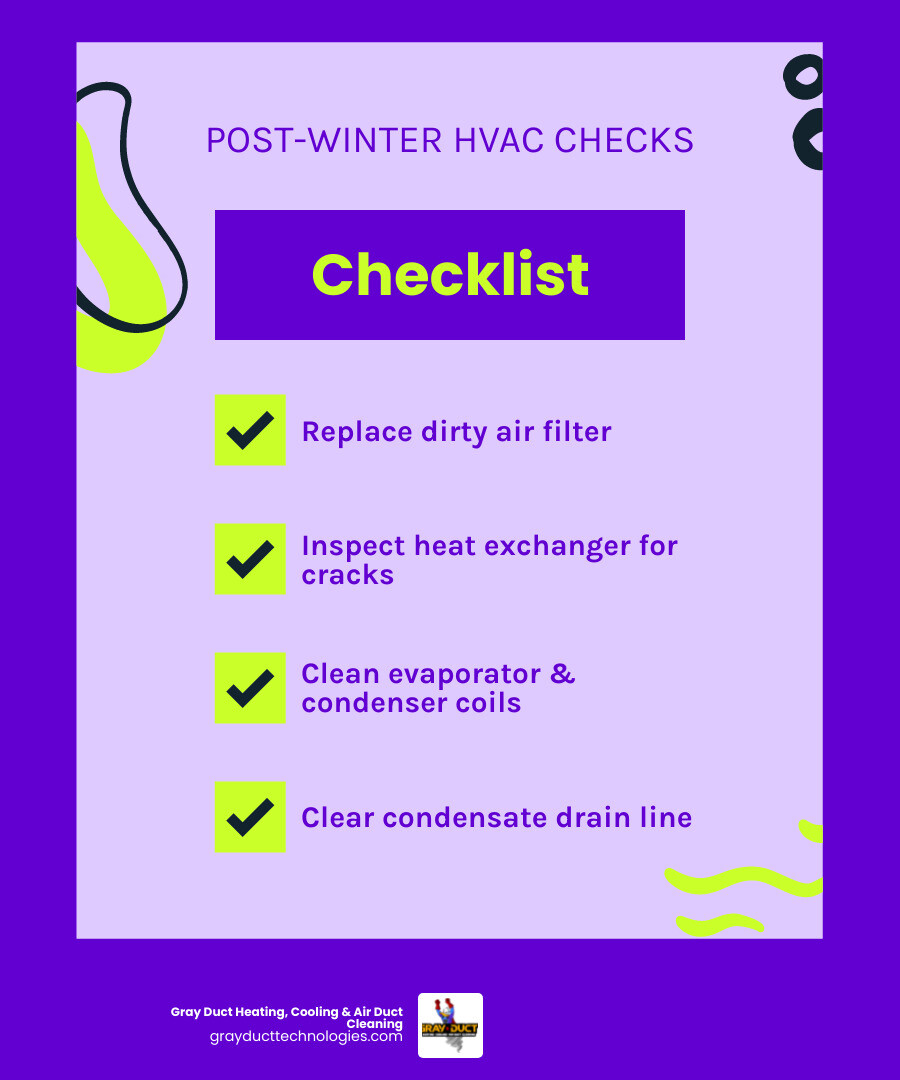
- Air filter — Replace if dirty or clogged after months of heavy heating use
- Heat exchanger — Check for cracks that can cause carbon monoxide leaks
- Burner assembly — Inspect for buildup, corrosion, or uneven flame
- Evaporator and condenser coils — Clean off dust, debris, and winter grime
- Condensate drain line — Clear any blockages before cooling season starts
- Refrigerant lines — Look for damage to insulation and signs of leaks
- Ductwork — Inspect for leaks, debris, or disconnected sections
- Thermostat — Test calibration and update settings for spring
- Electrical connections — Check for wear, corrosion, or loose wiring
- Outdoor unit — Remove debris, check clearance, and inspect fins
- Carbon monoxide and smoke detectors — Test and replace batteries
- Vents and registers — Confirm none are blocked by furniture or dust buildup
After a full Minnesota winter of near-constant heating, your HVAC system has worked harder than at almost any other point in the year. Heating and cooling together account for roughly 52% of a household’s annual energy use — so a system that’s even slightly out of shape after winter will cost you more to run and is more likely to fail when summer heat arrives. Leaky ducts alone can waste 20–30% of the air moving through your system, and a dirty filter forces the system to use 5–15% more electricity just to do the same job. A post-winter inspection catches those problems early, before they become expensive repairs or full system failures.
I’m Jason Giandalia, founder of Gray Duct Heating, Cooling & Air Duct Cleaning, and with years of hands-on HVAC and indoor air quality work across the Twin Cities, I’ve seen what a Minnesota winter does to heating systems — and exactly what a thorough post winter hvac inspection what to check process looks like. Let’s walk through every critical item so you can head into spring with confidence.
Why a Post-Winter HVAC Inspection is Essential for Twin Cities Homes
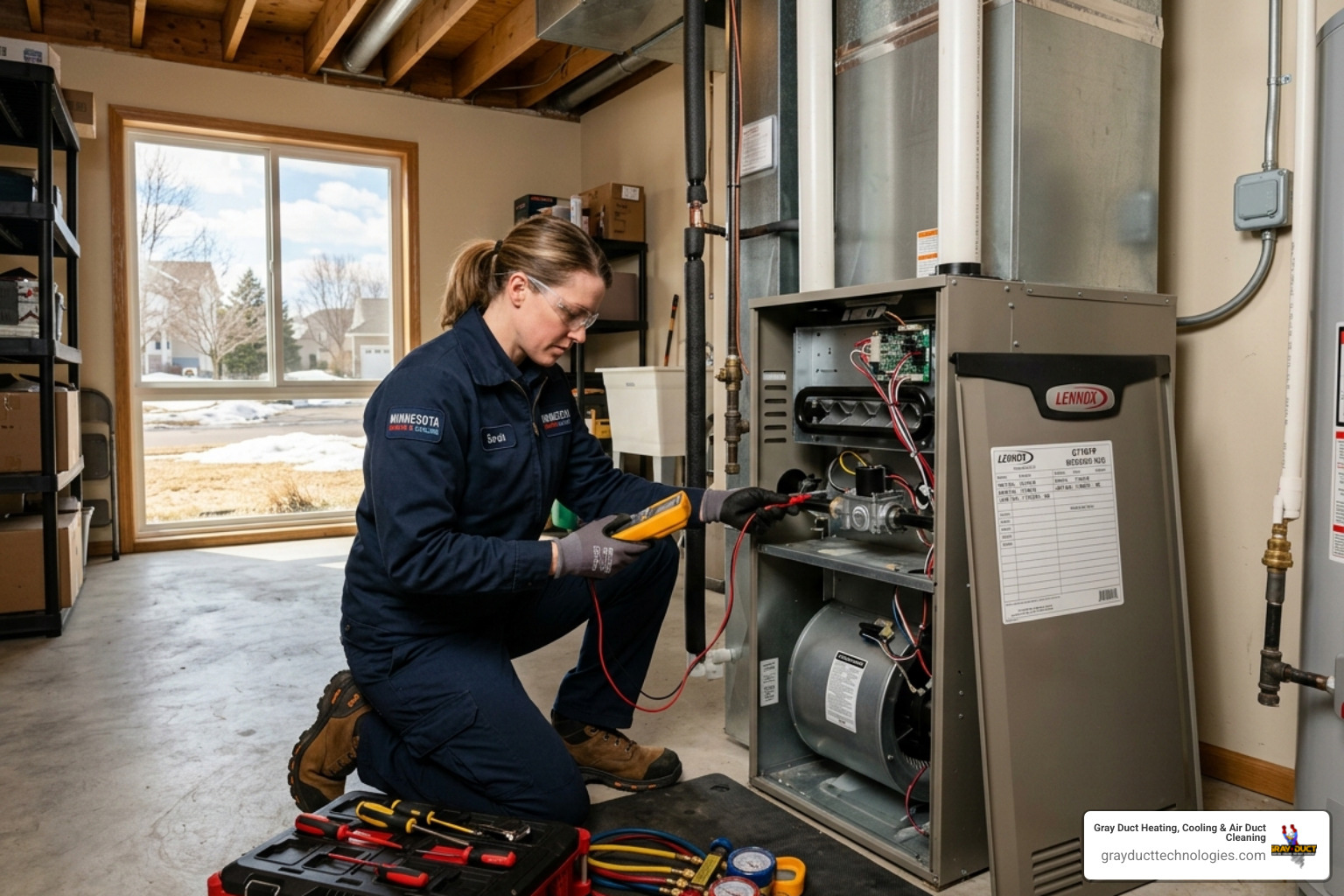
Living in the Twin Cities, we know that April 2026 doesn’t always mean the end of the chill, but it is the perfect time to evaluate the health of our heating and cooling systems. After months of sub-zero temperatures and heavy snowfall, your furnace or heat pump has likely been running at maximum capacity. This heavy workload leads to inevitable wear and tear that, if left unaddressed, can drastically shorten your system’s lifespan.
The Importance of Regular HVAC Maintenance cannot be overstated, especially in a climate like ours. Systems that receive annual professional care can last between 18 and 22 years, whereas neglected units often fail as early as year 11. Beyond longevity, a post-winter check directly impacts your wallet. When components are dirty or misaligned, the system works harder to achieve the same temperature, sending utility bills skyrocketing.
Furthermore, indoor air quality often suffers during our long Minnesota winters because we keep our homes sealed tight. Pollutant levels indoors can be 2 to 5 times higher than outdoor levels. A thorough inspection ensures that dust, pet dander, and allergens that accumulated in your ducts over the winter aren’t being recirculated throughout your home all spring.
Post-Winter HVAC Inspection: What to Check for Maximum Efficiency
When we talk about post winter hvac inspection what to check, we are looking for efficiency killers. The goal is to transition from the “heating” mindset to the “cooling” mindset without losing energy through mechanical friction or blockages.
What’s Included in HVAC Maintenance usually covers a deep dive into the internal mechanics that homeowners rarely see. For example, the burner assembly often collects soot and debris during the winter. If the burners are dirty, the fuel doesn’t burn as cleanly or efficiently, which can lead to higher gas bills and potential safety hazards. We also look closely at the refrigerant levels. Even though you haven’t used your A/C in months, winter ice or shifting ground can cause tiny leaks in the lines that will prevent your home from staying cool in July.
Essential Components for a Post-Winter HVAC Inspection: What to Check First
The very first thing we look at is the heat exchanger. This is the heart of your furnace, and it’s also a potential safety risk. During a HVAC Inspection, we check for microscopic cracks. Over a long winter, the metal expands and contracts thousands of times. If a crack develops, it can allow carbon monoxide to leak into your living space.
We also prioritize the blower motor and its belt. If the motor is struggling due to lack of lubrication or a worn belt, it draws more electricity. Replacing a failing capacitor or a fraying belt in April is much easier (and cheaper) than dealing with a seized motor during a June heatwave.
How to Check for Common Post-Winter Damage in Minnesota
In areas like Minneapolis and Saint Paul, moisture is a major factor. Snow that piles up against your outdoor unit can melt and refreeze, causing “heaving” or shifting. We check to ensure your outdoor condenser is still level; an unlevel unit can cause the compressor to fail prematurely.
Corrosion and rust are other common “gifts” from winter. Salt from nearby roads or simply the constant cycle of moisture can eat away at electrical connections and metal housing. During HVAC Diagnostic Maintenance in Minneapolis MN, we look for an “oily film” on refrigerant lines, which is a classic sign of a leak, as oil travels with the refrigerant.
Essential DIY Tasks for Your Spring HVAC Transition
While many parts of an inspection require a certified professional, there are several things you can do yourself to ensure a smooth transition. Following a The Ultimate HVAC Spring Tune-Up Checklist for Homeowners is a great way to stay organized.
Start by checking your thermostat. Replace the batteries if they are more than a year old—few things are more frustrating than a system that won’t turn on simply because of a dead AA battery. You should also walk through your home and ensure that no furniture, curtains, or rugs have been moved over the winter to block your supply or return vents. Blocked registers create pressure imbalances that force your system to work harder and can even lead to the heat exchanger overheating.
Inspecting and Replacing Air Filters After a Long Winter
This is the single most important DIY task. During winter, your filter works overtime to trap dust and soot. If you can’t see light through your filter when holding it up to a lamp, it’s time for a change.
For HVAC Maintenance in Minneapolis MN, we recommend a MERV 8 to MERV 11 filter for most homes. These provide a great balance between high-quality air filtration and maintaining proper airflow. Going too high (like a MERV 14 or 16) can actually “choke” some residential systems if they weren’t designed for that much resistance. Replacing a dirty filter can lower your energy consumption by 5% to 15% immediately.
Professional Maintenance: Cleaning Coils, Drains, and Ductwork
There is a significant difference between what a homeowner can see and what a professional can clean. For example, your indoor evaporator coil is likely tucked away inside a cabinet. Over time, dust that bypasses the filter settles on these moist coils, creating a “blanket” that prevents heat transfer.
| Task | DIY Homeowner | Professional Technician |
|---|---|---|
| Air Filter | Replace every 30-90 days | Inspect and recommend MERV rating |
| Outdoor Unit | Clear leaves and debris | Deep clean coils and check fins |
| Condensate Drain | Pour vinegar down the line | Flush line and test float switch |
| Ductwork | Vacuum registers/grilles | Deep clean and seal leaks |
| Electrical | Check thermostat batteries | Test capacitors and tighten wiring |
| Safety | Test CO detectors | Inspect heat exchanger for cracks |
Cleaning the condensate drain is another critical spring task. During the winter, dust and algae can settle in the line. When the A/C starts running and producing gallons of water, a clogged line will back up, potentially causing water damage to your furnace’s electrical components or your basement floor.
Professional Post-Winter HVAC Inspection: What to Check for Safety
Safety is the primary reason to call in the pros. HVAC Maintenance Prevent Breakdowns also means preventing hazards. We use specialized tools to check for gas leaks and verify that your system is venting properly.
Electrical connections can also become “embrittled” over time. Loose or corroded wiring creates high resistance, which can lead to melted components or even fires. We tighten all connections and measure the voltage and current on your motors to ensure they are operating within the manufacturer’s specified range.
Signs Your System Needs Immediate Attention Post-Winter
Sometimes, the transition from winter doesn’t go smoothly. If you notice any of the following, you should skip the DIY and call us immediately:
- Strange Noises: Banging, screeching, or grinding sounds usually mean a mechanical part is loose or failing. A “screech” often points to a bad belt or motor bearing.
- Odd Smells: A musty smell indicates mold or mildew in the ducts or on the coils. A “burning” smell that lasts more than a few minutes suggests an electrical issue.
- Short Cycling: If your system turns on and off every few minutes without reaching the set temperature, it’s a sign of a serious problem like a clogged filter, a faulty thermostat, or an overheating component.
- Weak Airflow: If the air coming out of your vents feels like a “sad, tiny sigh,” you likely have a major blockage or a blower motor issue.
If you noticed these signs during the coldest months, don’t assume they’ll go away in the spring. Is Your Furnace Ready for Freezing Temps? 5 Signs It Needs a Winter Tune-Up—the same signs apply when transitioning to the cooling season.
Frequently Asked Questions about Post-Winter Maintenance
How often should air filters be replaced after winter?
In the Twin Cities, we recommend checking your filter every 30 days. Most 1-inch pleated filters need to be replaced every 60 to 90 days. However, if you have pets, allergies, or a very dusty home, you might need a fresh one every 30 days during peak usage months. High-efficiency 4-inch media filters can often last 6 to 12 months, but they should still be inspected after a heavy winter.
What are the risks of skipping a post-winter HVAC inspection?
The biggest risks are unexpected breakdowns and safety hazards. Skipping maintenance is the number one reason a system that should last 20 years dies after only 11. You also risk carbon monoxide leaks from an uninspected heat exchanger and water damage from clogged condensate lines. Furthermore, many manufacturers require documented annual maintenance to honor their parts warranties.
How can post-winter maintenance lower my utility bills?
Regular maintenance can reduce energy bills by 15% to 30%. By cleaning coils, replacing filters, and sealing leaky ducts (which can waste up to 30% of your air), your system doesn’t have to run as long or work as hard to keep your home comfortable. Even something as simple as straightening bent fins on your outdoor unit can improve airflow and efficiency.
Conclusion
A thorough post winter hvac inspection what to check routine is the best way to protect your home and your wallet. At Gray Duct Heating, Cooling & Air Duct Cleaning, we are a family-owned business deeply rooted in the Twin Cities and South Metro area. From Minneapolis and Saint Paul to suburbs like Eagan, Eden Prairie, and Lakeville, our in-house certified team is here to ensure your system is safe, clean, and efficient.
We don’t just “check boxes”; we provide comprehensive care, including specialized A/C coil cleaning and air duct cleaning that many general contractors overlook. Whether you’re in Woodbury or Minnetonka, we’re ready to help you transition into the warmer months with peace of mind.
Ready to get your home spring-ready? Check out The Ultimate HVAC Spring Tune-Up Checklist for Homeowners and give us a call to schedule your professional inspection today!
Need HVAC Help?
Our NADCA-certified technicians are ready to help with all your heating, cooling, and air quality needs.
Get Free EstimateMore Articles
 HVAC Tips
What to Do When Your AC and Furnace Share the Same Air Filter
 HVAC Tips
Addressing Drafty Rooms Before Winter: Duct Sealing vs. Window Replacement
 HVAC Tips
Dryer Vent Routing: Rigid Metal vs. Flexible Foil in Cold Climates
 HVAC Tips
Why We Inspect the Heat Exchanger So Closely During Fall Maintenance
 HVAC Tips
Upgrading to a Two-Stage Furnace: Is the Investment Worth It in Minnesota?
Related Articles
Ready to Get Started?
Whether you need a repair, maintenance, or a new system installation, our expert team is here to help.