What an Energy Audit Checks: A Deep Dive into Your Home's Efficiency
Gray Duct

Discover what is a home energy audit: expert insights on audits, energy leaks, HVAC fixes & Minnesota incentives for efficiency savings.
What Is a Home Energy Audit? The Complete Answer for Twin Cities Homeowners
What is a home energy audit — it’s a thorough inspection of your home that identifies where energy is being wasted, where comfort is suffering, and what fixes will have the biggest impact on your utility bills and indoor environment.
Here’s a quick breakdown:
- What it is: A whole-house assessment covering your building envelope, heating and cooling systems, insulation, air leaks, appliances, and more
- Who performs it: A certified energy auditor using professional diagnostic tools — or a homeowner doing a structured DIY walk-through
- What you get: A written report that prioritizes the most cost-effective improvements for your specific home
- Why it matters: Reducing drafts alone can cut energy use by 10% to 20% per year — and that’s just one piece of the puzzle
- First step: Always complete an energy audit before making major improvements or adding renewable energy systems, so you’re fixing the right things first
If your Minnesota home feels drafty in winter, stuffy in summer, or your energy bills keep climbing with no clear reason — a home energy audit is exactly where to start. It gives you a clear, prioritized picture of what’s actually happening inside your home’s walls, attic, ductwork, and mechanical systems, so you stop guessing and start fixing what matters.
I’m Jason Giandalia, founder of Gray Duct Heating, Cooling & Air Duct Cleaning, and through years of diagnosing comfort and efficiency problems in Twin Cities homes, I’ve seen how understanding what is a home energy audit changes the way homeowners approach everything from duct cleaning to HVAC upgrades. In the sections ahead, we’ll walk through every layer of the audit process — from DIY basics to professional diagnostics — so you know exactly what to expect and how to act on the results.
What is a Home Energy Audit and Why is it Essential for Minnesota Homeowners?
Living in the Twin Cities means our homes face extreme temperature swings. From sub-zero January nights in Minneapolis to humid July afternoons in Lakeville, our HVAC systems work overtime. A home energy audit acts as a medical check-up for your house. It moves beyond just looking at a high utility bill and dives into the “why” behind the waste.
The primary goal of Energy Efficiency in Minneapolis, MN is to create a “whole-house” picture. This includes the building envelope (your walls, windows, and roof) and your mechanical systems (furnace, AC, and water heater). When these systems aren’t synchronized, you lose money. For instance, potential energy savings from simply reducing drafts can range from 10% to 20% per year.
Beyond just saving money, an audit addresses:
- Comfort: Eliminating those “ice cream headaches” you get from sitting near a drafty window.
- Safety: Ensuring your combustion appliances, like your furnace or water heater, aren’t backdrafting dangerous carbon monoxide into your living space.
- Prioritization: Knowing whether you should invest in How to Save Energy with HVAC Optimization or add more attic insulation first.
Professional vs. DIY: Understanding the Different Levels of Home Energy Assessments
Not every audit needs to be a full-scale forensic investigation. Depending on your goals—whether you’re just curious or planning a $20,000 renovation—there are different levels of assessments.
- Level 0 (Benchmarking): This is a simple review of your utility bills over the last year to see how your home compares to similar houses in the Twin Cities.
- Level I (Walk-through): A visual inspection to identify the “low-hanging fruit” like missing weatherstripping or visible gaps in ductwork.
- Level II (Detailed/General): This is the standard professional audit. It involves diagnostic testing and a thorough financial analysis of potential improvements. It often includes HVAC Inspections to ensure your heating and cooling equipment is sized and functioning correctly.
- Level III (Investment-Grade): Usually reserved for large commercial buildings or massive residential retrofits, this level uses computer modeling to provide high-confidence data for major capital investments.
What is a home energy audit for DIY enthusiasts?
If you aren’t ready to hire a pro, you can still make a massive dent in your energy waste with a diligent DIY walk-through. Start by checking for indoor air leaks along baseboards, flooring edges, and where the walls meet the ceiling.
A few quick DIY wins include:
- Outlet Gaskets: Install foam gaskets behind outlet covers on exterior walls to stop “hidden” drafts.
- Weatherstripping: Replace worn seals around doors and windows.
- Water Heater Settings: Set your water heater to 120°F. This is usually the “sweet spot” for safety and efficiency.
- Appliance Check: Don’t forget your laundry room. Understanding Why Dryer Vent Cleaning Saves You Money is vital; a clogged vent makes your dryer run longer and hotter, wasting electricity and posing a fire risk.
What is a home energy audit professional toolset?
While a DIY check is great, professionals use “X-ray vision” tools that homeowners usually don’t have. When we perform HVAC Maintenance in Minneapolis, MN, we often see the value of these diagnostic devices:
- Blower Door: A powerful fan mounted to an exterior door frame that depressurizes the house, making it easy to find even the smallest air leaks.
- Infrared Camera: This shows “heat signatures.” It can see through walls to find missing insulation or cold spots.
- Smoke Pens: These release a non-toxic puff of “smoke” to show exactly which way air is moving around windows or vents.
- Moisture Meters: Used to find hidden leaks or condensation issues that could lead to mold.
- Gas Leak Detectors: Essential for ensuring your gas lines and appliances are sealed tight.
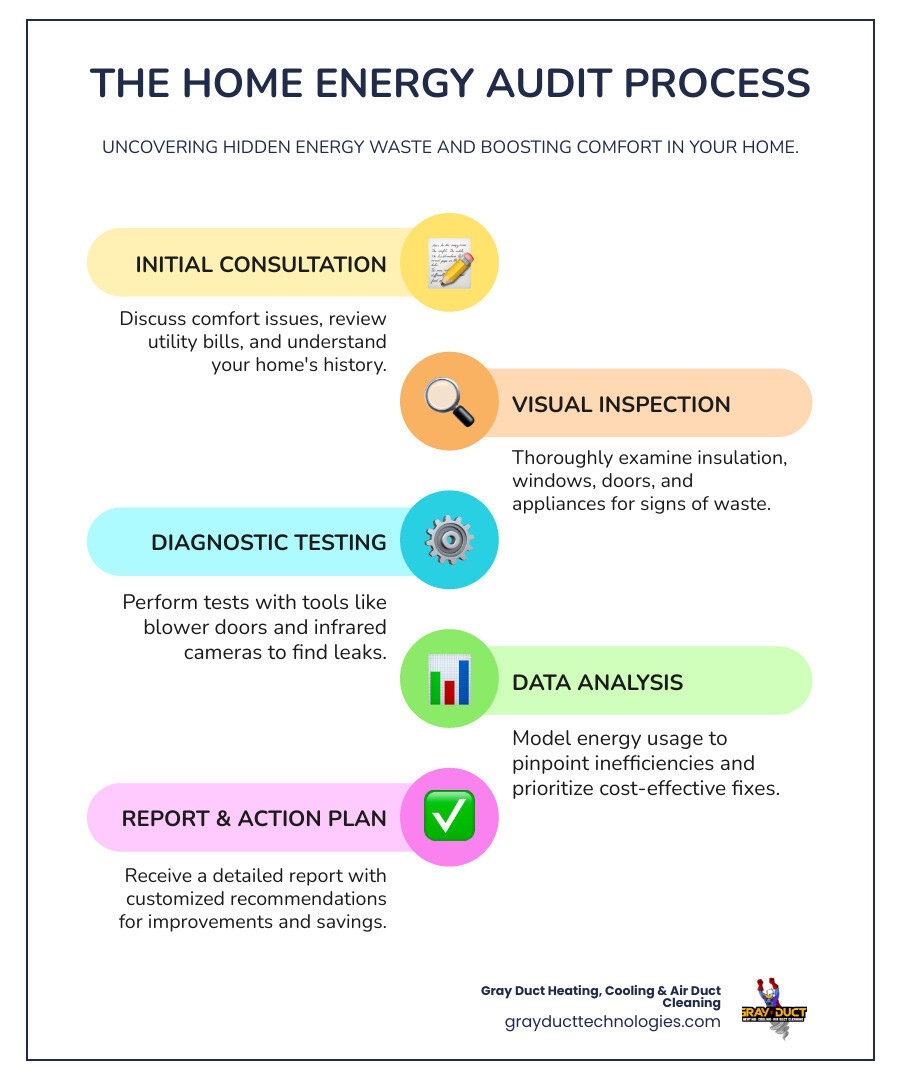
The Step-by-Step Process: What Happens During a Professional Energy Audit?
When a certified auditor arrives at your home in Bloomington or Woodbury, they follow a structured process that usually takes between 2 to 4 hours.
- Homeowner Interview: We want to know your pain points. Is the nursery always cold? Does the upstairs get sweltering in July? Your living patterns matter.
- Utility Bill Review: We look at at least one year of bills to find spikes in usage that don’t align with the weather.
- Room-by-Room Exam: The auditor checks every space, including the attic and crawlspace. They’ll look at lighting, appliances, and insulation levels.
- Diagnostic Testing: This is where the blower door and infrared cameras come out. They might also perform a duct leakage test to see how much conditioned air is escaping into your walls.
- Combustion Safety: This is the most important step. They check that your furnace and water heater are venting properly. Neglecting AC Maintenance & Utility Bills is a common issue, but safety is always the priority.
- Computer Modeling: The data is fed into software to calculate your home’s current efficiency. You might even use a SEER Calculator to see if upgrading an old AC unit is worth the investment.
- Final Report: You receive a detailed roadmap of recommended upgrades, ranked by how quickly they will pay for themselves.
Common Energy Loss Culprits Identified in Minnesota Homes
In the Twin Cities, we see the same “energy thieves” over and over again. Identifying these is the first step toward a more comfortable home.
- Attic Air Leaks: Heat rises. In the winter, your expensive heated air escapes through “bypasses”—gaps around chimneys, plumbing stacks, and light fixtures.
- Inadequate Insulation: Many older homes in Saint Paul or Minneapolis have insulation that has settled or was never thick enough to begin with. Our Insulation Services in Minneapolis, MN focus on bringing these areas up to modern R-value standards.
- Ductwork Gaps: If your ducts are leaking, you’re paying to heat your crawlspace or attic instead of your bedroom. Duct Sealing in Minneapolis, MN can fix this. The Dirty Ductwork Impact on HVAC is significant; leaks force the system to run longer, increasing wear and tear.
- Dirty Components: A layer of dust on your AC coils acts like a blanket, trapping heat. Regular HVAC Efficiency with AC Coil Cleaning restores performance. Similarly, Dirty Vents Affect Heating Performance by restricting airflow, making your furnace struggle to keep up.
- Phantom Loads: Electronics that stay plugged in (like chargers or old TVs) can account for a surprising amount of waste.
- Inefficient Lighting: Lighting usually accounts for about 10% of your electric bill. Switching to LEDs is one of the easiest energy wins.
Maximizing Your Investment: Tax Credits and Incentives for Efficiency Upgrades
The good news for 2026 is that the government and utility companies want you to be efficient. There are significant financial cushions available to offset the cost of these improvements.
- Federal Tax Credits: Under the Energy Efficient Home Improvement Credit, you can claim 30% of the cost of a home energy audit, up to a $150 maximum.
- Annual Limits: There is a total annual limit of $3,200 for efficiency tax credits. This encourages homeowners to spread improvements over a few years—for example, doing insulation this year and a heat pump next year.
- Smart Tech: Installing Smart Thermostats in Minneapolis, MN often qualifies for instant rebates from local utility providers like Xcel Energy or CenterPoint.
- HVAC Upgrades: When it’s time for a new system, knowing How to Choose an Energy-Efficient AC can save you thousands over the life of the unit. You can further How to Improve Air Conditioner Efficiency by pairing a new unit with the sealing and insulation work identified in your audit.
- Pool Pumps: If you have a pool, switching to a variable speed pump can reduce energy use by up to 75%, often qualifying for substantial rebates.
Frequently Asked Questions About Home Energy Audits
How can I prepare for a home energy audit?
To get the most out of your auditor’s time, gather at least 12 months of utility bills. Make a list of specific comfort concerns (like a room that never gets warm). Most importantly, clear a path to your attic hatch, crawlspace, and HVAC equipment so the auditor can move freely through the home.
How long does a home energy audit take?
It depends on the depth of the assessment. An introductory “check-up” or visual survey might only take 30 to 60 minutes. A comprehensive professional audit for a standard-sized home typically takes 2 to 4 hours.
Who should conduct a professional home energy audit?
Look for auditors with recognized certifications. The Building Performance Institute (BPI) and the Residential Energy Services Network (RESNET) are the gold standards. A certified auditor ensures that the safety checks—like identifying The Hidden Costs of a Dirty HVAC System During Winter—are handled with professional precision.
Conclusion
A home energy audit is more than just a list of chores; it’s a strategic plan for a better home. By identifying exactly where your Twin Cities house is leaking air or wasting power, you can invest your money where it will actually make a difference in your comfort and your bank account.
At Gray Duct Technologies, we are proud to be your local, family-owned experts in the South Metro and Twin Cities area. Our in-house certified team doesn’t just clean ducts; we understand the complex relationship between your home’s air quality, its efficiency, and your family’s health. Whether you need a detailed inspection or are ready to act on your audit’s findings, we are here to help.
Ready to take the first step toward a more efficient home? Explore our specialized Energy Audits in Minneapolis, MN and let us help you uncover your home’s true potential.
Need HVAC Help?
Our NADCA-certified technicians are ready to help with all your heating, cooling, and air quality needs.
Get Free EstimateMore Articles
 HVAC Tips
What to Do When Your AC and Furnace Share the Same Air Filter
 HVAC Tips
Addressing Drafty Rooms Before Winter: Duct Sealing vs. Window Replacement
 HVAC Tips
Dryer Vent Routing: Rigid Metal vs. Flexible Foil in Cold Climates
 HVAC Tips
Why We Inspect the Heat Exchanger So Closely During Fall Maintenance
 HVAC Tips
Upgrading to a Two-Stage Furnace: Is the Investment Worth It in Minnesota?
Related Articles
Ready to Get Started?
Whether you need a repair, maintenance, or a new system installation, our expert team is here to help.