Twin Cities Winter Survival Guide for Energy Efficiency
Gray Duct
Discover how to lower heating bills during extreme cold in Twin Cities: smart thermostats, seal drafts, furnace maintenance & more for 10-30% savings.
Why Extreme Cold Sends Twin Cities Heating Bills Through the Roof
How to lower heating bills during extreme cold is one of the most pressing questions for Twin Cities homeowners every January and February — when negative wind chills are the norm and furnaces run around the clock just to keep up. With the average U.S. household now spending close to $1,000 on heating each winter (up nearly 10% from the year before), and heating accounting for roughly 29% of a total utility bill, the stakes are real.
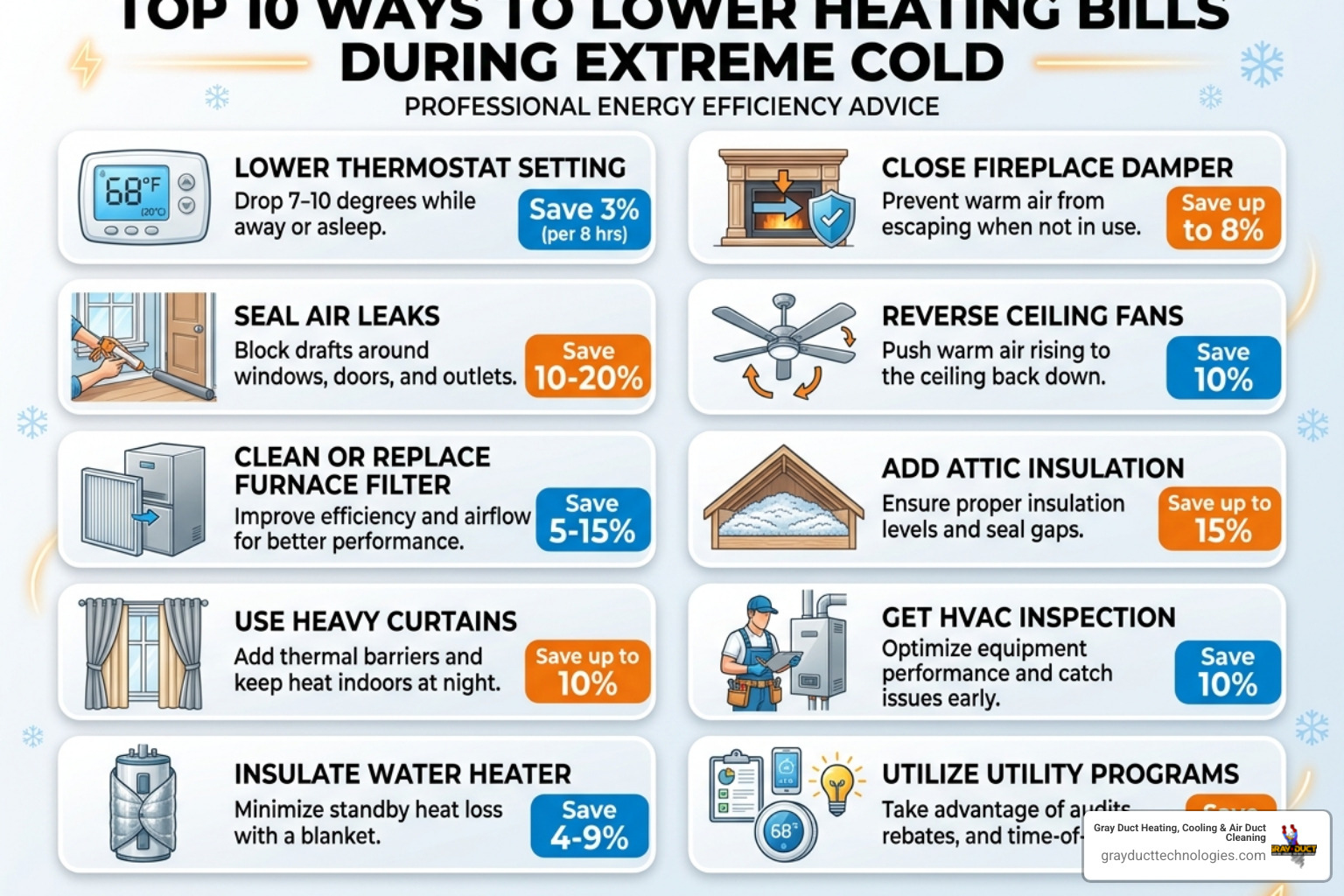
Here are the most effective ways to lower heating bills during extreme cold:
- Turn down the thermostat — Every 1-degree reduction saves up to 3%; dropping 7–10 degrees for 8 hours a day saves up to 10% annually
- Seal air leaks — Caulk and weatherstripping around windows, doors, and outlets can cut bills by 10–20%
- Change your furnace filter monthly — A clean filter reduces heating costs by 5–15% and prevents your system from overworking
- Use window coverings strategically — Open south-facing blinds during the day for solar heat; close all curtains at night to retain warmth
- Set your water heater to 120°F — Lowering it by 10 degrees saves 3–5% on water heating costs
- Keep fireplace dampers closed — An open damper acts like a wide-open window, pulling warm air straight up the chimney
- Reverse ceiling fans clockwise — This pushes warm air trapped near the ceiling back down into your living space
- Improve insulation — Better insulation in walls, crawl spaces, and ducts can save up to 10% on monthly energy bills
- Schedule a professional HVAC inspection — Especially if your furnace is over 15 years old or making unusual noises
- Ask about utility assistance programs — LIHEAP and budget-billing options exist to help manage high winter bills
The cold reality is that even a well-set thermostat won’t save you much if warm air is leaking out through gaps, dirty ducts, or a struggling furnace. Small fixes and consistent maintenance add up fast.
I’m Jason Giandalia, founder of Gray Duct Heating, Cooling & Air Duct Cleaning, and I’ve spent years helping Twin Cities homeowners diagnose exactly why their homes lose heat — and what to do about it, which is what knowing how to lower heating bills during extreme cold is all about. In this guide, I’ll walk you through every practical step, from quick behavioral changes to the maintenance tasks that make the biggest difference when temperatures drop below zero.
Immediate Actions: How to Lower Heating Bills During Extreme Cold
When the forecast calls for sub-zero temperatures in Minneapolis or St. Paul, you don’t have time to wait for a major renovation. You need immediate relief. One of the simplest “set it and forget it” strategies involves harnessing the sun. By opening south-facing blinds and curtains during the day, you allow solar radiation to naturally warm your home. As soon as the sun goes down, close those heavy drapes to create an extra layer of insulation against the glass.
Another quick win is ensuring all exterior doors are fully latched. It sounds simple, but a door that isn’t pulled tight can leak a massive amount of heat. Beyond these habits, How To Save Energy With Hvac Optimization is the most effective way to ensure your system isn’t wasting fuel.
| Thermostat Action | Estimated Savings |
|---|---|
| Lower by 1 degree (24/7) | Up to 3% on heating bill |
| Lower by 7-10 degrees (8 hours/day) | Up to 10% annually |
| Setting to 68°F while awake | Industry standard for balance |
| Dropping to 58°F while away | Maximizes savings without freezing pipes |
Smart Thermostat Settings: How to Lower Heating Bills During Extreme Cold
The Department of Energy recommends setting your thermostat to 68 degrees Fahrenheit while you are home and awake. If you find yourself shivering at that temperature, it is often a sign of poor insulation or air leaks rather than a furnace failure.
To really see a difference in your bill, we recommend a “setback” strategy. Lowering the temperature by 7 to 10 degrees for eight hours a day (like when you’re at work or sleeping) can save you up to 10% a year. Smart thermostats are the “masters” of this process; they can be programmed to auto-adjust based on your schedule and even be controlled remotely if you forget to turn the heat down before leaving for a weekend in May 2026.
Maintenance Tips: How to Lower Heating Bills During Extreme Cold
You wouldn’t drive your car 10,000 miles without an oil change, yet many homeowners forget their furnace filters. Changing your filter monthly during the peak of a Minnesota winter can reduce your heating costs by 5% to 15%. A dirty filter restricts airflow, which forces the blower motor to work harder, consuming more electricity and wearing out the system prematurely.
To stay on top of this, we recommend keeping a Winter Furnace Maintenance Checklist handy. Learning How To Spot Furnace Problems Early—such as strange noises or short-cycling—can save you from an expensive emergency repair in the middle of a blizzard.
Sealing Drafts and Air Leaks
Heat loss through windows accounts for roughly 25% to 30% of residential heating energy use. While new windows are a great long-term goal, you can achieve 10% to 20% savings right now by sealing air leaks. Use caulk to seal stationary gaps around window frames and electrical outlets on exterior walls. For moving parts like doors, apply fresh weatherstripping.
If your windows are particularly drafty, affordable DIY window sealing kits (plastic film) or thermal curtains can make a massive difference. These temporary fixes are incredibly cost-effective, often costing less than $30 in materials but paying for themselves in a single month.
Critical Maintenance for Peak Furnace Performance
In the Twin Cities, your furnace is the heart of your home. When it struggles, your comfort and your wallet both suffer. Many homeowners ask us why their house feels cold even when the heat is running. The answer is often restricted airflow. When air can’t move freely through your system, the furnace has to run longer cycles to reach the desired temperature.
Checking Is Your Furnace Ready For Freezing Temps 5 Signs It Needs A Winter Tune Up is the best way to avoid a breakdown when you need heat the most. We cannot overstate The Importance Of Regular Hvac Maintenance; it is the difference between a system that lasts 20 years and one that fails at 12. For those in the metro area, scheduling Hvac Maintenance In Minneapolis Mn ensures your burners are clean and your fan motor is lubricated for the long haul.
The Impact of Clean Vents and Ductwork
Think of your ductwork as the lungs of your home. If the “airways” are clogged with dust, pet hair, or construction debris, your furnace has to push air through a much narrower opening. This increases the static pressure within the system, leading to Dirty Vents Affect Heating Performance and higher bills.
Beyond just dust, The Hidden Costs Of A Dirty Hvac System During Winter And How To Fix Them include increased wear and tear on the blower motor. Professional duct cleaning ensures that 100% of the air your furnace heats actually makes it to your living rooms, rather than being trapped behind a wall of debris.
Professional Inspections and System Longevity
A standard furnace has a lifespan of about 15 to 20 years. If your unit is approaching that 15-year mark, it is likely significantly less efficient than modern Energy Star models. During a professional inspection, a technician will check the BTU (British Thermal Unit) output to ensure your system is properly sized for your home.
By How To Spot Furnace Problems Early, you can address issues like cracked heat exchangers or dirty burners before they become safety hazards. A clean burner ensures a more complete combustion process, meaning you get more heat out of every therm of natural gas you buy.
Maximizing Efficiency with Appliances and Long-Term Upgrades
While the furnace gets all the attention, your water heater is typically the second-largest energy consumer in your home during the winter. Most water heaters are factory-set to 140°F, which is often hotter than necessary and poses a scalding risk. By lowering the setting to 120°F, you can save 3% to 5% on your water heating costs.
Another “secret” weapon is your ceiling fan. Most people think fans are only for summer, but if you check our Winter Fan Direction Tips How To Stay Warm And Save Energy, you’ll see that reversing the rotation to clockwise creates an updraft. This gently pushes the warm air that naturally rises to the ceiling back down to the floor where you actually live.
Long-Term Home Improvements
If you’re looking for the biggest “bang for your buck” in May 2026, look toward your attic. Improving attic insulation can save up to 10% on your monthly energy bills. If you see icicles forming on your roof or snow melting quickly after a storm, that’s a primary indicator that heat is escaping through your ceiling.
Upgrading to Energy Star-certified equipment can reduce energy consumption by up to 30%. For those struggling with high bills, programs like the Low Income Home Energy Assistance Program (LIHEAP) or utility-sponsored budget billing can help even out costs. Residents looking for Hvac Maintenance In Bloomington Mn should also check for local rebates on high-efficiency equipment.
Advanced Energy Audits
If you want to stop guessing where your money is going, a professional energy audit is the answer. These audits often include:
- Blower Door Tests: A fan is used to depressurize the house, making it easy to find every tiny air leak.
- Infrared Scanning: Thermal cameras show exactly where insulation is missing inside your walls.
- Duct Inspections: Technicians look for leaks in your ductwork that can be sealed with mastic sealant or metal tape (never use standard duct tape for ducts!).
Frequently Asked Questions about Winter Energy Savings
What is the best temperature for a thermostat in winter?
The ideal balance for cost and comfort is 68°F while you are home. However, you should never let your home drop below 55°F, even when you are away on vacation. This minimum temperature is critical for preventing frozen pipes, which can lead to thousands of dollars in water damage if they burst during a cold snap.
Does closing vents in unused rooms save money?
No, this is a common myth that can actually cost you more. HVAC systems are designed to operate with a specific amount of air pressure. Closing vents increases the pressure in your ductwork, which can lead to leaks and put significant strain on the blower motor. This is one of the Top Causes Of Furnace Breakdowns we see in the Twin Cities. It is better to keep all vents open and lower the overall thermostat setting instead.
How often should I change my furnace filter during a cold snap?
During extreme cold, your furnace runs much more frequently, meaning it’s pulling more air (and more dust) through the filter. We recommend checking and replacing your filter every single month during the peak heating season. This simple task can lead to a 5% to 15% reduction in heating costs and keeps your indoor air cleaner.
Conclusion
Lowering your heating bills during a Minnesota winter doesn’t require a miracle—it requires a strategy. By combining immediate actions like sealing drafts and adjusting your thermostat with critical maintenance like duct cleaning and furnace tune-ups, you can stay warm without breaking the bank.
At Gray Duct Heating, Cooling & Air Duct Cleaning, we are proud to be your local, family-owned Twin Cities experts. Our certified, in-house technicians are here to ensure your system is running at peak efficiency, whether you’re in Minneapolis, Rochester, or Woodbury. For more tips on Budget Friendly Warmth How To Save On Heating Maintenance In Bloomington or to schedule your next service, Explore our full range of services today. Stay warm, Twin Cities!
Need HVAC Help?
Our NADCA-certified technicians are ready to help with all your heating, cooling, and air quality needs.
Get Free EstimateMore Articles
 HVAC Tips
What to Do When Your AC and Furnace Share the Same Air Filter
 HVAC Tips
Addressing Drafty Rooms Before Winter: Duct Sealing vs. Window Replacement
 HVAC Tips
Dryer Vent Routing: Rigid Metal vs. Flexible Foil in Cold Climates
 HVAC Tips
Why We Inspect the Heat Exchanger So Closely During Fall Maintenance
 HVAC Tips
Upgrading to a Two-Stage Furnace: Is the Investment Worth It in Minnesota?
Related Articles
Ready to Get Started?
Whether you need a repair, maintenance, or a new system installation, our expert team is here to help.