The Definitive Guide to Benefits of Regular HVAC Maintenance in Cold Weather
Gray Duct

Discover the benefits of regular HVAC maintenance in cold weather to boost efficiency, prevent breakdowns, and lower winter energy bills.
Why the Benefits of Regular HVAC Maintenance in Cold Weather Matter More Than You Think
The benefits of regular HVAC maintenance in cold weather are hard to overstate — especially if you live in the Twin Cities, where Minnesota winters push heating systems to their absolute limits. When temperatures drop below zero, your furnace isn’t just a comfort appliance. It’s a lifeline. And yet, most homeowners don’t think about their heating system until something goes wrong — usually during the coldest week of the year.
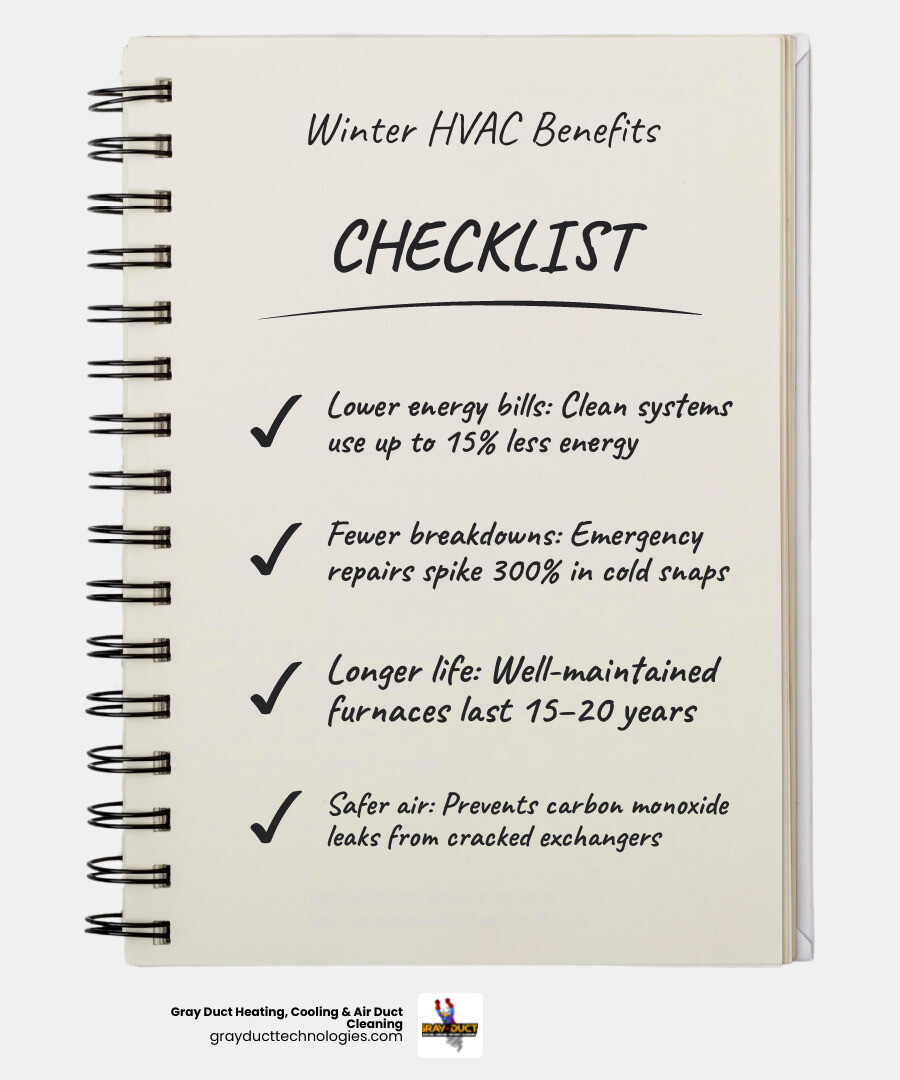
Here’s a quick look at the core benefits:
| Benefit | What It Means for You |
|---|---|
| Lower energy bills | Clean, tuned systems use up to 15% less energy |
| Fewer breakdowns | Emergency repair calls spike 300% during cold snaps — maintenance keeps you off that list |
| Longer equipment life | Well-maintained furnaces last their full 15–20 year lifespan |
| Better indoor air quality | Sealed winter homes trap pollutants 2–5x higher than outdoor levels |
| Improved safety | Prevents carbon monoxide leaks from cracked heat exchangers |
| Consistent comfort | No cold rooms, no short-cycling, no surprise shutdowns |
Heating and cooling account for roughly 52% of a household’s annual energy use. In a Minnesota winter, that number skews even higher. When your system is dirty, worn, or out of tune, you’re paying more for less heat — and rolling the dice on a breakdown every time the temperature plunges.
I’m Jason Giandalia, founder of Gray Duct Heating, Cooling & Air Duct Cleaning, and after years of diagnosing HVAC problems across the Twin Cities, I’ve seen how routine maintenance directly delivers the benefits of regular HVAC maintenance in cold weather — from lower utility bills to cleaner air to systems that simply don’t fail when you need them most. In this guide, I’ll walk you through exactly what those benefits look like and what it takes to get them.
Key Benefits of Regular HVAC Maintenance in Cold Weather

When we talk about the benefits of keeping your heating system tuned up, we aren’t just trying to sell you a service. We are talking about protecting one of the most expensive and critical appliances in your home. Minnesota winters are legendary for their unforgiving cold snaps. When the thermometer dips to -15°F in Minneapolis or Saint Paul, your furnace runs almost continuously to maintain a safe indoor temperature.
Without regular maintenance, minor issues like a layer of dust on the blower motor or a slightly loose electrical connection can quickly escalate. By scheduling professional upkeep before or during the peak winter months, you enjoy three primary advantages: enhanced system reliability, an extended equipment lifespan, and immediate utility savings.
When you ignore these preventative steps, you run into The Hidden Costs of a Dirty HVAC System During Winter, which often include higher energy bills, poor air distribution, and premature system failure.
How Energy Efficiency Drives the Benefits of Regular HVAC Maintenance in Cold Weather
At its core, energy efficiency is about how much work your furnace has to do to produce a specific amount of heat. If your system is clean and well-calibrated, it transfers heat effortlessly. However, when dust, pet dander, and debris accumulate on internal components, your system has to work twice as hard to achieve the same results.
- Airflow Optimization: A clean system ensures that air moves freely through your heat exchanger and out into your living areas. If airflow is restricted by dirty blowers or clogged filters, your furnace will run longer cycles to warm your home, consuming far more electricity and fuel.
- Reduced Energy Consumption: Did you know that a clean HVAC system can reduce overall energy consumption by up to 15%? Additionally, scientific studies by organizations like NADCA show that clean HVAC systems can reduce fan and blower motor energy consumption by an incredible 41% to 60%.
- Lower Utility Bills: Because heating and cooling make up roughly 52% of your annual energy use, even a modest 10% improvement in efficiency translates directly to noticeable savings on your monthly gas and electric bills.
- Enhanced Heat Transfer: Dirty burners or soot-covered heat exchangers act as insulation, preventing heat from transferring from the combustion chamber to your home’s air. Cleaning these parts restores optimal fuel efficiency, ensuring you get every bit of heat you pay for.
Why Preventing Emergency Breakdowns is Among the Top Benefits of Regular HVAC Maintenance in Cold Weather
There is nothing quite like the feeling of waking up at 3:00 AM on a January morning in Minnetonka or Plymouth to the sound of dead silence—and realizing you can see your breath in your own bedroom.
- Slowing Down Component Wear: A furnace is a complex machine with dozens of moving parts. When bearings lose lubrication, belts crack, or electrical connections loosen, it puts extra mechanical strain on the entire system. Routine maintenance catches these worn parts and replaces them before they cause a complete system failure.
- Surviving Cold Snaps: Emergency repair calls spike by roughly 300% during extreme cold snaps. When a deep freeze hits the Twin Cities, every HVAC company’s phone rings off the hook. If your system breaks down during a blizzard, you could wait hours—or even days—for a technician to arrive.
- Avoiding Emergency Surcharges: Emergency repairs scheduled during a holiday weekend or in the middle of a sub-zero night can be stressful and logistically challenging. Regular maintenance helps you identify failing parts on your own terms, during normal business hours, preventing sudden “no-heat” situations.
- System Failure Prevention: Most major furnace failures start as small, easily fixable issues. For instance, a dirty flame sensor can cause your furnace to shut down repeatedly, eventually damaging the ignition control board. A simple cleaning during a tune-up completely prevents this cascade of failures.
Essential Winter HVAC Maintenance Tasks for Homeowners
While we always recommend leaving complex electrical and combustion diagnostics to our certified, in-house team at Gray Duct Heating, Cooling & Air Duct Cleaning, there are several crucial maintenance tasks that homeowners can—and should—perform themselves. Keeping up with these tasks ensures your system operates smoothly between professional visits. For a detailed breakdown of what to look for, you can reference our comprehensive Winter Furnace Maintenance Checklist.
To keep your home safe and warm, make sure to add these DIY tasks to your monthly routine:
- Replace Your Air Filter Regularly: This is the single most important DIY task. Change your filter every 60 to 90 days, or every 30 to 60 days if you have pets or suffer from seasonal allergies.
- Clear Outdoor Vents and Intakes: Modern high-efficiency furnaces vent through plastic PVC pipes on the side of your home. After a heavy Minnesota snowfall or ice storm, check these pipes to ensure they aren’t blocked by snowdrifts or ice buildup. A blocked exhaust vent will cause your furnace to shut down immediately for safety reasons.
- Keep Vents and Registers Unobstructed: Ensure that furniture, heavy drapes, and rugs are not blocking your indoor supply and return vents. Blocking these registers restricts airflow, putting extra strain on your blower motor.
- Test Your Thermostat: Before the bitter cold sets in, test your thermostat to make sure it accurately reads the room temperature and properly triggers your heating system. Upgrading to a smart thermostat can also help you optimize your heating schedule and save money.
- Check Carbon Monoxide Detectors: Test every carbon monoxide detector in your home monthly and replace the batteries annually. This is your primary defense against silent, odorless gas leaks.
DIY Maintenance vs. Professional Tune-Ups
It can be tempting to think that changing your air filter is all your furnace needs to survive the winter. However, there is a massive difference between basic DIY housekeeping and a comprehensive professional tune-up.
A professional inspection involves advanced diagnostics that require specialized tools, safety training, and technical expertise. Here is how the two compare:
| Task | DIY Homeowner | Professional Technician |
|---|---|---|
| Air Filtration | Inspect and replace standard filters every 30–90 days | Verify proper filter fit, recommend MERV upgrades, inspect housing |
| Safety Inspections | Test carbon monoxide detectors; check vent pipes for snow | Use specialized equipment to test for gas leaks, inspect heat exchanger for hairline cracks |
| Electrical Systems | Check thermostat batteries | Measure voltage/draw, tighten all wiring harness connections, test safety limit switches |
| Mechanical System | Clear debris around the indoor furnace cabinet | Lubricate all moving parts, inspect blower wheel, check fan belt tension |
| Combustion System | Keep area around furnace clear of flammable items | Clean burners, inspect flame sensor, adjust gas pressure, test fuel-to-air combustion ratio |
| Ductwork | Wipe down dust from register grilles | Inspect duct integrity for leaks, check airflow balance, run specialized camera diagnostics |
By combining your monthly DIY efforts with an annual professional tune-up, you create a double layer of protection for your heating system, ensuring peak performance all winter long.
How Cold Weather Strains Your Heating System
To truly appreciate the benefits of regular HVAC maintenance in cold weather, it helps to understand exactly what happens to your heating equipment when the temperature drops. Extreme cold doesn’t just make your house colder; it physically changes how the materials inside your furnace or heat pump behave.
- Metal Contraction: When temperatures plummet, the metal components inside your heating system contract. This contraction can cause electrical connections to loosen, create gaps in ductwork, and put extra stress on the heat exchanger.
- Thickening Lubricants: Just like the motor oil in your car, the lubricants protecting your blower motor bearings and fan assembly can thicken in extreme cold. This increases friction, forcing the motor to draw more electrical current and run hotter, which can lead to premature motor burnout.
- Continuous Cycling: When it is -10°F outside, your home loses heat rapidly. Your furnace must run longer, more frequent cycles to keep up. This continuous operation accelerates wear and tear on ignition components, gas valves, and safety switches.
- Heat Pump Defrost Cycles: If you use a heat pump in a suburb like Lakeville or Woodbury, cold weather forces the outdoor unit to regularly enter “defrost mode” to melt ice off the coils. If the system isn’t perfectly maintained, these defrost cycles can fail, causing the outdoor unit to become a solid block of ice and forcing your system to rely on expensive backup electrical resistance heat.
If you suspect your system is struggling under this winter workload, keep an eye out for warning signs. You can learn what to look for by reading Is Your Furnace Ready for Freezing Temps? 5 Signs It Needs a Winter Tune-Up.
To help visualize this, let’s compare how a heating system operates under normal winter conditions versus how it behaves during an extreme Minnesota cold snap:
| System Component | Normal Winter Operation (30°F to 40°F) | Extreme Cold Strain (Below 0°F) |
|---|---|---|
| Blower Motor | Runs moderate cycles; lubricants flow easily; normal electrical draw | Runs almost continuously; thickened lubricants increase friction and electrical draw |
| Heat Exchanger | Steady heating cycles allow metal to expand and contract gradually | Rapid, extreme temperature swings cause metal fatigue and increase risk of cracking |
| Ignition Assembly | Cycles on and off a few times per hour; minimal component wear | Frequent cycling puts heavy stress on hot surface igniters or pilot assemblies |
| Thermostat & Controls | Easily maintains target temperature; system cycles normally | Struggles to keep up; system may “short-cycle” if safety limits are triggered by overheating |
| Ductwork | Small leaks waste minor amounts of air | Extreme pressure forces cold air in and wastes up to 20% to 30% of warm air through leaks |
Improving Indoor Air Quality During Sealed Winter Months
When winter arrives in Minnesota, we do everything we can to seal our homes tight. We install weatherstripping, seal windows, and close doors to keep the warm air in and the freezing draft out. While this is great for your energy bills, it creates a major challenge for your health: it traps indoor air pollutants.
According to the EPA, indoor air pollutants are often 2 to 5 times higher than outdoor levels. Because we spend up to 90% of our time indoors during the winter, we end up breathing in a concentrated soup of dust, pet dander, mold spores, bacteria, and seasonal viruses.
Your HVAC system’s ductwork acts as the respiratory system of your home. If your ducts are dirty, your heating system will continuously recirculate these contaminants through your living spaces. To understand why clean air ducts are so critical when your home is sealed shut for the season, read our guide on Breathe Easier This Winter: Why Air Duct Cleaning Matters More in Cold Weather.
At Gray Duct Heating, Cooling & Air Duct Cleaning, we don’t just focus on the mechanical side of your furnace. We look at your home’s air quality holistically. During a professional maintenance visit, we inspect your ductwork and can recommend advanced indoor air quality solutions, such as:
- Polarized Media Air Cleaners: These advanced filters use an active electrical charge to attract and capture ultra-fine particles that standard fiberglass filters miss, including smoke, bacteria, and microscopic allergens.
- UV Germicidal Lights: Installed inside your ductwork or near your system’s coils, UV lights safely destroy the DNA of airborne viruses, mold, and bacteria, preventing them from multiplying and spreading through your home.
- Whole-Home Humidifiers: Cold winter air is incredibly dry, which can dry out your nasal passages, irritate your throat, and make you more susceptible to winter colds. A whole-home humidifier keeps your indoor humidity balanced between the ideal 30% to 40% range, protecting your respiratory health and keeping your skin comfortable.
Frequently Asked Questions About Winter HVAC Upkeep
How often should you service your HVAC system for winter?
You should schedule a professional HVAC tune-up at least once a year for your heating system. The ideal time for this service is in the early autumn, before you turn your furnace on for the first time. However, if you missed the autumn window, a mid-winter tune-up is still highly beneficial.
Scheduling a maintenance visit in January or February is actually a strategic move. By mid-winter, your system has already logged hundreds of running hours and endured extreme cold snaps, making it easier for our certified technicians to spot worn components, loose connections, or minor safety issues before they turn into late-winter breakdowns.
What are the safety risks of skipping winter furnace maintenance?
Skipping annual furnace maintenance poses several severe safety hazards:
- Carbon Monoxide Poisoning: This is the most serious risk. If your furnace’s heat exchanger develops a hairline crack due to metal fatigue and dirt buildup, it can leak deadly, odorless carbon monoxide gas into your home’s air.
- Fire Hazards: Dust and lint accumulation near the burners or electrical wiring can ignite, causing a house fire. Loose electrical connections can also overheat and spark.
- Ventilation Blockages: Birds, pests, or falling debris can block your chimney or PVC vent pipes, forcing combustion gases back into your living areas.
Can a dirty air filter cause my furnace to shut down in freezing weather?
Yes, absolutely. A dirty air filter restricts the flow of air into your furnace. When airflow is blocked, the heat produced by the burners cannot be transferred out of the heat exchanger. As a result, the temperature inside the furnace cabinet rises rapidly.
To prevent the system from catching fire or cracking the heat exchanger, a safety control called a limit switch will trigger, immediately shutting down the furnace. This is known as “short-cycling.” If this happens repeatedly, the limit switch can fail, leaving you with a complete system shutdown and a costly emergency repair.
Conclusion
Investing in preventative care for your heating system is the best way to guarantee a warm, stress-free, and energy-efficient winter. The benefits of regular HVAC maintenance in cold weather — from lower gas and electric bills to breathing cleaner air and avoiding the nightmare of a midnight furnace breakdown — far outweigh the effort of scheduling a simple tune-up.
When you choose us, you are partnering with a local, family-owned business rooted right here in the Twin Cities. Our certified, in-house team handles every inspection, cleaning, and repair ourselves, without relying on third-party contractors. Whether you need a comprehensive furnace tune-up, professional air duct cleaning, or indoor air quality upgrades, we are here to help. We proudly serve homeowners across the South Metro and Twin Cities area, including Bloomington, Eagan, Plymouth, Lakeville, and Woodbury.
Don’t wait for the next major cold snap to find out if your furnace is up to the challenge. Protect your home, your family, and your wallet by scheduling your service today.
- To learn more about our local heating tune-up services, visit our Heating Maintenance in Minneapolis, MN page.
- Ready to book your appointment? Schedule your professional winter tune-up with Gray Duct Heating, Cooling & Air Duct Cleaning and enjoy peace of mind all winter long.
Need HVAC Help?
Our NADCA-certified technicians are ready to help with all your heating, cooling, and air quality needs.
Get Free EstimateMore Articles
 HVAC Tips
What to Do When Your AC and Furnace Share the Same Air Filter
 HVAC Tips
Addressing Drafty Rooms Before Winter: Duct Sealing vs. Window Replacement
 HVAC Tips
Dryer Vent Routing: Rigid Metal vs. Flexible Foil in Cold Climates
 HVAC Tips
Why We Inspect the Heat Exchanger So Closely During Fall Maintenance
 HVAC Tips
Upgrading to a Two-Stage Furnace: Is the Investment Worth It in Minnesota?
Related Articles
Ready to Get Started?
Whether you need a repair, maintenance, or a new system installation, our expert team is here to help.