The Complete Guide to Fogging After Duct Cleaning in Minneapolis
Gray Duct
Discover when fogging is recommended after duct cleaning to eliminate odors and improve indoor air quality for Twin Cities homeowners.
When Is Fogging Recommended After Duct Cleaning? A Quick Answer for Minneapolis Homeowners
When fogging is recommended after duct cleaning depends on what’s happening inside your HVAC system — not just how long it’s been since your last service. Here are the most common situations where fogging makes sense:
- After water damage or flooding — moisture creates ideal conditions for mold and bacteria to grow on duct surfaces
- When mold is confirmed or suspected — mechanical cleaning removes debris, but fogging kills spores that cling to duct walls
- After a house fire — smoke residue and odor molecules embed deep into ductwork where brushes can’t reach
- Moving into a new home — you don’t know what the previous occupants left behind in the system
- After major renovations — drywall dust and construction debris harbor moisture and can seed mold growth
- Persistent musty or foul odors — if smells return shortly after the fan kicks on, biological growth is likely the cause
- Homes with allergy or asthma sufferers — fogging provides an additional layer of pathogen control beyond physical cleaning
- As part of routine maintenance — every 3–5 years alongside a full mechanical cleaning for most Twin Cities homes
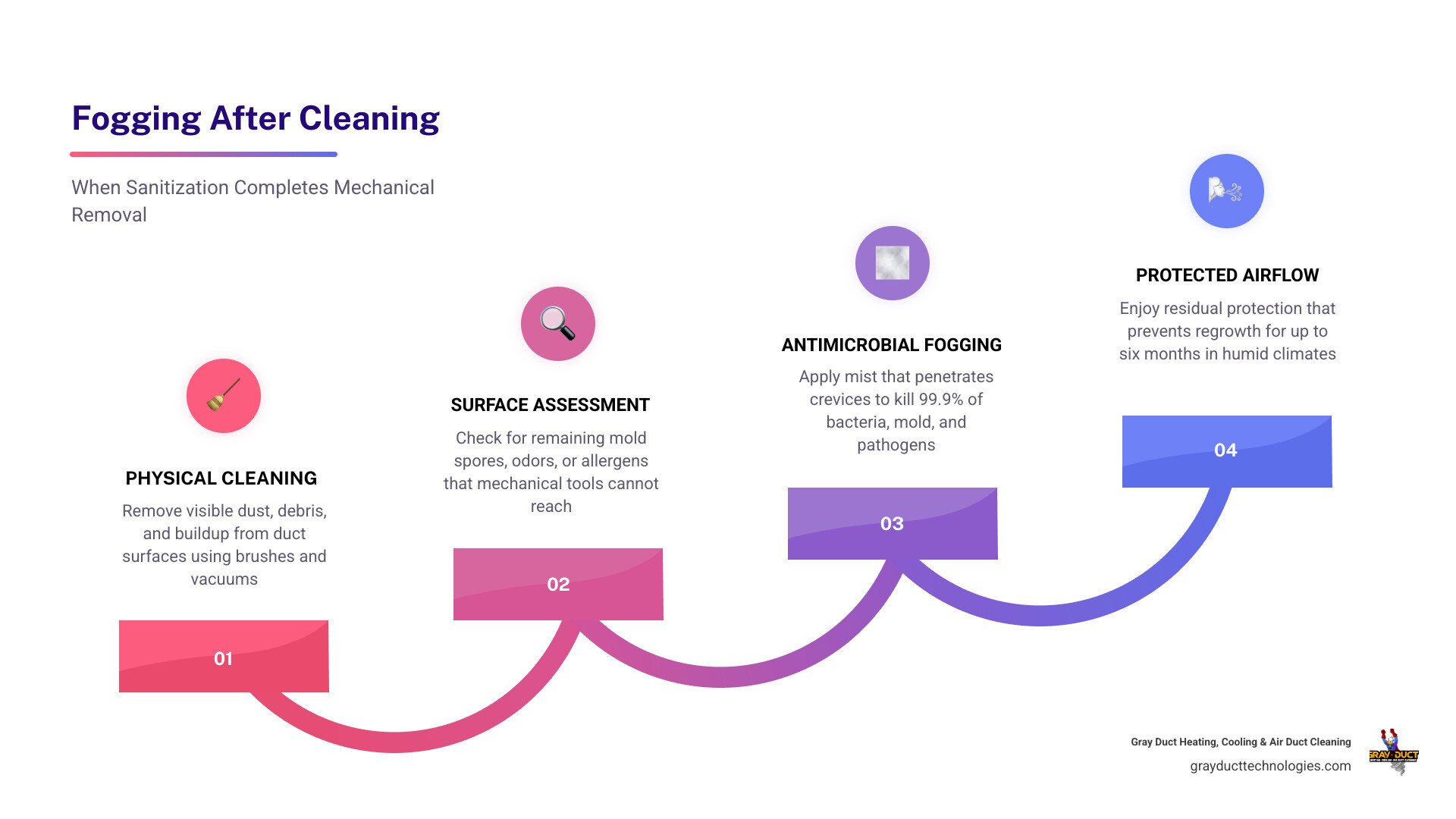
Fogging is not a replacement for physical duct cleaning — it works after debris has been removed to sanitize surfaces that brushes and vacuums simply can’t disinfect.
If your home’s air has felt heavier than it should — stale when the furnace kicks on, musty after a wet Minnesota spring, or just not quite right even after you’ve changed the filters — you’re not imagining it. The Twin Cities climate puts a unique strain on HVAC systems. Humid summers followed by bone-dry winters create the kind of condensation swings that make ductwork a surprisingly hospitable place for mold, bacteria, and allergens to take hold. Standard mechanical duct cleaning removes the visible buildup — the dust, debris, and settled contaminants. But it doesn’t kill what’s living on the interior duct surfaces. That’s where antimicrobial fogging comes in, and knowing when to use it is the difference between clean-looking ducts and genuinely cleaner air.
I’m Jason Giandalia, founder of Gray Duct Heating, Cooling & Air Duct Cleaning, and with NADCA’s ASCS certification and years of hands-on experience diagnosing indoor air quality issues across Minneapolis and the Twin Cities metro, I’ve developed a clear, no-shortcuts framework for determining when fogging is recommended after duct cleaning — and when it’s simply not necessary. In the sections below, I’ll walk you through exactly how to make that call for your home.
Understanding Air Duct Fogging vs. Standard Cleaning
To understand when fogging is recommended after duct cleaning, we first need to distinguish between the two processes. Think of your HVAC system as the “lungs” of your home. If those lungs are filled with dust, you need to vacuum them out. That is standard mechanical cleaning. But if those lungs have a lingering infection or persistent odor, you need a treatment that goes deeper than a simple vacuuming.
Standard duct cleaning is a mechanical process. We use high-powered HEPA-filtered vacuums and rotating brushes or air whips to physically dislodge and remove dust, pet dander, lint, and “construction Cheerios” (that’s our term for the random debris left behind by builders). This is essential because you cannot effectively sanitize dirt. If you spray a disinfectant over a layer of dust, the chemical never reaches the actual duct surface.
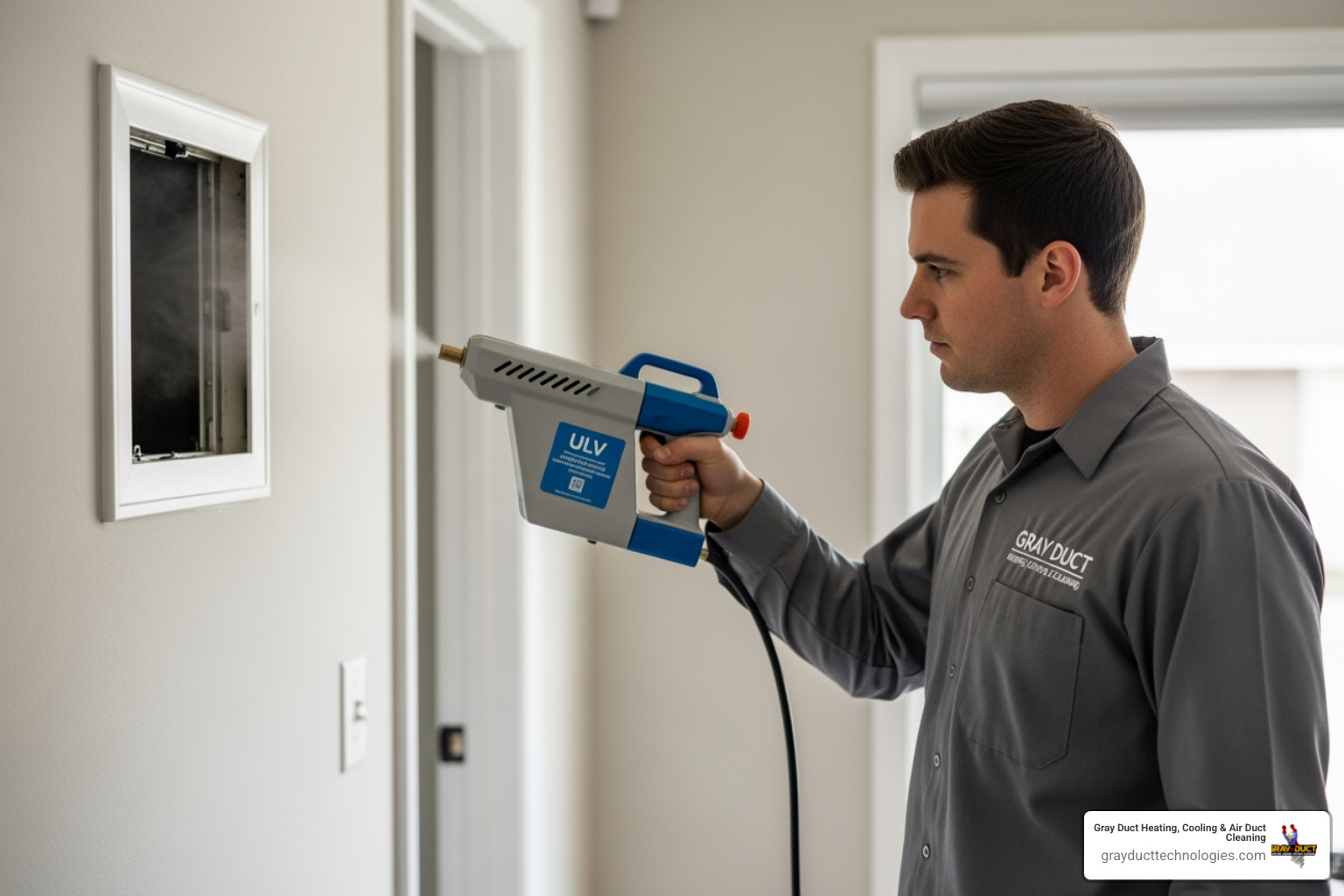
Duct fogging, also known as antimicrobial or antimicrobial treatment, is the “soap and water” stage that follows the “sweeping” stage. We use specialized equipment called ULV (Ultra-Low Volume) foggers. These machines turn a liquid antimicrobial solution into a fine mist with droplets ranging from 2 to 50 microns in size. Because these droplets are so small, they behave like air, traveling through every bend, corner, and coil in your system—areas that are physically inaccessible to even the best brushes.
| Feature | Standard Mechanical Cleaning | Antimicrobial Fogging (Sanitization) |
|---|---|---|
| Primary Goal | Physical removal of dust and debris | Neutralizing biological pathogens and odors |
| Tools Used | HEPA vacuums, brushes, air whips | ULV cold foggers, compressed air systems |
| Targets | Dust, hair, skin cells, cobwebs | Mold spores, bacteria, viruses, fungi |
| Odor Control | Removes source of dust-based smells | Chemically neutralizes deep-seated odors |
| Frequency | Every 3–5 years | Supplemental after cleaning or for specific issues |
As we discuss in Duct Fogging 101: How It Kills Mold and Bacteria, fogging serves as a “shock treatment.” It provides a 99.99% kill rate for disease-causing organisms and leaves behind a residual bacteriostatic activity that continues to inhibit growth for up to six months.
When is fogging recommended after duct cleaning for Twin Cities homeowners?
Living in areas like Bloomington, Eden Prairie, or Minnetonka means dealing with the “yo-yo” effect of Minnesota humidity. One week it’s a humid 90 degrees, and the next, we’re firing up the furnace. This constant cycling creates condensation within the ductwork, particularly near the A/C coils.
Here is a deeper look at when fogging is recommended after duct cleaning in our local climate:
Water Damage and Flooding
Whether it’s a burst pipe in Saint Paul or a basement backup in Lakeville, water damage is the number one reason to request fogging. Once ductwork gets wet, it becomes a breeding ground for mold and mildew. Even after the water is gone and the ducts are “cleaned,” microscopic spores remain. We recommend fogging as an essential finishing step to ensure those spores are neutralized before they can recolonize.
Mold Remediation
If we perform a camera inspection and find “hot spots” of mold growth, mechanical cleaning is only half the battle. Brushes can remove the visible mold, but they can also inadvertently spread spores throughout the system. Fogging acts as the final safeguard, killing any remaining spores and preventing regrowth. This is a vital part of The Importance of System Fogging for maintaining a healthy home environment.
Post-Renovation Dust
If you’ve recently remodeled your kitchen in Edina or finished a basement in Woodbury, your ducts are likely filled with fine drywall dust. This dust is highly absorbent and can trap moisture against the duct walls, creating a perfect environment for biological growth. Fogging after a post-construction cleaning ensures that any moisture-laden dust particles left in the crevices are sanitized.
Moving Into a New Home
When you buy a pre-owned home, you’re inheriting the biological history of the previous owners—their pets, their smoking habits, and their health history. We often recommend fogging for new homeowners who want a “clean slate” for their indoor air quality. It’s the best way to ensure your family isn’t breathing in the remnants of someone else’s environment.
Fire and Smoke Damage Recovery
Smoke molecules are incredibly small and incredibly sticky. They embed themselves into the porous surfaces of duct liners and the microscopic scratches in sheet metal. Standard cleaning might remove the soot, but the smell often lingers. Fogging uses specialized deodorizers that bind to and neutralize smoke molecules at the chemical level.
Persistent Musty Odors
Have you ever noticed a “dirty sock” smell when your A/C kicks on? This is usually caused by bacteria or mold growing on the damp coils or in the dark corners of the plenum. If a standard cleaning doesn’t solve the problem, fogging is the recommended next step to hit the “reset button” on your system’s internal environment.
The Science of Sanitization: How Fogging Works
At Gray Duct Technologies, we don’t just “spray and pray.” There is a specific science to how we apply these treatments to ensure they are both effective and safe for your family.
Identifying when fogging is recommended after duct cleaning for odor removal
Odors are more than just an annoyance; they are often a sign of volatile organic compounds (VOCs) or biological activity. When we determine when fogging is recommended after duct cleaning for odor control, we look at the source.
We use System Fogging Solutions like Bio-Fresh, a high-level disinfectant used in hospitals and medical environments. Unlike retail air fresheners that simply mask smells with perfumes, these professional-grade solutions destroy the bacterial spores and mycobacterium that cause the odors in the first place.
For homes with persistent pet odors or smoke residue, we use botanical agents, often based on Thymol (a derivative of the thyme plant). These solutions are non-corrosive and have a low rate of surface evaporation, meaning they stay on the duct walls long enough to neutralize the odor-causing particles completely.
Determining when fogging is recommended after duct cleaning for health and safety
For many of our clients in the Twin Cities, indoor air quality is a medical necessity, not a luxury. If a resident suffers from severe allergies, asthma, or a compromised immune system, the “microbial load” of the HVAC system matters immensely.
As detailed in our Guide to System Fogging Services, fogging provides a level of sanitization that is unrivaled in the industry. The EPA-registered disinfectants we use are designed to disrupt the cellular structure of microorganisms.
- Bacteriostatic Activity: One application of a quality disinfectant can provide residual protection for up to six months. This means that even if new spores enter the system, the treated surfaces are hostile to their growth.
- Pathogen Kill Rate: Our professional fogging solutions offer a 99.9% kill rate for mold, fungi, and bacteria. This is why fogging is standard practice in hospitals and dental clinics—and why it’s so effective for residential homes.
What to Expect During a Professional Fogging Service
If we decide that fogging is right for your home, the process is relatively quick and non-invasive. Here is what you should expect during a visit from our certified team:
- Preparation: We always perform the fogging after the full mechanical cleaning is complete. We ensure the HVAC system is off initially.
- Application: We use an electric ULV (Ultra-Low Volume) cold fogger. We typically introduce the mist into the main return air duct while the system’s fan is running. This allows the air pressure to carry the microscopic mist throughout the entire supply and return system, coating the plenum, coils, and all branch lines.
- Dwell Time: The solution needs a “dwell time”—usually between 30 to 60 minutes—to effectively bond with the surfaces and neutralize contaminants.
- Ventilation: After the treatment is complete, we recommend a brief period of ventilation. While the botanical solutions we use are incredibly safe, we suggest residents (and pets) stay out of the immediate area for 30 minutes to 2 hours, depending on the extent of the treatment.
- Drying: The mist is so fine that it doesn’t leave your ducts “wet” in a way that would cause damage; it creates a thin, protective film that dries quickly.
For more localized details, you can read about our specific approach in Everything You Need to Know About Professional Air Duct Fogging in Eden Prairie MN.
Frequently Asked Questions about HVAC Sanitization
Is fogging safe for pets and children?
Yes, provided the right products are used. We prioritize EPA Category IV disinfectants—the safest rating given to such products. Many of our preferred solutions are botanical, using ingredients like Thymol. These are non-toxic, biodegradable, and free from harsh chemical fumes. Once the dwell time is over and the home has been ventilated for about 30 to 60 minutes, it is perfectly safe for children and pets to return to the space.
How long does the protection from fogging last?
A professional application of an antimicrobial like Bio-Fresh or Sporicidin typically provides residual bacteriostatic activity for up to six months. This means it continues to inhibit bacterial growth on the duct surfaces long after we’ve left. However, the physical cleanliness of your ducts lasts much longer. We generally recommend a full professional duct cleaning every 3–5 years for most Twin Cities homes, with fogging being used as a supplemental “shock treatment” during those intervals or after specific events like water damage.
Can fogging be done without a full cleaning?
We strongly advise against it. As the saying goes, “you can’t sanitize dirt.” If your ducts have a significant accumulation of dust and debris, the fogging mist will simply settle on top of the dust. This can actually make problems worse by adding moisture to the debris, potentially fueling mold growth. In Choosing Between System Fogging and Traditional Duct Cleaning, we emphasize that physical source removal must always come first. Fogging is the “polish for purity” that finishes the job.
Conclusion
Determining when fogging is recommended after duct cleaning is about more than just checking a box on a maintenance list. It’s about responding to the specific needs of your home and the unique challenges of the Minnesota climate. Whether you’re dealing with the aftermath of a renovation in Maple Grove, moisture issues in Plymouth, or simply want the peace of mind that comes with a hospital-grade sanitized system in Minneapolis, fogging is a powerful tool for indoor air quality.
At Gray Duct Heating, Cooling & Air Duct Cleaning, we are a family-owned business deeply rooted in the Twin Cities. We don’t use third-party contractors; our in-house certified team handles every step of the process, from high-definition camera inspections to precision fogging. We believe that clean air is a fundamental part of a healthy home.
If you’re ready to clear the air and ensure your HVAC system is truly sanitized, we’re here to help. Explore our System Fogging services today and experience the difference that professional, local expertise can make for your family’s comfort and health.
Need HVAC Help?
Our NADCA-certified technicians are ready to help with all your heating, cooling, and air quality needs.
Get Free EstimateMore Articles
 HVAC Tips
What to Do When Your AC and Furnace Share the Same Air Filter
 HVAC Tips
Addressing Drafty Rooms Before Winter: Duct Sealing vs. Window Replacement
 HVAC Tips
Dryer Vent Routing: Rigid Metal vs. Flexible Foil in Cold Climates
 HVAC Tips
Why We Inspect the Heat Exchanger So Closely During Fall Maintenance
 HVAC Tips
Upgrading to a Two-Stage Furnace: Is the Investment Worth It in Minnesota?
Related Articles
Ready to Get Started?
Whether you need a repair, maintenance, or a new system installation, our expert team is here to help.