Step-by-Step Guide to Summer Duct and Vent Maintenance
Gray Duct

Prepare your home with summer duct and vent maintenance tips to boost airflow, cut energy costs, and improve indoor air quality.
Why Summer Is the Right Time to Act on Your Home’s Air Quality
Following summer duct and vent maintenance tips can make a real difference in how well your home cools, how clean your air feels, and how much you pay on your energy bill each month. As temperatures climb across the Twin Cities, your HVAC system shifts into its hardest-working months — and dirty ducts, clogged vents, and built-up debris can quietly drag down performance before summer even peaks.
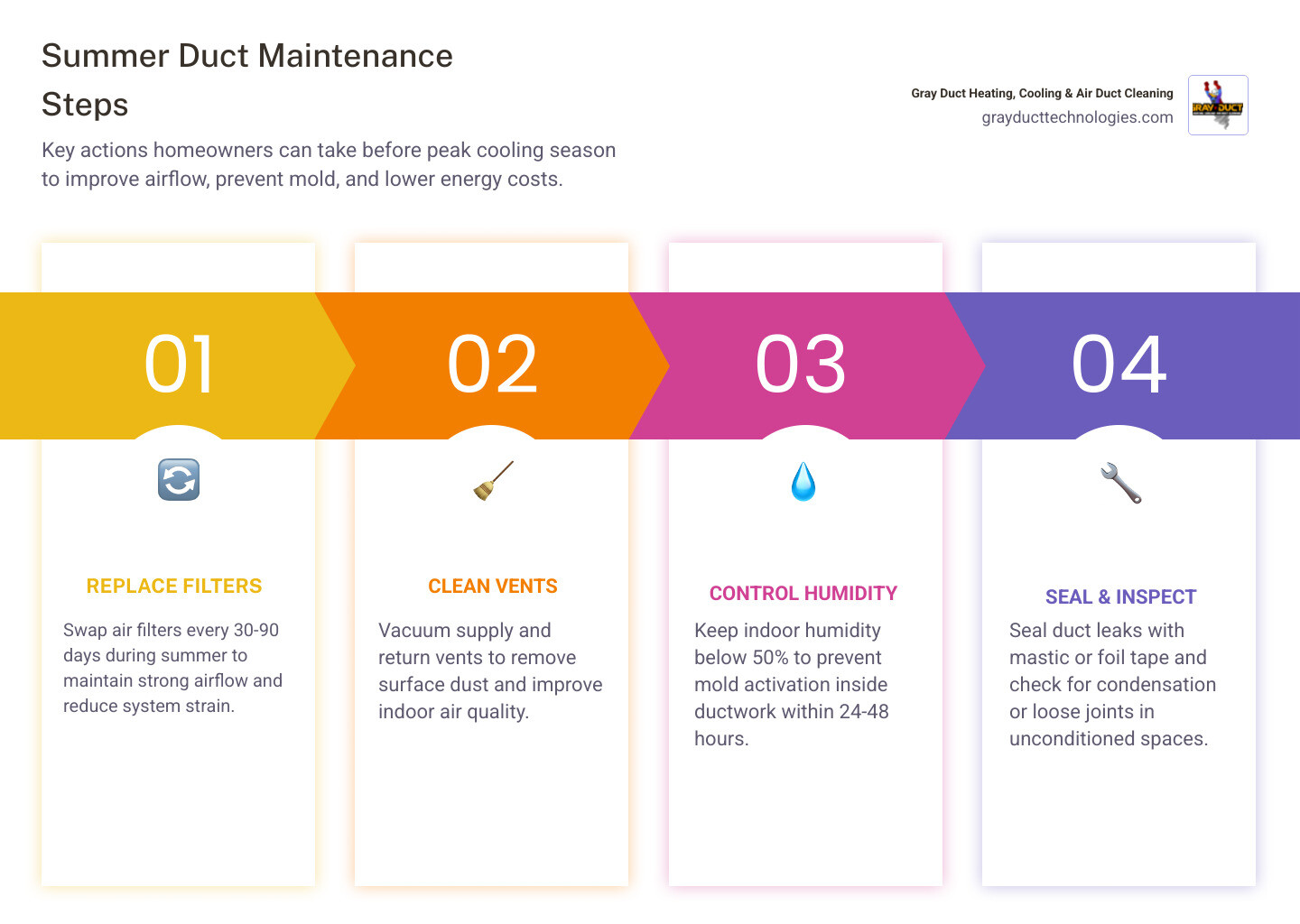
Here are the core summer duct and vent maintenance steps every Twin Cities homeowner should know:
- Replace your air filter every 30 to 90 days during cooling season
- Vacuum supply vents and return grilles to remove surface dust buildup
- Check for musty odors or uneven cooling, which can signal deeper duct issues
- Schedule professional duct cleaning every three to five years (or sooner with pets, allergies, or recent remodeling)
- Have your dryer vent cleaned annually to reduce fire risk
- Keep indoor humidity below 50% to prevent mold from activating inside ductwork
- Inspect visible duct sections in basements or utility rooms for loose joints or condensation
- Clear debris from your outdoor condenser unit before peak heat arrives
- Seal duct leaks with mastic sealant or foil tape to stop conditioned air from escaping
- Schedule professional AC coil cleaning to maintain cooling efficiency
After a long Minnesota winter with sealed windows and hard-running heating systems, dust, allergens, and debris accumulate inside ductwork at levels that most homeowners don’t see until performance starts to suffer. Summer brings a new set of challenges on top of that — high humidity creates conditions where mold can begin growing inside ducts within just 24 to 48 hours, and a poorly maintained AC system can consume 15 to 25% more electricity than a properly serviced one.
This guide walks you through exactly what to do, what to watch for, and when to call in a professional — so your home stays cool, clean, and efficient all summer long.
I’m Jason Giandalia, founder of Gray Duct Heating, Cooling & Air Duct Cleaning, a NADCA-certified ASCS and family-owned HVAC and indoor air quality company serving the Twin Cities metro. Over the years, I’ve seen how the right summer duct and vent maintenance tips can transform a home’s comfort, air quality, and energy efficiency — especially in Minnesota’s uniquely demanding climate. Let’s get into what actually works.
Why Pre-Season Summer Duct and Vent Maintenance Tips Matter

When the summer heat hits communities like Bloomington, Plymouth, and Woodbury, your air conditioning system becomes the most important appliance in your home. However, many homeowners forget that the air conditioner is only half of the cooling equation. The other half is the network of air ducts responsible for carrying that chilled air to every room.
Skipping seasonal duct and vent care before the peak cooling season places an immense burden on your cooling system. Over time, air ducts naturally collect dust, pet dander, pollen, and other airborne particles. When these contaminants clog your system, it restricts airflow, resulting in severe system strain. By prioritizing proactive maintenance, you protect your comfort and enjoy the many Regular Air Duct Cleaning Benefits that keep your household running smoothly.
Beating the Heat with Summer Duct and Vent Maintenance Tips
As we head deeper into May 2026, preparing your home for summer means ensuring that cold air can actually move freely. When dust and debris block your supply registers and return grilles, your air conditioner has to work twice as hard to push air through the narrow, clogged channels. This restriction directly impacts cooling performance, leading to warm spots in your home and an AC unit that runs constantly without ever reaching the set temperature on your thermostat.
By utilizing targeted summer duct and vent maintenance tips, you can optimize airflow and ensure your system is prepared for the humid days ahead. Consistent airflow balancing and vent cleaning are essential parts of proper HVAC Maintenance in Minneapolis MN, helping to ensure that your home remains a cool haven even during the hottest July heatwaves.
How Dirty Ducts Force Your AC to Work Overtime
Did you know that air conditioners account for about 12% of U.S. home energy expenditures? When you add dirty ductwork to the mix, those energy bills can skyrocket. According to industry data, a poorly maintained AC system can consume 15–25% more electricity than a properly serviced unit.
When dust builds up inside the ductwork, it creates friction that slows down airflow. The system has to run longer cycles to cool your home, which significantly increases electricity consumption. This extra strain doesn’t just raise your monthly utility bills; it also accelerates wear and tear on expensive HVAC components like the compressor and blower motor. Addressing these issues early prevents you from paying The Hidden Costs of a Dirty HVAC System During Winter and How to Fix Them, which can carry over from season to season and lead to unexpected, costly breakdowns.
The Threat of Summer Humidity and Mold Growth
Summer in Minnesota isn’t just hot — it is incredibly humid. This spike in moisture levels introduces a major threat to your home’s indoor air quality: mold. When hot, humid air from unconditioned spaces like attics or basements comes into contact with cold metal ductwork carrying air-conditioned air, the temperature differential causes the ducts to “sweat.”
This condensation acts as a catalyst. Mold can begin growing within 24–48 hours when moisture is introduced to duct surfaces. Once mold spores activate and establish colonies inside your dark ductwork, every blast of cool air from your AC system spreads these microscopic spores into your living spaces, affecting everyone in the household.
Indoor humidity above 50% is enough to trigger mold spore activation. To fight back, homeowners must monitor their indoor humidity levels and address condensation issues immediately. While we often think of clean air as a seasonal concern, understanding these humidity risks highlights why proactive care is just as critical now as it is during the colder months, a topic we explore in detail in Breathe Easier This Winter: Why Air Duct Cleaning Matters More in Cold Weather.
Protecting Indoor Air Quality from Summer Allergens
For residents in Eagan, Minnetonka, and Saint Paul, summer also brings high outdoor pollen counts. Every time doors or windows are opened, pollen, dust, and pet dander find their way inside and are pulled directly into your return vents.
Without regular maintenance, these allergens settle in the ductwork and recirculate continuously. Combined with the potential for biological growth from summer humidity, your indoor air can quickly become more polluted than the air outside. Regular cleaning removes these trapped particles, providing much-needed relief for asthma and allergy sufferers. Utilizing professional Air Duct Cleaning for Improved Indoor Air Quality is one of the most effective ways to eliminate these hidden triggers and ensure your family breathes clean, healthy air all summer.
Essential Summer Duct and Vent Maintenance Tips for Homeowners
To keep your cooling system running at peak performance, you need a balanced approach to duct and vent maintenance. Achieving maximum comfort requires a mix of smart airflow adjustments, basic DIY upkeep, and knowing when to call in the professionals.
One of the most effective ways to optimize summer airflow is through damper balancing. Many homes feature manual duct dampers — small metal levers located on the main duct branches in your basement or utility room. In the summer, you can adjust these dampers to direct more conditioned air to the warmer upper levels of your home and restrict airflow to naturally cooler basements.
Additionally, focus your attention on ductwork running through unconditioned spaces like attics, crawl spaces, or unfinished basements. If these ducts are uninsulated, they will absorb ambient heat, warming the air before it ever reaches your rooms. Wrapping these ducts in R-6 or higher fiberglass insulation and sealing them tightly prevents energy loss and keeps your system from wasting energy.
DIY Summer Duct and Vent Maintenance Tips You Can Do Safely
While deep duct cleaning requires specialized tools, there are several low-risk maintenance tasks that homeowners in Eden Prairie, Maple Grove, and Lakeville can safely perform themselves:
- Filter Replacement: Change your HVAC filter every 30 to 90 days. If you have pets or severe allergies, check it every 30 days. Replacing a clogged filter is the easiest way to prevent airflow restriction.
- Vacuuming Registers: Remove your vent grilles and use a vacuum with a soft brush attachment to clean out visible dust and pet hair from the register openings. Wipe down the grilles with mild soap and water before replacing them.
- Clearing the Outdoor Condenser: Your outdoor AC unit needs room to breathe. Clear away grass clippings, leaves, weeds, and branches within a two-foot radius around the unit to maintain proper heat transfer.
To help you manage your summer maintenance checklist, here is a quick comparison of what you can handle yourself versus what requires professional expertise:
| Maintenance Task | DIY Safety Level | Recommended Frequency | What It Accomplishes |
|---|---|---|---|
| Air Filter Replacement | Completely Safe (Easy DIY) | Every 30–90 Days | Protects blower motor, maintains basic airflow |
| Register & Grille Vacuuming | Safe (Moderate DIY) | Every 3 Months | Removes surface dust, improves room-to-room aesthetics |
| Outdoor Condenser Clearance | Safe (Easy DIY) | Monthly in Summer | Prevents system overheating, maintains heat transfer |
| Duct Inspection & Leak Sealing | Moderate (DIY-Friendly) | Annually | Stops conditioned air from escaping into walls/attic |
| Deep Duct & Vent Cleaning | Professional Only | Every 3–5 Years | Extracts deep-seated dirt, mold, and allergens using negative pressure |
| A/C Coil Cleaning | Professional Only | Annually | Restores cooling efficiency and heat absorption capabilities |
When to Call Professionals for Deep Cleaning
While DIY steps are excellent for surface maintenance, they cannot replace a comprehensive, system-level professional cleaning. Standard household vacuums do not have the power to clean deep inside your duct network, and attempting to use DIY brushes can accidentally push debris deeper or damage flexible duct joints.
Professional technicians use specialized, truck-mounted negative pressure vacuums and high-velocity air scrubbers to safely extract pounds of dust, pet hair, and biological contaminants without releasing them into your living spaces. If you are wondering whether your home is due for a professional service, check out our guide on How Often Should You Clean Air Ducts? as well as our complete resource on Everything You Need to Know About Air Duct Cleaning Frequency to determine the perfect schedule for your household.
Don’t Forget the Dryer Vent: Preventing Summer Fire Hazards
While maintaining your air ducts is essential for comfort, maintaining your dryer vent is critical for your family’s safety. Many homeowners don’t realize that failure to clean and maintain dryers is the leading cause of residential dryer fires in the United States.
Over the course of a year, highly flammable lint bypasses your dryer’s lint trap and accumulates inside the narrow exhaust duct. During the hot summer months, your dryer already runs hotter due to higher ambient temperatures. When lint restricts the exhaust airflow, heat builds up rapidly inside the appliance, creating a severe fire hazard.
We recommend having dryer vents cleaned once a year to reduce your risk of a house fire. Regular cleaning doesn’t just protect your home; it also improves your dryer’s efficiency, ensuring clothes dry faster and reducing wear on the appliance. To learn more about how we clear these hazards from your laundry line, explore our professional Dryer Vent Cleaning services.
Frequently Asked Questions About Summer Duct Care
How often should I schedule professional air duct cleaning?
For most standard households, we recommend scheduling professional duct cleaning every three to five years. However, this timeline can change depending on your living situation. If you have household pets that shed, family members who suffer from asthma or seasonal allergies, or if you have recently completed a home remodeling project, you should schedule cleanings more frequently.
For residents looking to restore their home’s air quality, scheduling a professional service with our certified team is the best way to start fresh. Learn more about our regional services on our Professional Air Duct and Dryer Vent Cleaning Minneapolis St. Paul MN page.
What are the signs that my air ducts need immediate cleaning?
Your ductwork will usually let you know when it is overwhelmed by dust and debris. Watch out for these common warning signs:
- Uneven Cooling: Some rooms feel ice-cold while others remain warm and stuffy.
- Rapid Dust Return: You find a thick layer of dust settling on your furniture just a day or two after deep cleaning.
- Musty Odors: A distinct, damp, or musty smell fills the air as soon as your air conditioner starts running.
- Visible Vent Buildup: Dark, dusty “mats” or fuzzy lint layers are visible on your supply registers and return grilles.
Can sealing my ducts really lower my summer cooling bills?
Yes, absolutely! According to Energy.gov, the average home loses about 20% to 30% of the air that moves through its duct system due to leaks, holes, and poorly connected joints. By sealing these leaks and insulating your ducts properly, you can reduce your summer cooling costs by up to 20%.
To seal these gaps permanently, professional HVAC technicians use a combination of high-durability mastic sealant and UL-listed foil tape. Traditional “duct tape” actually degrades quickly under temperature changes, so using the correct professional materials is essential for long-term savings.
Conclusion
Taking care of your air ducts and vents is one of the most effective ways to prepare your home for the peak summer heat. By applying these summer duct and vent maintenance tips — from simple DIY filter changes to scheduling professional deep cleanings — you can protect your indoor air quality, lower your monthly energy bills, and keep your air conditioner running reliably for years to come.
At Gray Duct Heating, Cooling & Air Duct Cleaning, we are proud to be a family-owned, local business serving homeowners across the Twin Cities metro, from Minneapolis and Saint Paul to surrounding suburbs like Burnsville, Chanhassen, and Woodbury. We never use third-party contractors; our in-house, certified team handles every job with the highest level of care and precision.
Ready to breathe easier and maximize your home’s cooling efficiency this summer? Contact us today to schedule your professional Air Duct Cleaning and experience the difference that a truly clean HVAC system can make!
Need HVAC Help?
Our NADCA-certified technicians are ready to help with all your heating, cooling, and air quality needs.
Get Free EstimateMore Articles
 HVAC Tips
What to Do When Your AC and Furnace Share the Same Air Filter
 HVAC Tips
Addressing Drafty Rooms Before Winter: Duct Sealing vs. Window Replacement
 HVAC Tips
Dryer Vent Routing: Rigid Metal vs. Flexible Foil in Cold Climates
 HVAC Tips
Why We Inspect the Heat Exchanger So Closely During Fall Maintenance
 HVAC Tips
Upgrading to a Two-Stage Furnace: Is the Investment Worth It in Minnesota?
Related Articles
Ready to Get Started?
Whether you need a repair, maintenance, or a new system installation, our expert team is here to help.