How to Understand Fogging Benefits in Duct Cleaning
Gray Duct
Learn how antimicrobial fogging adds to duct cleaning by targeting microbes after source removal for fresher Twin Cities air.
Why the Two-Step Approach Matters for Your Home’s Air
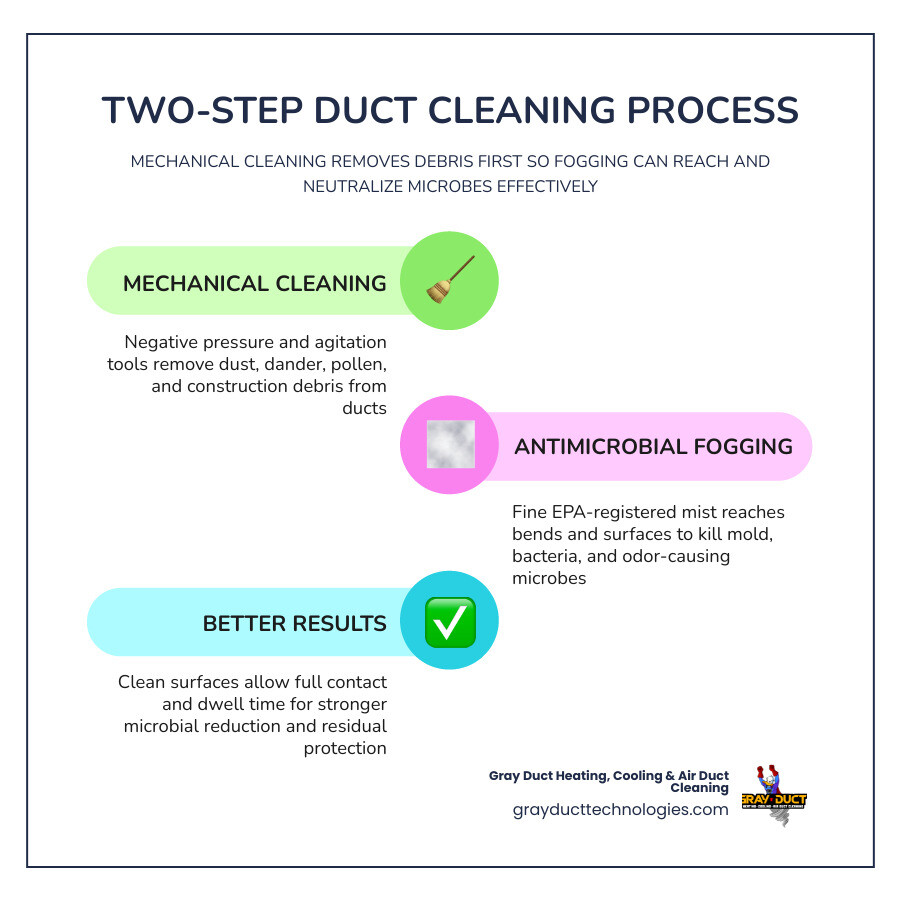
How antimicrobial fogging adds to duct cleaning is a two-step process: mechanical cleaning physically removes dust, debris, and buildup from your duct surfaces, and antimicrobial fogging then disperses a fine EPA-registered mist through the system to neutralize mold, bacteria, fungi, and other microbes that vacuuming alone cannot eliminate.
- Step 1 – Mechanical duct cleaning: Removes physical debris — dust, pet dander, pollen, construction particles — using negative pressure and agitation tools
- Step 2 – Antimicrobial fogging: Introduces a fine antimicrobial mist into the cleaned duct system, reaching bends, coils, and surfaces brushes cannot touch
- Why order matters: Fogging applied over dust and debris is far less effective — the debris blocks contact with duct surfaces and reduces kill rates
- What fogging targets: Mold spores, bacteria, fungi, viruses, biofilms, and odor-causing microbes left behind after mechanical cleaning
- When it is most useful: After water damage, mold events, renovations, pest activity, or in homes with allergy or asthma sufferers
If you have ever walked past a vent and caught a musty smell you could not explain, or noticed that allergy symptoms seem worse indoors than outside, your duct system may be holding onto more than just dust. Standard duct cleaning handles the physical side of that problem. But the microscopic side — mold colonies, bacterial biofilms, and odor-producing microbes — requires a different approach entirely.
I’m Jason Giandalia, founder of Gray Duct Heating, Cooling & Air Duct Cleaning, and after years of inspecting and cleaning HVAC systems across the Twin Cities, I have seen how understanding how antimicrobial fogging adds to duct cleaning changes the results homeowners get from their indoor-air-quality investments.
Mechanical Cleaning First, Fogging Second
Mechanical duct cleaning and antimicrobial fogging are not the same service. They solve different parts of the indoor air quality puzzle. Think of mechanical cleaning as removing the clutter from a room. Fogging is more like sanitizing the surfaces after the clutter is gone. If you skip the first step, the second step cannot do its job well.
| Category | Mechanical duct cleaning | Antimicrobial fogging |
|---|---|---|
| Main purpose | Physically removes dust, debris, dander, pollen, and buildup | Reduces microbial contamination on cleaned surfaces |
| Best for | Dust buildup, airflow restrictions, construction debris, pet hair | Mold spores, bacteria, fungi, biofilms, musty odors |
| Tools used | Negative pressure, agitation tools, brushes, HEPA collection | ULV fogger dispersing a fine antimicrobial mist |
| Works on dust? | Yes | No, fogging does not remove dust |
| Best sequence | First | Second |
Mechanical duct cleaning removes what fogging cannot
Mechanical source removal is the foundation. During a proper air duct cleaning, the system is inspected, placed under negative pressure, and cleaned with agitation tools that loosen debris from duct surfaces. That loosened material is pulled into high-powered collection equipment instead of being pushed back into your living space. This removes household dust, pet dander, pollen, lint, construction debris, drywall dust, hair, and loose mold-contaminated dust. Fogging cannot vacuum a duct or remove a layer of dust. That is why source removal comes first.
How fogging targets what remains
After the heavy debris is removed, antimicrobial fogging can reach areas that are difficult for brushes and vacuums to fully contact. A professional fogging process disperses an EPA-registered antimicrobial solution as a fine mist that moves through supply ducts, return ducts, bends and transitions, and hard-to-reach duct surfaces. It targets microscopic contaminants that may remain after cleaning, including mold spores, bacteria, fungi, odor-causing microbes, and biofilm-forming organisms. For more detail, see Duct Fogging 101: How It Kills Mold and Bacteria.
Why fogging should follow cleaning instead of replacing it
Fogging works by making contact with surfaces for a required dwell time. If dust, lint, and debris are covering those surfaces, the fog may land on the dirt instead of the duct material or microbial residue underneath. Industry guidance from NADCA emphasizes source removal as the first priority in HVAC cleaning, and the EPA advises that products must be used according to their labels. Clean first. Fog second.
How Antimicrobial Fogging Works Inside an HVAC System
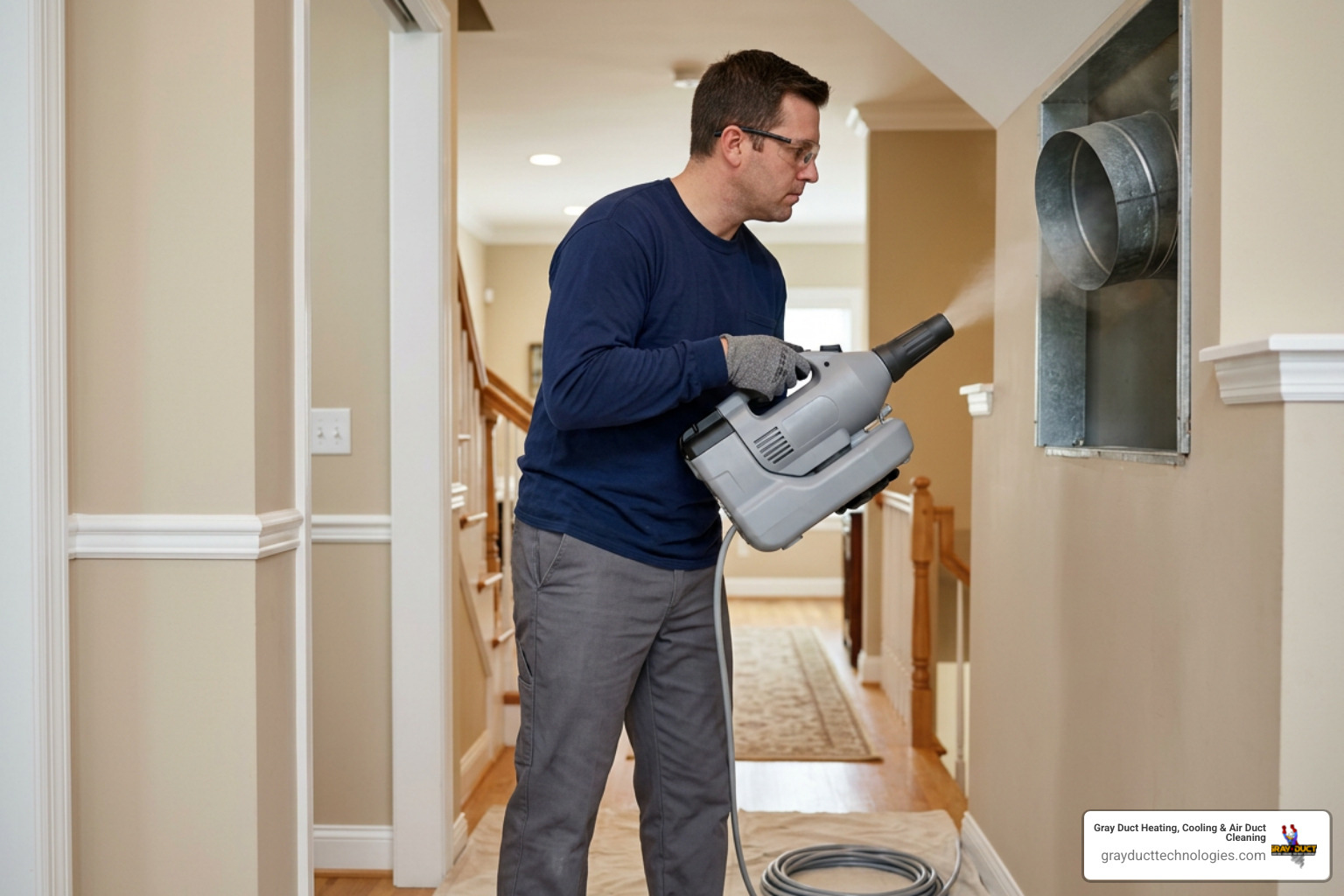
Antimicrobial fogging uses specialized equipment to atomize an approved solution into very small droplets for even distribution through the cleaned duct system. A typical process includes inspecting the duct system, completing mechanical cleaning first, selecting an EPA-registered product, applying the mist through supply and return sides, allowing proper dwell time per the label, ventilating the home before re-entry, and reviewing post-treatment recommendations.
What residual protection can and cannot do
Some antimicrobial fogging products provide residual protection after application, ranging from about 30 days to several months depending on the product. But residual protection is not permanent. It can be affected by indoor humidity, water leaks or condensation, filter quality, dust load, pet activity, HVAC run time, and whether the original contamination source was fixed. If moisture keeps returning, microbes can return too. Fogging is part of a maintenance plan, not a permanent force field.
When Homeowners Should Consider Adding Fogging
Fogging is most useful when there is a biological or odor-related concern. Consider adding antimicrobial fogging after duct cleaning when you are dealing with:
- Musty odors from vents
- Visible or suspected microbial growth
- A history of water damage or moisture intrusion
- Recent mold remediation
- Remodeling or construction dust
- Persistent pet odors
- Seasonal allergy flare-ups indoors
- A pre-owned home where you want a cleaner starting point
- High-risk household members, such as infants, elderly occupants, or immunocompromised residents
Fogging is not automatically needed in every home. It may not be necessary if the duct inspection looks clean and dry, there are no odors or signs of biological contamination, ducts were recently cleaned, and occupants are not experiencing indoor-air-related symptoms. We do not believe in adding chemical treatments just because they sound fancy.
How often to schedule fogging
There is no one-size-fits-all schedule. Common intervals range from every 2 to 3 years to every 3 to 5 years, depending on the home, occupants, pets, moisture conditions, and product used. Fogging may be recommended sooner after water damage, mold remediation, major renovations, pest activity, or a confirmed microbial concern. The best first step is an inspection, not a calendar guess.
Safety Considerations
Safety depends on product selection, correct application, and homeowner preparation. Children, pets, and sensitive individuals should be out of the treated area during application. People with asthma, chemical sensitivity, or immune concerns should discuss precautions before service. Re-entry should only happen after the recommended dwell, drying, and ventilation period. DIY spraying into vents is not recommended.
Fogging Compared With Other Indoor Air Quality Options
Each indoor air quality solution has a different job. High-quality HVAC filters capture airborne particles but do not replace duct cleaning. UV lights provide continuous microbial control near coils but do not replace mechanical cleaning. Portable air purifiers help clean air in specific rooms. Indoor air quality works best as a layered plan: clean the ducts when needed, maintain the HVAC system, change filters, manage humidity, clean coils, and use fogging when microbial concerns are present.
Frequently Asked Questions
Is antimicrobial fogging safe for pets and children?
Yes, when the correct EPA-registered product is used according to label directions and the home is properly ventilated before re-entry. That said, children, pets, elderly family members, and anyone with respiratory sensitivity should stay out until the recommended re-entry time has passed.
Can fogging remove dust from air ducts?
No. Fogging does not remove dust from air ducts. It is a sanitizing step, not a debris-removal step. If dust is the main issue, start with duct cleaning. If microbes, odors, or moisture history are also part of the issue, fogging may be a smart second step.
What should homeowners look for in a duct cleaning and fogging company?
Look for a company that puts inspection and source removal first, explains clearly whether fogging is actually needed, cleans mechanically before antimicrobial application, uses EPA-registered products per label directions, and provides ventilation and re-entry instructions. At Gray Duct, our in-house team handles the work directly.
Conclusion
Antimicrobial fogging is not a replacement for duct cleaning. It is the next step when your system needs more than dust removal. Mechanical duct cleaning removes the physical buildup; antimicrobial fogging adds a sanitizing layer that targets mold spores, bacteria, fungi, biofilms, and odor-causing microbes on cleaned surfaces. Used in the right order, with the right product, and for the right reason, the two services work together to support cleaner indoor air.
Gray Duct Heating, Cooling & Air Duct Cleaning is a family-owned Twin Cities company providing air duct cleaning, system fogging, A/C coil cleaning, dryer vent cleaning, HVAC services, and indoor air quality solutions. To learn more or schedule service, visit our system fogging page.
Need HVAC Help?
Our NADCA-certified technicians are ready to help with all your heating, cooling, and air quality needs.
Get Free EstimateMore Articles
 HVAC Tips
What to Do When Your AC and Furnace Share the Same Air Filter
 HVAC Tips
Addressing Drafty Rooms Before Winter: Duct Sealing vs. Window Replacement
 HVAC Tips
Dryer Vent Routing: Rigid Metal vs. Flexible Foil in Cold Climates
 HVAC Tips
Why We Inspect the Heat Exchanger So Closely During Fall Maintenance
 HVAC Tips
Upgrading to a Two-Stage Furnace: Is the Investment Worth It in Minnesota?
Related Articles
Ready to Get Started?
Whether you need a repair, maintenance, or a new system installation, our expert team is here to help.