How to Eliminate Mold in Ductwork with System Fogging
Gray Duct
Discover how system fogging eliminates mold in ductwork with safe, effective antimicrobial treatment for cleaner air in Twin Cities homes.
Why Mold in Your Air Ducts Is a Bigger Problem Than You Think
How system fogging eliminates mold in ductwork is something every Twin Cities homeowner with musty odors, worsening allergies, or a history of water damage deserves to understand. In short, system fogging uses a ULV (ultra-low volume) machine to push a fine antimicrobial mist — with droplets between 5 and 50 microns — throughout your entire duct system. That mist floats through the ductwork for around 10 minutes after application, coating surfaces, neutralizing mold spores, and reaching areas no brush or vacuum can access.
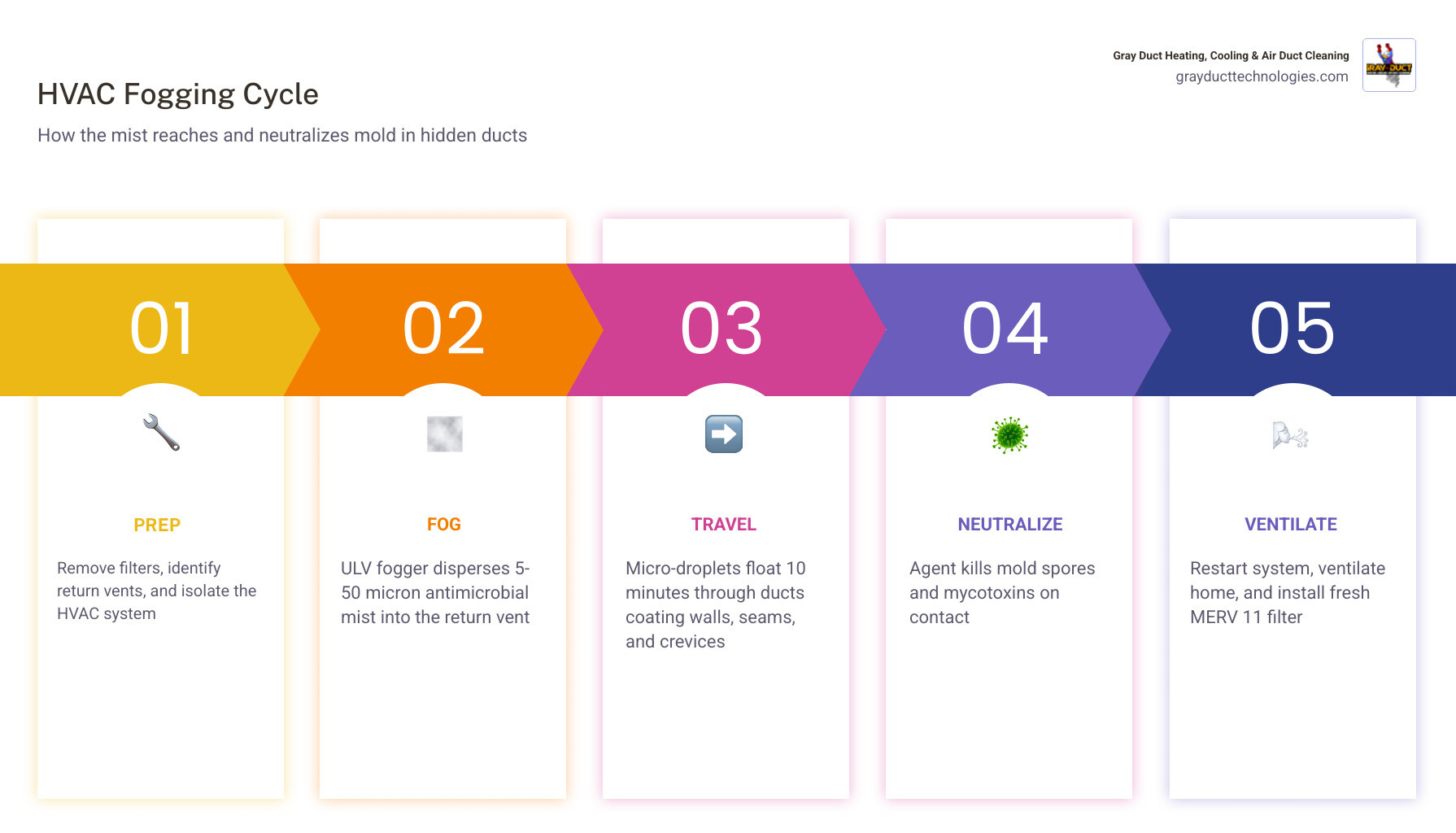
Here’s how the process works at a glance:
- Seal and prep — Filters are removed, return vents are identified, and the system is isolated
- Fog is introduced — A ULV fogger disperses a fine antimicrobial mist into the return air vent
- Mist travels the system — Micro-droplets float through ducts, coating walls, seams, and hidden crevices
- Spores are neutralized — The antimicrobial agent kills mold spores and mycotoxins on contact
- Dwell time — The solution is allowed to settle and work before the system is restarted
- Ventilation and filter replacement — The home is ventilated, and a new high-efficiency filter (MERV 11 or higher) is installed
Dark, damp ductwork is one of the most overlooked mold hotspots in a home. A single square inch of contaminated duct surface can harbor over one million spores — and your HVAC system can distribute those spores to every room, every time it runs. In Minnesota’s climate, where humidity swings are common and water damage from ice dams or flooding is a real risk, mold inside ductwork is not a rare edge case. It’s a problem that shows up quietly, through allergy flare-ups, lingering smells, and air that never quite feels clean.
I’m Jason Giandalia, founder of Gray Duct Heating, Cooling & Air Duct Cleaning, and through years of hands-on HVAC and indoor air quality work across the Twin Cities, I’ve seen how system fogging eliminates mold in ductwork as part of a complete, no-shortcuts remediation approach. In the sections below, I’ll walk you through exactly how the process works, when it’s the right call, and what to expect before and after treatment.
Understanding the Science: How System Fogging Eliminates Mold in Ductwork
To understand why fogging is so effective, we have to look at the physics of air movement. Traditional cleaning methods, like brushes and vacuums, are excellent for removing physical debris—dust, pet hair, and “the chunky stuff.” However, mold spores are microscopic. They don’t just sit on the bottom of the duct; they cling to the ceiling of the duct, hide behind seams, and nestle into the porous insulation liners of your HVAC system.
This is where ULV (Ultra-Low Volume) technology changes the game. Our professional foggers create a mist where the droplets are sized between 5 and 50 microns. To give you some perspective, a human hair is about 70 microns wide. These micro-droplets are so light that they behave like air itself. Instead of falling immediately to the floor, they stay suspended in the air for approximately 10 minutes.
As these droplets travel through the system, they perform a “search and destroy” mission. This Duct Fogging 101: How It Kills Mold and Bacteria approach ensures that the antimicrobial agent penetrates the biofilm of mold colonies. It doesn’t just kill the visible growth; it neutralizes the spores and mycotoxins—the toxic byproducts of mold—that can cause serious health issues. By May 2026, these standards have become the gold standard for restoring indoor air quality (IAQ) in water-damaged buildings.
The Step-by-Step Process of Professional Duct Sanitization
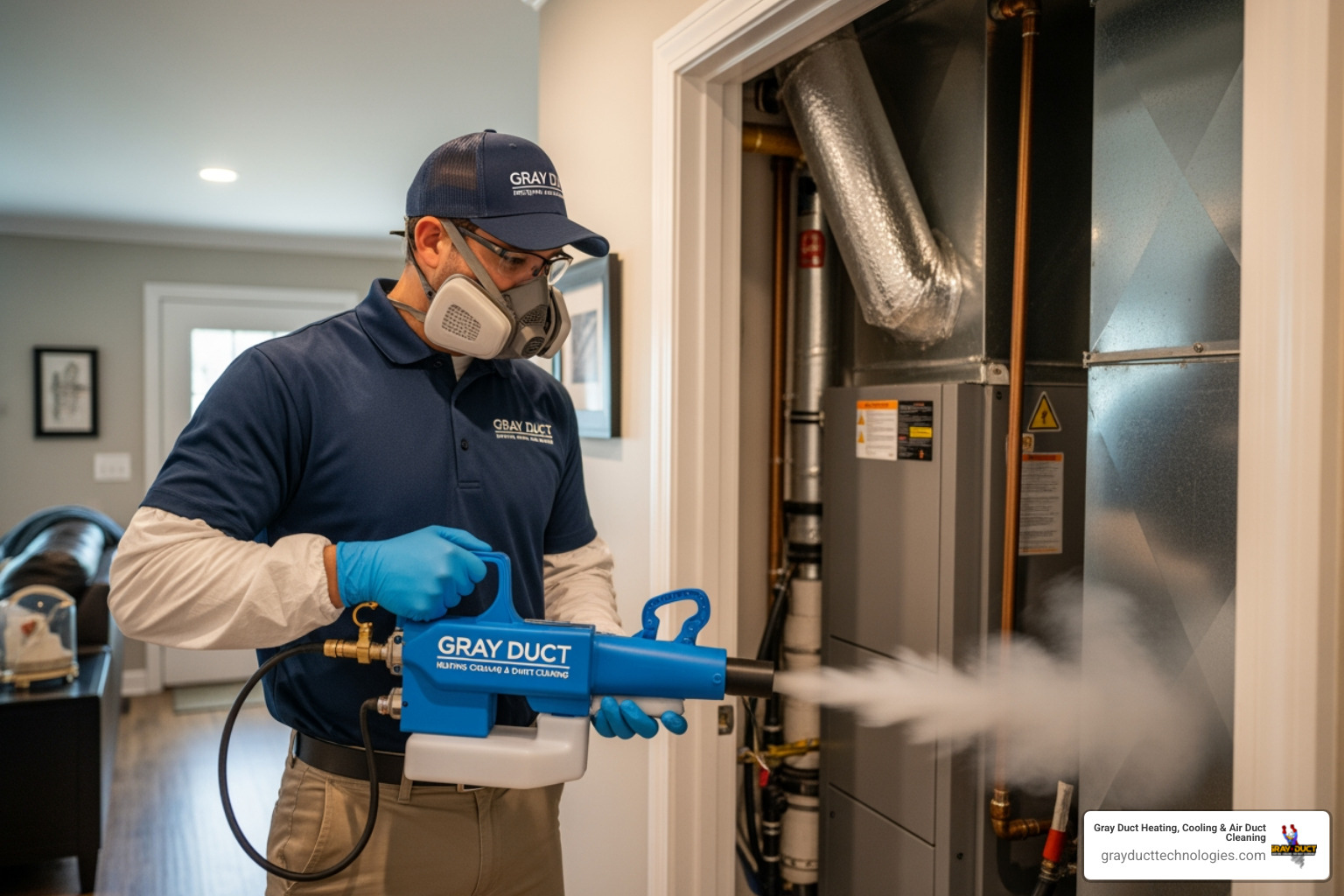
When we arrive at a home in Eden Prairie or Minneapolis, we don’t just start spraying. A professional Guide to System Fogging Services requires a methodical approach to ensure the safety of your family and the effectiveness of the treatment.
First, we isolate the system. We remove the existing air filters, as these would simply trap the fog and prevent it from reaching the rest of the ductwork. We then identify the main return air vents—the “lungs” of your house that pull air back into the furnace or AC unit.
Once the ULV fogger is positioned, we introduce the antimicrobial agent. As the mist circulates, it coats every square inch of the interior. After the application, “dwell time” is critical. The solution needs time to sit on the surfaces to achieve a 99.99% kill rate. We typically allow the system to remain off for a specific period before starting the ventilation phase. Finally, we install a high-quality MERV 11 or higher filter to catch any neutralized debris. These System Fogging Solutions ensure that when you turn your AC back on, the air coming out is truly sanitized.
How system fogging eliminates mold in ductwork by reaching inaccessible areas
Mechanical brushes are great, but they have limits. They can’t reach into the tiny crevices of a heat exchanger or the deep folds of a cooling coil without risking damage. Because our foggers produce droplets that float for 10 minutes, the mist reaches the “unreachable.”
Whether it’s System Fogging for Commercial Spaces with complex, winding duct runs or a residential home with narrow branch lines, the fog follows the path of the air. It wraps around corners and penetrates nooks and crannies that have never seen the light of day. This comprehensive coverage is what separates a “surface clean” from a “deep sanitization.”
Key Benefits for Twin Cities Homeowners and Indoor Air Quality
Living in the Twin Cities means dealing with humid summers and frozen winters. This constant cycle of heating and cooling creates condensation inside your ducts—the perfect breeding ground for fungi.
One of the primary Benefits of System Fogging is the immediate reduction in allergens. For families in Bloomington or Woodbury dealing with asthma or seasonal allergies, fogging can provide significant relief by stopping the recirculation of triggers. Furthermore, it is the most effective way to eliminate “dirty sock syndrome”—that musty, locker-room smell that occurs when bacteria and mold grow on your AC coils.
When Choosing Between System Fogging and Traditional Duct Cleaning, it’s important to remember that they work best together. Cleaning removes the food source (dust), while fogging kills the “occupants” (mold and bacteria).
| Feature | System Fogging | UV Light Treatments |
|---|---|---|
| Reach | Entire ductwork system | Line-of-sight only (near bulb) |
| Odor Removal | Molecular neutralization | Limited |
| Residual Effect | Up to 6 months protection | Only while light is on |
| Application | Targeted treatment | Constant low-level prevention |
| Best For | Active mold/odor issues | Ongoing maintenance |
Understanding how system fogging eliminates mold in ductwork after water damage
If your home has suffered a roof leak in Plymouth or a basement flood in Saint Paul, the clock is ticking. Mold can begin to colonize within 24 to 48 hours of moisture exposure. The Importance of System Fogging in these scenarios cannot be overstated.
Fogging agents like Sporicidin provide a bacteriostatic shield that can last for up to 6 months. This means that even if a little moisture remains, the treated surfaces inhibit the reproduction of new mold spores. It acts as a residual antimicrobial shield, protecting your home through the humid Minnesota summer months.
Safety Standards and Post-Treatment Protocols
Safety is our top priority. We only use EPA-registered, Level IV disinfectants. In chemicals, Level IV is the safest category, often classified as “hospital-grade” yet safe enough for use in homes with children and pets once the treatment is complete. These solutions are non-toxic and designed specifically for HVAC environments.
Our Professional System Fogging Services include clear re-entry protocols. Typically, we ask occupants (including pets) to vacate the area for 30 minutes to 2 hours. This allows the mist to settle completely and the home to be properly ventilated. Once the “dwell time” is over and we’ve cycled the air, you return to a home that smells fresher and has significantly lower microbial counts.
Frequently Asked Questions about Duct Fogging
Is fogging a complete mold remediation solution?
Fogging is a powerful tool, but it is not a “magic wand” that replaces the need to fix a leak. To truly solve a mold problem, you must address the moisture source and physically remove heavy growth. As we explain in our guide, Everything You Need to Know About Professional Air Duct Fogging in Eden Prairie MN, fogging is the essential final step that ensures the spores released during cleaning are neutralized and that hidden areas are treated.
How long does the antimicrobial protection last?
While the immediate “kill” happens on contact, quality agents provide residual protection. In a standard home environment with controlled humidity (below 50%), the bacteriostatic properties can last up to 6 months. However, if a new water leak occurs or humidity stays consistently above 60%, the protection may wear thin sooner.
Is the fogging solution safe for pets and children?
Yes. We prioritize botanical-based solutions whenever possible, such as those containing Thymol (derived from thyme oil). These are EPA-certified and highly effective against mold while remaining gentle on the household. Once the 30-to-120-minute ventilation period is over, there are no harmful residues left in the air.
Conclusion
At Gray Duct Heating, Cooling & Air Duct Cleaning, we believe that every breath you take in your home should be a clean one. As a family-owned business serving the Twin Cities from Lakeville to Maple Grove, we don’t use subcontractors. Our certified in-house technicians handle every step of the process, ensuring that how system fogging eliminates mold in ductwork is executed with precision and care.
If you’ve noticed a musty smell, are recovering from water damage, or simply want to ensure your family is breathing the highest quality air possible, we are here to help. Our team is proud to serve neighbors in Minneapolis, Saint Paul, Rochester, and throughout the South Metro.
Don’t let mold spores take over your HVAC system. Schedule your professional air duct cleaning and fogging today and experience the difference that a truly sanitized home can make for your health and comfort.
Need HVAC Help?
Our NADCA-certified technicians are ready to help with all your heating, cooling, and air quality needs.
Get Free EstimateMore Articles
 HVAC Tips
What to Do When Your AC and Furnace Share the Same Air Filter
 HVAC Tips
Addressing Drafty Rooms Before Winter: Duct Sealing vs. Window Replacement
 HVAC Tips
Dryer Vent Routing: Rigid Metal vs. Flexible Foil in Cold Climates
 HVAC Tips
Why We Inspect the Heat Exchanger So Closely During Fall Maintenance
 HVAC Tips
Upgrading to a Two-Stage Furnace: Is the Investment Worth It in Minnesota?
Related Articles
Ready to Get Started?
Whether you need a repair, maintenance, or a new system installation, our expert team is here to help.