How Temperature Extremes Affect Duct Condition in the Twin Cities
Gray Duct
Learn how temperature extremes affect duct condition in Twin Cities homes and discover practical steps to protect your HVAC system from seasonal damage.
Why Twin Cities Homeowners Need to Understand How Temperature Extremes Affect Duct Condition
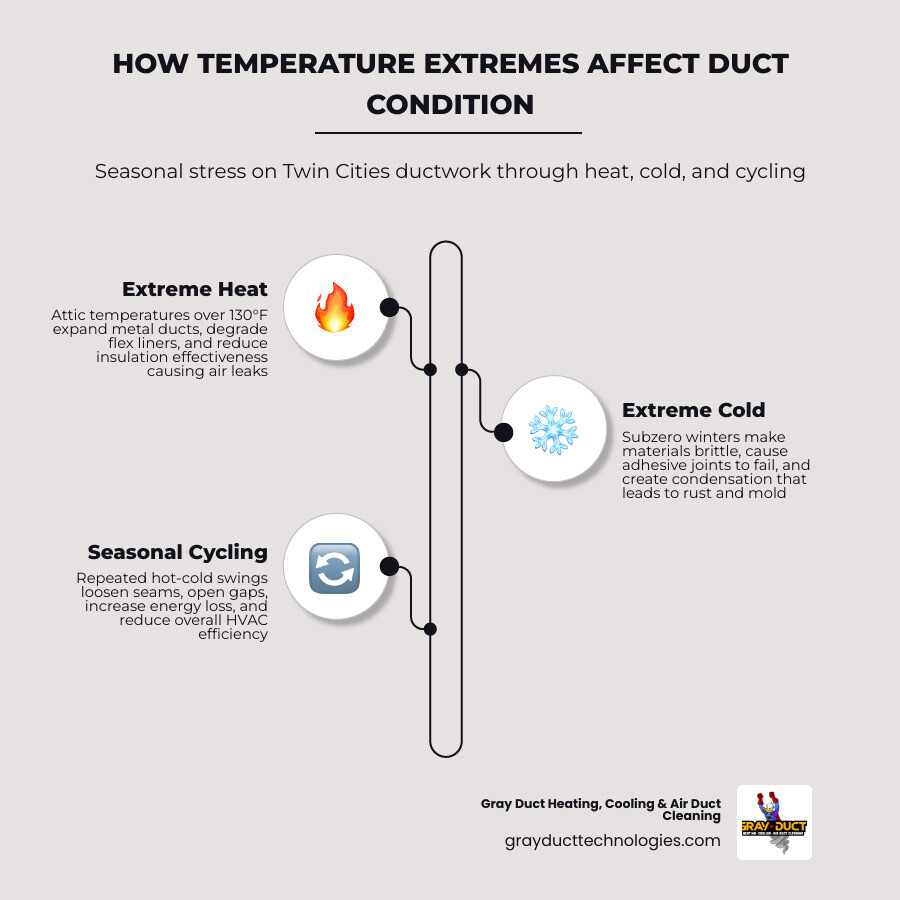
How temperature extremes affect duct condition is one of the most overlooked factors in home comfort — especially in Minnesota, where winters drop well below zero and summer attics can bake past 130°F. Here’s a quick summary of what’s happening inside your ducts when temperatures swing to either extreme:
- Extreme heat causes ducts to expand, degrades flexible duct liners, breaks down insulation, and allows cool air to escape before it reaches your rooms
- Extreme cold makes older duct materials brittle, causes tape and adhesive joints to fail, and leads to condensation that promotes rust and mold
- Seasonal cycling between hot and cold repeatedly stresses seams and connections, gradually opening gaps that leak conditioned air
- Moisture from humid summers or cold crawlspaces accelerates corrosion, insulation breakdown, and mold growth inside ducts
- The result is reduced HVAC efficiency, uneven temperatures, worse indoor air quality, and higher energy bills — with studies showing homes can lose 20–30% of conditioned air through leaky ducts
These problems compound over time. A small gap caused by one hot summer gets worse every winter. Most homeowners don’t notice until comfort and energy bills become hard to ignore.
I’m Jason Giandalia, founder of Gray Duct Heating, Cooling & Air Duct Cleaning, and after years of inspecting ductwork in Twin Cities attics, crawlspaces, and basements, I’ve seen how temperature extremes affect duct condition in ways that quietly drain home efficiency season after season. In this guide, I’ll walk you through exactly what’s happening to your ducts — and what you can do about it.
How Temperature Extremes Affect Duct Condition in the Twin Cities
Twin Cities homes deal with the full weather menu: deep winter cold, humid summers, shoulder-season swings, and lots of ductwork routed through attics, basements, garages, and other semi-conditioned or unconditioned spaces. That combination puts real stress on duct systems.
When ducts are exposed to repeated hot and cold cycles, materials move. Metal expands and contracts. Flexible ducts can sag, stiffen, or degrade faster. Adhesives dry out. Insulation loses effectiveness. Over time, those small changes can become leaks, pressure loss, and comfort problems.
Research consistently shows that duct leakage can waste around 20% to 30% of conditioned air, and in some systems HVAC efficiency can drop by up to 30%. In a Minnesota home, those losses hit especially hard because your system is working hard in both summer and winter.
Why Twin Cities ductwork faces more stress than many homeowners realize
A lot of duct problems stay hidden because the ducts themselves are hidden. If your ductwork runs through an attic, crawlspace, garage, or cold basement ceiling, it may be exposed to temperatures that are far more extreme than the rooms you live in.
That matters because:
- Attics can exceed 130°F in summer
- Winter temperatures can drive surrounding spaces far below comfortable indoor levels
- Seasonal changes create repeated thermal cycling
- Unconditioned spaces increase the risk of condensation and insulation failure
Even good duct materials age faster in harsh environments. Research on duct lifespan shows installation location matters almost as much as material choice. Hot vented attics can shorten duct life, and humid crawlspaces can do the same. In plain English: where your ducts live affects how long they last.
How temperature extremes affect duct condition in metal, flex, and fiberglass ducts
Different duct materials handle temperature extremes differently.
| Duct type | Common temperature-related issues | Typical concern in Twin Cities homes |
|---|---|---|
| Sheet metal ducts | Expansion and contraction, loosened joints, rust if moisture is present | Strong structure, but seams and insulation need attention |
| Flexible ducts | Liner degradation, sagging, kinks, brittle outer jacket, failed connections | More vulnerable in hot attics and older installations |
| Fiberglass-lined or duct board systems | Moisture absorption, insulation breakdown, damaged interior surfaces, failed tape joints | Can lose performance if wet, dirty, or physically damaged |
Sheet metal ducts usually have the best structural durability, but they are not immune. Repeated movement can loosen joints and register connections. If condensation develops, corrosion can follow.
Flexible duct tends to be more sensitive to heat and physical stress. Research indicates that attic heat above 130°F can speed up flexible duct liner degradation at roughly twice the rate of installations in conditioned spaces. If a flex run is already kinked, unsupported, or older, summer heat and winter cold can make a bad situation worse.
Fiberglass-lined ducts and duct board can perform well when dry and properly installed, but moisture is the enemy. Once insulation gets wet or internal surfaces are damaged, efficiency and indoor air quality concerns can rise together.
How temperature extremes affect duct condition through expansion, contraction, and loosened joints
This is one of the biggest hidden issues.
As temperatures change, duct materials expand and contract. That movement may be tiny in a single day, but over months and years it adds up. Joints loosen. Seams open slightly. Tape dries out and lets go. Register boots separate from surrounding materials. Mastic can crack if the original installation was poor or the movement is excessive.
The result is often:
- Small air leaks at seams and joints
- Reduced airflow to distant rooms
- Pressure loss through the system
- More strain on heating and cooling equipment
- Hot and cold spots around the house
This is why homeowners sometimes hear a whistle near a vent, notice one bedroom never feels right, or wonder why the system seems to run forever. The equipment may be fine, but the delivery system is slowly falling apart.
What Extreme Heat and Cold Do to Insulation Performance
Duct insulation has one job: keep conditioned air close to the temperature your system produced in the first place. In summer, it helps cold air stay cold. In winter, it helps warm air stay warm.
Without proper insulation, ducts running through very hot or very cold spaces lose that battle quickly. Uninsulated or poorly insulated ducts can gain heat, lose heat, and create condensation issues at the same time. That is a rough trio.
Why proper insulation matters in hot attics and freezing spaces
In hot attics, insulation slows heat gain into cool supply air. In freezing spaces, it slows heat loss from warm supply air and helps keep duct surfaces from hitting temperatures that trigger condensation.
Best practice depends on where the duct is located, but in unconditioned spaces many systems benefit from insulation levels such as R-6 or R-8. Proper installation matters just as much as the insulation rating itself. Gaps, compression, torn outer jackets, or missing vapor barriers can reduce real-world performance.
Good insulation helps:
- Preserve delivered air temperature
- Reduce HVAC runtime
- Prevent surface sweating
- Protect materials from moisture damage
- Improve room-to-room comfort
It is also better when ducts are kept inside the conditioned envelope of the home whenever possible. If they have to run through attics or other extreme spaces, insulation becomes even more important.
Signs insulation is failing before comfort problems get worse
Insulation problems do not always announce themselves dramatically. Sometimes the clues are subtle at first.
Watch for:
- Rooms that are hotter in summer or colder in winter than the rest of the house
- Weak airflow at certain vents
- Exposed or compressed insulation on visible ducts
- Torn duct jackets or detached insulation wrap
- Condensation on duct surfaces
- A sudden jump in heating or cooling use
- Musty smells near vents
If those signs sound familiar, your duct insulation may be underperforming even if the HVAC equipment itself is in decent shape.
Best insulation practices for preventing heat loss or gain
The right insulation approach depends on duct type and location, but several best practices consistently help:
- Use quality insulation materials such as fiberglass, foam board, or reflective foil where appropriate
- Make sure ducts in unconditioned spaces are properly insulated
- Protect insulation with an intact vapor barrier in humid or moisture-prone areas
- Seal joints before insulating so air is not leaking underneath the insulation layer
- Replace wet, compressed, or damaged insulation instead of trying to ignore it
- Support flex duct properly so insulation is not pinched or sagging
Regular upkeep matters too. If you want a broader look at why tune-ups help prevent comfort and efficiency issues, we recommend reading The Importance of Regular HVAC Maintenance.
Moisture, Condensation, and Indoor Air Quality During Seasonal Extremes
Temperature extremes are only part of the story. Moisture is the sidekick nobody asked for.
Humidity, cold surfaces, air leaks, and insulation gaps can combine to create condensation inside or outside ductwork. Once that happens, you can end up with rust, wet insulation, mold growth, and stale or musty air moving through the home.
Summer humidity and cold-air ducts: where sweating starts
In summer, cooled duct surfaces can drop below the dew point of surrounding air. When warm humid air touches those cold surfaces, water forms. That is the classic “sweating duct” problem.
This often shows up in:
- Basements
- Crawlspaces
- Utility rooms
- Supply ducts carrying very cold air
- Areas with missing or damaged insulation
High humidity makes the problem worse. Research notes that humid summer conditions can lead to moisture accumulation that contributes to rust, corrosion, and mold in duct systems.
If a duct is sweating, the issue is not just cosmetic. Water can soak insulation, drip onto building materials, and create ideal conditions for microbial growth.
Winter condensation problems in cold duct runs and vented spaces
Winter brings a different version of the same problem.
If warm indoor air leaks into cold spaces around ducts, or if duct surfaces become cold enough due to poor insulation, moisture can condense at seams, around boots, or inside surrounding cavities. In older systems, cold weather can also make some tapes and materials more brittle, increasing leakage and allowing more moist air to reach cold surfaces.
This is especially common when ducts run through:
- Cold attics
- Rim joist areas
- Exterior wall cavities
- Vented spaces with insulation gaps
In the Twin Cities, that combination of warm indoor air and bitter outdoor cold creates a very strong temperature difference, which raises the stakes for moisture control.
How to reduce moisture damage and air quality issues
The goal is to control both temperature difference and humidity.
Helpful steps include:
- Seal leaking duct joints and seams
- Replace damaged insulation and vapor barriers
- Reduce excess summer humidity with proper dehumidification where needed
- Maintain healthy winter humidity instead of letting the home get too dry or too damp
- Address standing water, drainage issues, or wet basements near duct runs
- Clean and inspect ducts when there is evidence of debris, contamination, or musty odors
If you want to go deeper on how duct conditions affect the air you breathe, see The Dirty Truth About Your Home’s Air Quality and Why Indoor Air Quality Gets Worse in Winter.
How Damaged or Poorly Insulated Ducts Hurt HVAC Efficiency
Your HVAC system can only deliver comfort if the ducts actually carry conditioned air to the rooms that need it. If the ductwork is leaking, poorly insulated, crushed, or weather-worn, the equipment has to work harder to get worse results.
That is why duct problems often show up as “my furnace is always running” or “the AC never quite catches up.”
Why leaks get worse during heating and cooling peaks
Peak summer and peak winter are when duct flaws become most obvious.
When the temperature difference between duct air and surrounding space is large, every leak and every insulation gap matters more. Escaping conditioned air is lost faster. Thermal gain or loss is greater. The HVAC system runs longer trying to make up the difference.
Research shows:
- Around 20% to 30% of conditioned air can be lost through duct leaks
- Duct leaks can reduce HVAC efficiency by up to 30%
- Severe duct leakage can noticeably increase heating demand
- Poor insulation can add another layer of delivery loss
That means even a newer system can underperform if the ductwork is the weak link.
What homeowners may notice first when ducts are weather-worn
Most people do not inspect their ducts regularly. That makes sense because ductwork is usually out of sight. So the warning signs usually show up elsewhere.
Common symptoms include:
- Uneven temperatures between rooms
- A bedroom that is always stuffy, cold, or too warm
- Musty odors from vents
- Extra dust around registers
- Whistling, hissing, or rattling noises
- Weak airflow from some vents
- Longer system runtimes in summer or winter
- More noticeable humidity issues indoors
Those clues do not always mean the ductwork is the only problem, but they are strong reasons to take a closer look.
How to maintain your heating and cooling system without losing performance
A good maintenance routine helps catch weather-related duct issues before they become bigger repairs.
We recommend:
- Changing filters on schedule
- Keeping supply and return vents unobstructed
- Watching for new hot and cold spots
- Checking visible ducts for moisture, loose insulation, or disconnected sections
- Scheduling seasonal HVAC tune-ups
- Having ductwork evaluated when comfort problems keep returning
For a broader maintenance checklist, read How to Maintain Your Heating and Cooling System Without Losing Your Cool.
Warning signs to watch for:
- Rising energy use without a clear reason
- Condensation on ducts
- Visible rust or corrosion
- Torn insulation jackets
- Noisy vents
- Persistent room comfort issues
- Musty or stale air
How to Inspect and Protect Your Ductwork Through Every Season
Seasonal checks are one of the best ways to reduce weather-related duct wear. You do not need to become obsessed with your ductwork, but giving it a little attention twice a year can save a lot of frustration.
Spring and fall duct maintenance steps for Twin Cities homes
Spring and fall are ideal times to look things over before the heavy heating or cooling season begins.
A simple homeowner checklist:
- Inspect visible ducts in basements, utility rooms, and storage areas
- Look for loose connections, torn insulation, or sagging flex duct
- Check for rust, staining, or signs of past condensation
- Make sure vent covers are secure and unobstructed
- Look at support straps on flex duct to make sure runs are not drooping
- Note any new noises or airflow changes at registers
- After severe weather, check accessible vented spaces for shifted or damaged components
If the ductwork is in an attic or crawlspace, use caution. Those spaces can be unsafe or difficult to access, especially during temperature extremes.
When to schedule a professional duct inspection
A professional duct inspection makes sense when:
- Your ductwork is older
- You are noticing recurring comfort issues
- Energy use has increased without another explanation
- There is evidence of moisture, mold, or rust
- You suspect a disconnected or crushed run
- You are replacing HVAC equipment and want the delivery system checked too
Many homes benefit from annual HVAC checks, while duct inspections for leakage, wear, and design issues are often smart every 2 to 3 years, or sooner if symptoms appear.
Repairs and prevention that help ducts last longer
The right repair depends on the issue, but the most effective fixes often include:
- Sealing joints with mastic
- Using metal-backed foil tape instead of ordinary cloth duct tape
- Replacing damaged insulation
- Re-supporting sagging flex duct
- Correcting crushed or kinked runs
- Improving airflow balance where needed
- Cleaning ductwork when contamination is part of the problem
For seasonal planning, see Don’t Get Left in the Cold: Minnesota HVAC Service Schedules.
Frequently Asked Questions About How Temperature Extremes Affect Duct Condition
Can extreme cold make ductwork crack or become brittle?
Yes, especially in older systems or in more vulnerable materials. Extreme cold can make certain tapes, outer jackets, and aging flexible duct materials more brittle. That brittleness increases the chance of cracks, failed connections, or loosened seals. Cold weather can also reveal weaknesses that were already developing from age or previous heat exposure.
Do hot attics really damage ducts in summer?
Yes. In Twin Cities homes with attic ductwork, summer heat can be brutal. Research shows attic temperatures can exceed 130°F, and that kind of heat can accelerate flexible duct liner degradation, stress insulation, and warm cooled air before it reaches living spaces. Even metal ducts are affected because high heat increases expansion and can worsen leakage at joints and seams.
How often should Twin Cities homeowners have ducts inspected for weather-related wear?
A visible homeowner check in spring and fall is a good habit. Professionally, annual HVAC maintenance is smart, and a more focused duct inspection every 2 to 3 years is often a good baseline. We recommend sooner if you notice rising energy use, weak airflow, condensation, musty odors, or room-to-room comfort problems.
Conclusion
In the Twin Cities, ducts have to survive a lot. Summer attic heat, winter cold, humidity swings, and constant expansion and contraction all add up over time. That is the real answer to how temperature extremes affect duct condition: they slowly wear down materials, weaken seals, reduce insulation performance, increase moisture risk, and make your HVAC system work harder than it should.
The good news is that duct problems are manageable when they are caught early. Sealing leaks, replacing damaged insulation, controlling moisture, and scheduling regular inspections can protect comfort, improve indoor air quality, and help your system perform the way it is supposed to.
If you would like help inspecting, cleaning, or improving your duct system in Minneapolis, Saint Paul, or the surrounding Twin Cities and South Metro communities, we are here to help. Learn more or get in touch at our services.
Need HVAC Help?
Our NADCA-certified technicians are ready to help with all your heating, cooling, and air quality needs.
Get Free EstimateMore Articles
 HVAC Tips
What to Do When Your AC and Furnace Share the Same Air Filter
 HVAC Tips
Addressing Drafty Rooms Before Winter: Duct Sealing vs. Window Replacement
 HVAC Tips
Dryer Vent Routing: Rigid Metal vs. Flexible Foil in Cold Climates
 HVAC Tips
Why We Inspect the Heat Exchanger So Closely During Fall Maintenance
 HVAC Tips
Upgrading to a Two-Stage Furnace: Is the Investment Worth It in Minnesota?
Related Articles
Ready to Get Started?
Whether you need a repair, maintenance, or a new system installation, our expert team is here to help.