Everything You Need to Know About Air Duct Cleaning Frequency
Gray Duct

Discover how often should you clean your air ducts: EPA/NADCA guidelines, pet homes, renovations & Minneapolis signs for optimal IAQ. Schedule now!
Why Knowing How Often Should You Clean Your Air Ducts Could Transform Your Home’s Air Quality
How often should you clean your air ducts depends on your household situation, but here is a quick breakdown:
| Household Situation | Recommended Frequency |
|---|---|
| Most homes (standard conditions) | Every 3-5 years |
| Pets in the home | Every 2-3 years |
| Allergies, asthma, or respiratory issues | Every 2-3 years |
| Smokers in the household | Every 2-3 years |
| Recent major renovation or construction | Immediately after |
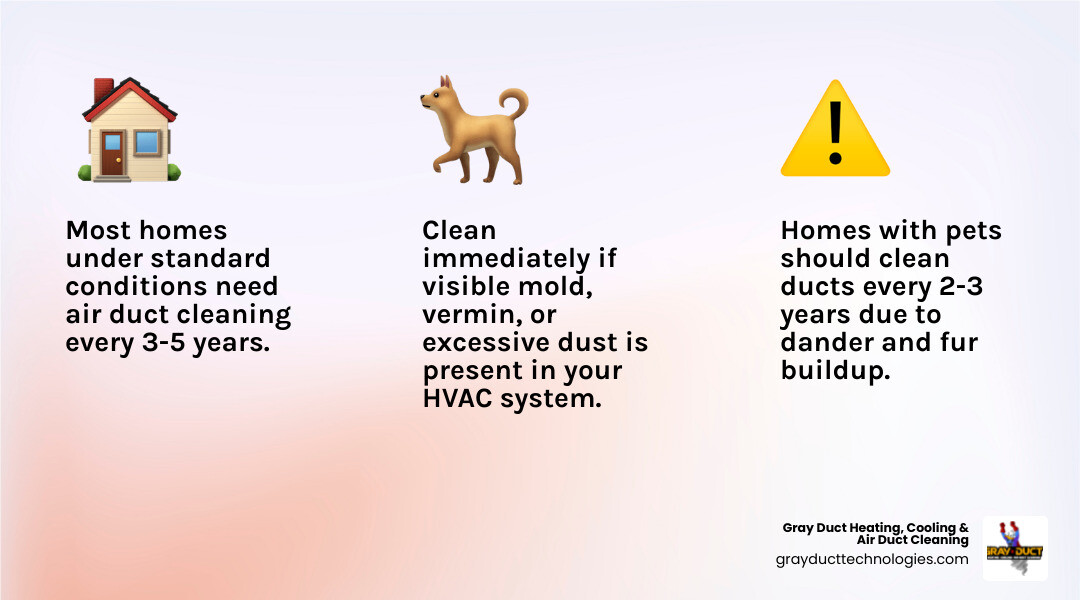
| Visible mold, vermin, or excessive dust | Right away, regardless of last cleaning |
| Humid climates or mold-prone environments | Annually |
Most homeowners in the Twin Cities never think about their air ducts — until something goes wrong. Maybe you notice a layer of dust on every surface just days after cleaning. Maybe your allergies seem worse inside your own home than they do outdoors. Or maybe there is a faint musty smell you just cannot track down. These are not random annoyances. They are often signals from your duct system telling you it needs attention.
The challenge is that there is real disagreement about how often duct cleaning is actually necessary. The EPA takes a cautious, evidence-based stance — recommending cleaning only under specific conditions like visible mold growth, vermin infestation, or ducts clogged with debris that is actively releasing particles into your living space. The National Air Duct Cleaners Association (NADCA), on the other hand, recommends a proactive schedule of every 3 to 5 years for most households. Neither position is wrong. They are just answering different questions: one asks “when is it urgent?” and the other asks “when is it smart?”
For homeowners in Minnesota, the answer is especially nuanced. The region’s cold winters, humid summers, and seasonal allergens create conditions that can accelerate contaminant buildup inside ductwork faster than in milder climates.
I’m Jason Giandalia, founder of Gray Duct and a NADCA-certified Air Systems Cleaning Specialist (ASCS) with years of hands-on experience helping Twin Cities homeowners answer exactly this question — how often should you clean your air ducts — based on their actual home, not a generic schedule. In the sections below, I’ll walk you through what the experts say, what the research actually supports, and how to make the right call for your household.
How Often Should You Clean Your Air Ducts: Expert Recommendations for 2026
As we move through 2026, the consensus among industry leaders has solidified around a “condition-based” maintenance model. While your car needs an oil change every few thousand miles regardless of how you drive, your HVAC system is a bit more sensitive to its environment.
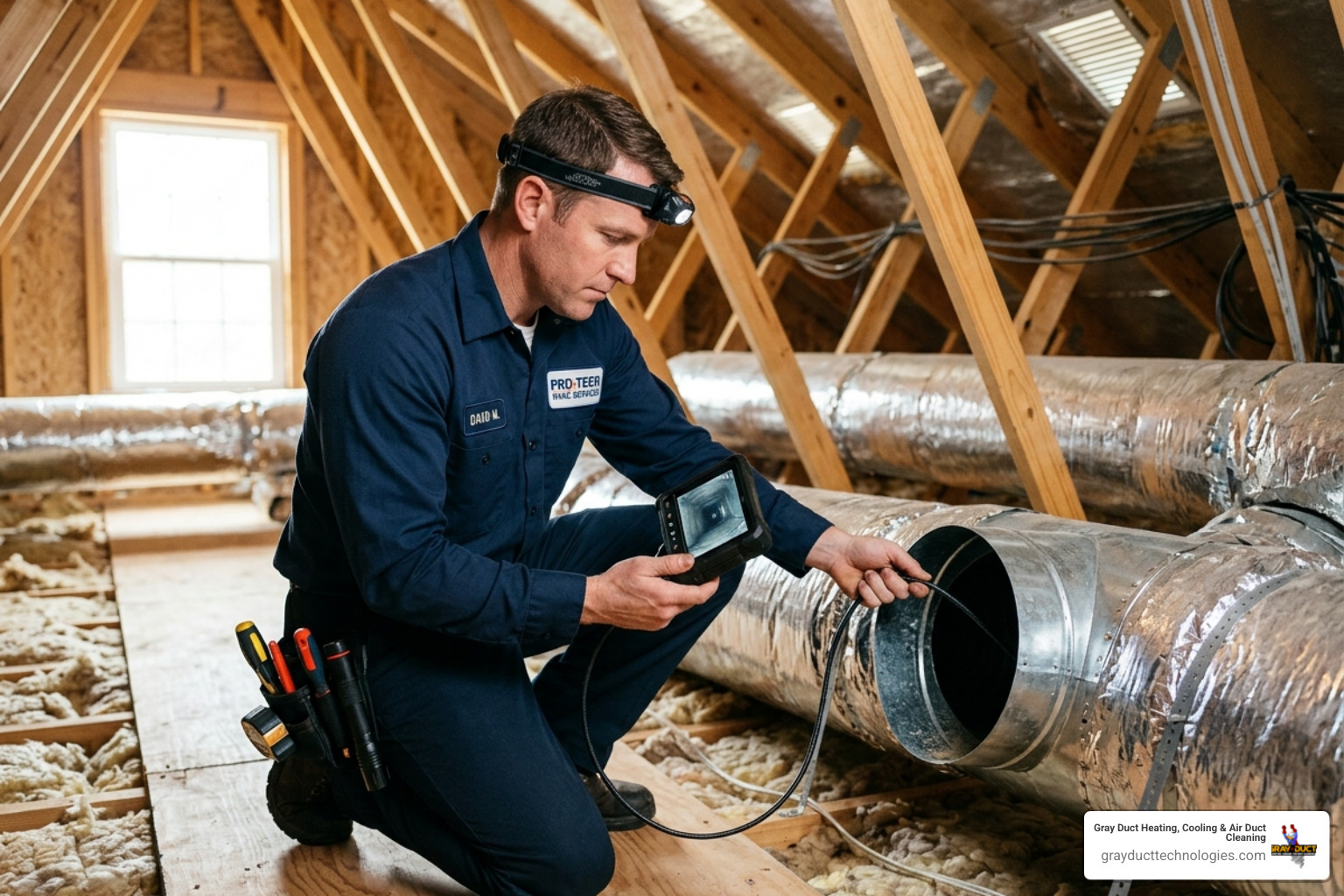
At Gray Duct Technologies, we lean on the standards set by the National Air Duct Cleaners Association (NADCA) while respecting the conservative guidelines of the Environmental Protection Agency (EPA). Understanding the importance of regular air duct cleaning starts with knowing which authority to follow for your specific needs.
How often should you clean your air ducts according to the EPA?
The EPA does not recommend routine air duct cleaning as a preventative measure. Instead, they suggest a reactive approach. According to their guidelines, you should only consider cleaning if:
- Visible Mold: There is substantial visible mold growth inside hard surface (e.g., sheet metal) ducts or on other components of your heating and cooling system.
- Vermin Infestation: The ducts are infested with vermin, such as rodents or insects.
- Excessive Clogging: Ducts are clogged with excessive amounts of dust and debris and/or particles are actually being released into your home from your supply registers.
If you are wondering how often should you clean air ducts when none of these “red flags” are present, the EPA suggests that light dust is a normal part of home life and doesn’t necessarily pose a health risk.
How often should you clean your air ducts according to NADCA?
NADCA provides a more proactive recommendation for standard households. They suggest that having your air ducts cleaned every 3 to 5 years is the “sweet spot” for maintaining system hygiene. This interval helps prevent the buildup of allergens and ensures that your system doesn’t have to work overtime to push air through restricted passages.
By following this rule of thumb, you can stay ahead of potential issues before they become costly repairs. It is a fundamental part of why it’s important to have your air ducts cleaned—you are essentially “resetting” your home’s respiratory system.
| Agency | Recommendation | Primary Focus |
|---|---|---|
| EPA | As-needed (only if mold, pests, or clogs exist) | Evidence-based necessity |
| NADCA | Every 3-5 years | Preventative maintenance & hygiene |
| Carrier | Every 3-5 years | System longevity & efficiency |
Factors That Influence Your Air Duct Cleaning Schedule
A “standard” household is rare in the Twin Cities. Between our love for our four-legged friends and our DIY spirit for home renovations, many factors can shorten the time between your professional cleanings. Air duct cleaning for indoor air quality is highly personal.
How often should you clean your air ducts if you have pets?
If your home is “friendly to animals,” your ducts likely reflect that. Pets shed hair and dander, which are pulled into the return vents and can eventually mat down inside the ductwork. For households with heavy shedders, we recommend moving the cleaning frequency up to every 2 to 3 years. This helps mitigate the “wet dog” smell that can sometimes linger in a home and ensures that regular air duct cleaning benefits your family’s ability to breathe easily without constant exposure to pet allergens.
How often should you clean your air ducts after a home renovation?
Renovations are a major source of duct contamination. If you have recently sanded drywall, cut tile, or ground concrete, that fine white dust has a way of finding its way into your HVAC system, even if you tried to cover the vents.
Construction debris is particularly heavy and can contain irritants that shouldn’t be recirculated. We always tell our neighbors in places like Minnetonka and Woodbury to schedule a cleaning immediately after the contractors pack up. When you ask, is air duct cleaning worth it after a remodel, the answer is a resounding yes—it protects your brand-new finishes from being coated in old construction dust the moment you turn on the AC.
Critical Signs You Need Immediate Air Duct Cleaning in Minneapolis
Sometimes you cannot wait for the 3-year mark. Our harsh Minnesota climate—with its high humidity in the summer and bone-dry winters—can create unique challenges for HVAC systems. Knowing how often should you clean your air ducts what Minneapolis homeowners need to know involves being a bit of a “duct detective.”
Identifying mold and vermin in your HVAC system
Mold thrives in moisture. If your home has had a water leak or if your humidity levels aren’t properly controlled, mold can grow on the internal surfaces of your ducts. If you notice a musty, earthy odor when the furnace kicks on, that is a major warning sign.
Vermin are another urgent issue. Rodents and insects love the warmth and safety of ductwork. If you hear scurrying, see droppings, or smell an ammonia-like odor, you need to call pest control first, then call us for a deep air duct cleaning to remove the hazardous biological remains.
Recognizing excessive dust and debris buildup
Take a look at your supply registers (the vents where air blows out). Do you see “cobwebs” of dust hanging from the slats? If you wipe them down and they are fuzzy again within a week, your ducts are likely acting as a reservoir for dust. This is a clear indicator that the system is overloaded. Visual inspections are the best way to determine why professional air duct cleaning matters—if you can see the dirt on the outside, imagine what is hiding around the corners inside the trunk lines.
Benefits and Risks of Professional Duct Cleaning
When done correctly by a certified team, duct cleaning offers significant upsides. However, it is not without its nuances. Using effective air duct cleaning methods, like negative pressure and HEPA-filtered vacuums, is essential to ensure the process helps rather than hurts.
Improving system efficiency and lifespan
One of the most immediate regular air duct cleaning benefits is a drop in energy strain. While cleaning just the ducts offers some improvement, a full-system cleaning that includes the A/C coils and the blower fan can significantly improve airflow. When your system doesn’t have to fight through layers of dust to move air, it runs for shorter cycles, which can lower your energy bills and extend the life of your furnace and air conditioner.
Understanding chemical biocides and sealants
There is a lot of talk in the industry about chemical biocides (to kill mold) and sealants (to “glue” dust to the duct walls). Here is our expert take: the EPA has not registered any biocides for use on the internal, fiberglass-lined surfaces of duct systems.
We generally advise caution. While these products can be useful in specific, extreme remediations, they should never be a “standard” part of a routine cleaning. If a company tries to upsell you on a “sanitizer” without explaining exactly why you need it, that is a red flag. We believe in source removal—getting the dirt out entirely—rather than trying to spray a chemical over it.
How to Prevent Duct Contamination Between Cleanings
You can actually extend the time between professional cleanings by taking a few simple steps at home. It is all about “source control”—stopping the gunk before it enters the system.
Best practices for HVAC filter maintenance
Your air filter is your system’s first line of defense. We recommend:
- Check monthly: Especially during peak heating and cooling seasons in Minnesota.
- Replace every 1-3 months: If you have pets or allergies, aim for the 30-day mark.
- Use quality filters: Look for a MERV rating between 8 and 11. These are efficient enough to catch small particles without “choking” your system’s airflow.
Consistent filter changes are the single most effective way to maintain the importance of regular air duct cleaning by keeping the internal components cleaner for longer.
Controlling moisture and humidity in Minnesota homes
Mold needs water to survive. By keeping your home’s humidity between 30% and 50%, you make your ducts a very inhospitable place for microbial growth. This is especially important in the humid summer months in the Twin Cities. Ensure your AC’s condensate drain is clear and that any ductwork in unconditioned spaces (like attics or crawlspaces) is properly insulated to prevent condensation. This proactive approach is a key part of how often should you clean your air ducts what Minneapolis homeowners need to know.
Frequently Asked Questions about Air Duct Maintenance
Are chemical biocides or sealants recommended for my ducts?
As mentioned earlier, we recommend them only in very specific cases of documented mold or duct damage. For 95% of homes, a thorough mechanical cleaning (source removal) is all that is needed. Always ask for evidence of mold before agreeing to chemical treatments.
Is air duct cleaning worth it for a brand-new home?
Surprisingly, yes. We often find “construction surprises” in the ducts of new builds—lunch bags, soda cans, sawdust, and drywall scraps. Cleaning a new home ensures you are starting your life there with a truly clean slate.
How long does a professional air duct cleaning take?
For an average-sized home in the Twin Cities, a proper, thorough cleaning usually takes between 2 to 4 hours. If a company claims they can do it in 45 minutes, they are likely only cleaning what you can see and ignoring the deep trunk lines where the real buildup lives.
Conclusion
At Gray Duct Technologies, we aren’t just here to clean your vents; we are here to help you manage your home’s health. As a family-owned business serving the Twin Cities from Lakeville to Maple Grove and everywhere in between, we take pride in our in-house certified team. We don’t use subcontractors, and we don’t use high-pressure sales tactics.
Whether you’ve just finished a basement remodel in Edina or you’re noticing more dust than usual in your Bloomington townhome, we can help you determine the right schedule for your specific needs. Clean air shouldn’t be a mystery.
Ready to see the difference a professional, NADCA-certified cleaning can make for your home? Request Professional Air Duct Cleaning in the Twin Cities today and let our family take care of yours.
Need HVAC Help?
Our NADCA-certified technicians are ready to help with all your heating, cooling, and air quality needs.
Get Free EstimateMore Articles
 HVAC Tips
What to Do When Your AC and Furnace Share the Same Air Filter
 HVAC Tips
Addressing Drafty Rooms Before Winter: Duct Sealing vs. Window Replacement
 HVAC Tips
Dryer Vent Routing: Rigid Metal vs. Flexible Foil in Cold Climates
 HVAC Tips
Why We Inspect the Heat Exchanger So Closely During Fall Maintenance
 HVAC Tips
Upgrading to a Two-Stage Furnace: Is the Investment Worth It in Minnesota?
Related Articles
Ready to Get Started?
Whether you need a repair, maintenance, or a new system installation, our expert team is here to help.