Duct Cleaning 101: What Actually Happens to Your Vents
Gray Duct
Air duct cleaning explained simply: Twin Cities pros reveal the step-by-step process, signs you need it, and why hire experts for healthier air.
Concerned About Indoor Air Quality in Your Twin Cities Home?
Air duct cleaning explained simply means a professional uses specialized equipment to remove dust, debris, and contaminants from the ductwork and components that move air throughout your home’s HVAC system.
Here’s a quick breakdown:
- Inspect – A technician examines your ducts, vents, and HVAC components for buildup, mold, or pests.
- Seal – Supply and return registers are covered to create an airtight environment.
- Negative pressure – A high-powered vacuum creates suction so dislodged debris is pulled out of your home, not back into it.
- Agitate – Rotating brushes, air whips, and compressed air tools loosen stubborn buildup from duct walls.
- Clean components – Technicians also clean the blower motor, evaporator coils, and drain pan — not just the ducts.
- Final inspection – Every accessible section is visually confirmed clean before the job is done.
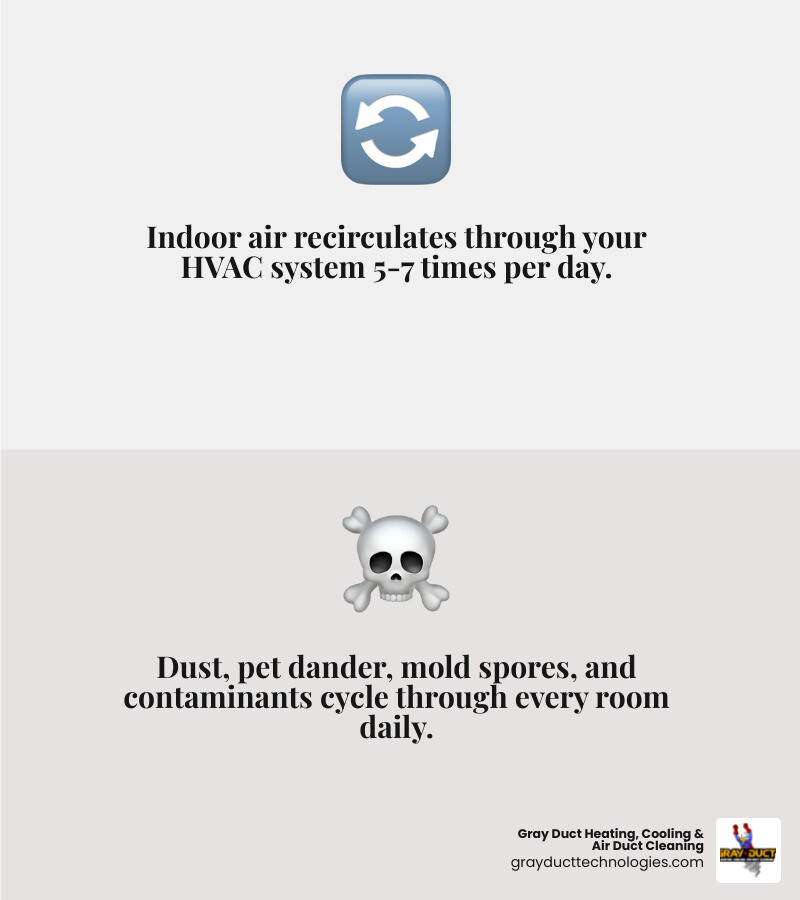
Most homeowners don’t think about their ductwork until something feels off — maybe the house gets dusty faster than it used to, allergy symptoms have been flaring up, or energy bills keep creeping higher. What’s easy to miss is that the air inside your home recirculates through your HVAC system several times per day. That means any dust, pet dander, mold spores, or other contaminants sitting in your ducts aren’t staying put — they’re making the rounds through every room, every day.
At Gray Duct Heating, Cooling & Air Duct Cleaning, we help Twin Cities homeowners better understand air duct cleaning explained simply. Below, you’ll see exactly what the process looks like, when it’s actually needed, and how to make sure it’s done right.
What Is Air Duct Cleaning?
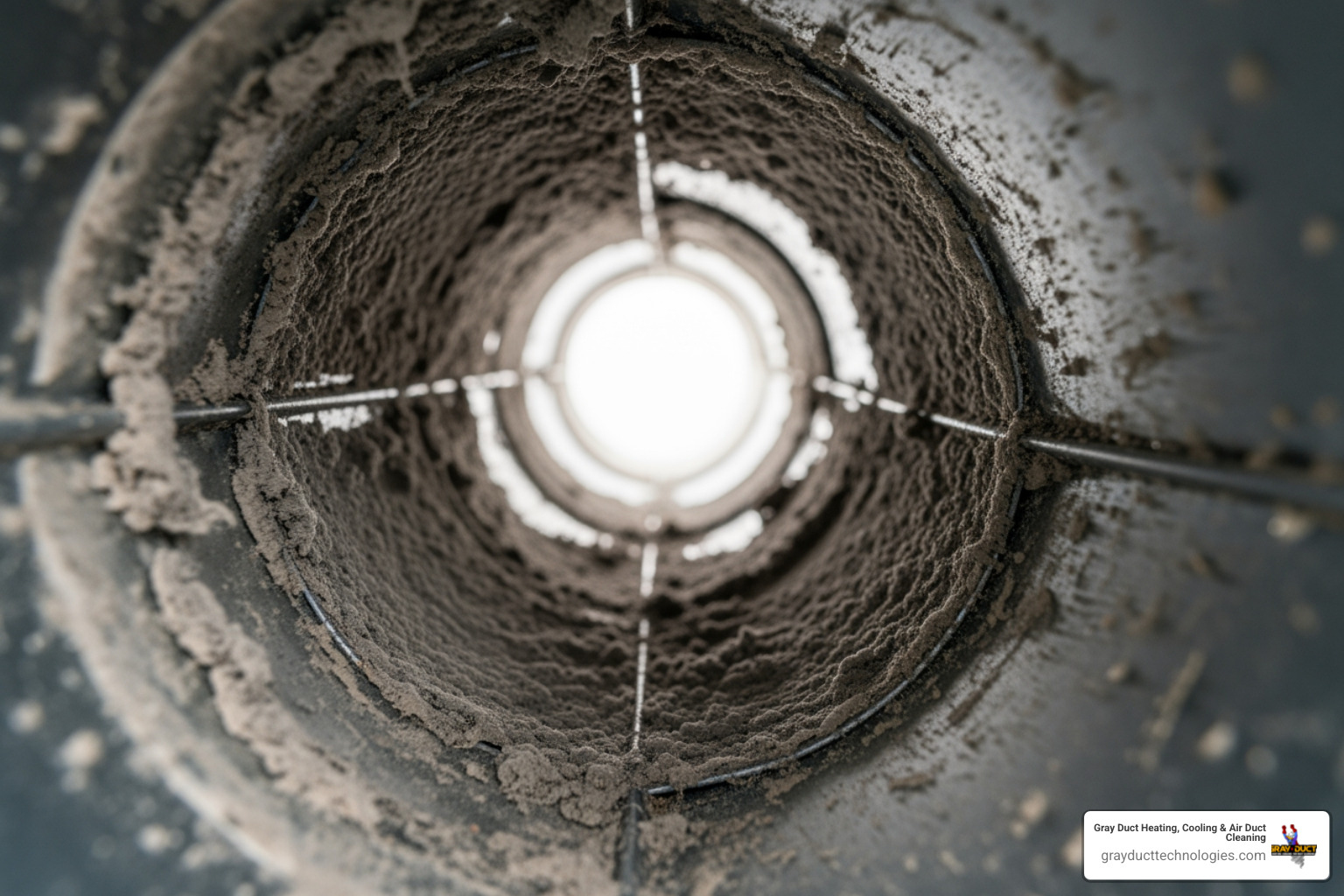
At its core, air duct cleaning is about HVAC hygiene. Think of your ductwork as the “lungs” of your home. Just as you wouldn’t want to breathe through a dirty filter, you don’t want your home’s air traveling through miles of dusty, debris-filled metal or plastic tubes. Everything from pet hair and skin cells to construction dust and pollen settles in these passages.
When we talk about air duct cleaning explained simply, we are referring to a “source removal” process. This means we aren’t just moving dust around; we are physically removing it from the system so it can no longer circulate. A proper cleaning must address the entire system, including supply ducts, return ducts, registers and grills, and internal HVAC components like the blower motor and coils. Focusing on cleaner indoor air quality ensures that the air your family breathes is as clean as possible.
The Step-by-Step Process for Professional Cleaning
The air duct cleaning process is a highly technical operation that typically takes between three to five hours for a single-family home. It isn’t just about sticking a vacuum hose down a vent; it’s a systematic restoration of your airflow.
- System Assessment: We start by inspecting the system to identify the layout and any areas of concern, such as moisture or heavy debris.
- Creating the Vacuum Bond: We connect a high-powered, truck-mounted vacuum collection device to the main trunk line near your furnace.
- Sealing the System: We go through every room and seal off the registers with adhesive covers so the vacuum’s power is concentrated exactly where we are working.
- The Cleaning Cycle: One by one, we activate a vent by removing its cover and using agitation tools to push dust toward the main vacuum.
- Component Sanitization: We clean the mechanical side of the system, ensuring the parts that blow the air are just as clean as the pipes that carry it.
- Verification: We perform a final walkthrough to ensure every branch line has been reached.
Why Professional Cleaning Requires Negative Pressure
The key to professional cleaning is negative pressure. Without it, cleaning your ducts would just blow a cloud of dust into your living room. By connecting a massive vacuum to the air handler, we create a constant pull of air inward. This ensures any dust we stir up is immediately sucked into our filtration system rather than floating onto your furniture, and it lets us pull debris from the furthest corners of your home back to the collection truck. Note: you shouldn’t seal a system that is already dirty — cleaning must always come first.
Agitation Tools and Component Cleaning
To get ducts truly clean, suction alone isn’t enough. Dust often clings to the walls of the ducts due to static or moisture. We use air whips (flexible tubes that thrash around inside the duct) and rotating brushes to knock that debris loose. A duct cleaning that only cleans the pipes is incomplete, so we also clean the evaporator coils, blower motor, and drain pans. By addressing these parts, we help prevent the system from straining under the weight of its own dirt.
How Do I Know if My Vents Actually Need Cleaning?
There are several red flags that indicate it’s time to call in the pros:
- Visible Dust Clouds: Do you see a “poof” of dust when the furnace kicks on? That’s a sign the system is saturated.
- Musty Odors: An earthy or stale smell coming from the vents often points to mold or mildew growth within the dark, damp areas of the HVAC system.
- Post-Renovation Debris: If you’ve recently sanded drywall or cut tile in your Bloomington or Edina home, your return vents have likely sucked up a massive amount of fine construction dust.
- Pest Infestation: Rodents and insects often use ductwork as a highway system. If you see droppings or nesting material, a professional sanitization is mandatory.
- Unexplained Allergy Symptoms: If your family is sneezing or has itchy eyes only when they are inside the house, the recirculating dander and pollen in your ducts could be the culprit.
The EPA notes that while duct cleaning hasn’t been definitively proven to prevent health problems, it is certainly warranted when visible mold, pests, or excessive clogs are present. From a mechanical standpoint, the benefits are clear: when airflow is restricted by a thick layer of dust, your furnace and AC have to run longer cycles to reach the temperature set on your thermostat, wasting energy and wearing out equipment faster.
Is It Safe to Clean My Own Air Ducts?
It is a common question: “Can’t I just use my shop vac?” While many homeowners like to handle basic home maintenance themselves, this is one of those tasks where household tools usually fall short.
| Feature | DIY Cleaning | Professional Cleaning |
|---|---|---|
| Equipment Power | Standard shop vac (low suction) | High-powered vacuum collection equipment |
| Reach | 5-10 feet into the vent | Entire system (including main trunks) |
| Containment | Dust often blows back into the room | Negative pressure helps keep dust contained |
| Agitation | Hand brush or vacuum attachment | Air whips, brushes, and compressed air |
| Risk | Higher risk of damaging duct materials | Safer, system-specific cleaning methods |
If you try to clean the ducts yourself, you might reach the first few feet of your registers, but you won’t reach the plenum or the main trunk lines where much of the debris settles. In fact, many DIY attempts actually make the air quality worse by stirring up dust that a small vacuum can’t capture. Professional equipment is designed to ensure that once the dust is loosened, it actually leaves your house for good.
Frequently Asked Questions about HVAC Hygiene
How often should air ducts be cleaned?
For most homes in areas like Plymouth or Woodbury, we recommend a professional cleaning every three to five years. Consider a more frequent schedule (every 2-3 years) if you have multiple shedding pets, someone in the home smokes, you have residents with severe asthma or allergies, or you have recently completed a major home renovation.
Are chemical biocides or sealants necessary?
We only recommend chemical treatments when there is a specific, identified need. If we find evidence of mold or biological growth, we may discuss EPA-registered sanitizers. But mechanical cleaning (scrubbing and vacuuming) is always the most important step. Chemicals should never be used as a substitute for actual dirt removal.
How do I choose a reliable service in Minneapolis?
Look for NADCA certification (confirming the company follows recognized industry standards), in-house teams that handle the work directly, a transparent process, and clear communication about cleaning methods and what is included.
Conclusion
At Gray Duct Heating, Cooling & Air Duct Cleaning, we believe that air duct cleaning is about more than just vacuuming; it’s about providing peace of mind for families across the Twin Cities and South Metro. From Minneapolis to Rochester and everywhere in between, our family-owned business is dedicated to improving your indoor air quality with integrity and expertise.
When you choose us for your air duct cleaning, you’re getting a team of certified, in-house technicians who treat your home like their own. Whether you’re in Lakeville, Maple Grove, or Saint Paul, we are here to help you breathe easier.
Need HVAC Help?
Our NADCA-certified technicians are ready to help with all your heating, cooling, and air quality needs.
Get Free EstimateMore Articles
 HVAC Tips
What to Do When Your AC and Furnace Share the Same Air Filter
 HVAC Tips
Addressing Drafty Rooms Before Winter: Duct Sealing vs. Window Replacement
 HVAC Tips
Dryer Vent Routing: Rigid Metal vs. Flexible Foil in Cold Climates
 HVAC Tips
Why We Inspect the Heat Exchanger So Closely During Fall Maintenance
 HVAC Tips
Upgrading to a Two-Stage Furnace: Is the Investment Worth It in Minnesota?
Related Articles
Ready to Get Started?
Whether you need a repair, maintenance, or a new system installation, our expert team is here to help.