Don’t Ignore These Red Flags in Your Laundry Room
Gray Duct

Is Your Dryer Trying to Tell You Something? Signs Your Dryer Vent Needs Repair The signs your dryer vent needs repair are easier to spot than most homeowners think — and…
Is Your Dryer Trying to Tell You Something? Signs Your Dryer Vent Needs Repair
The signs your dryer vent needs repair are easier to spot than most homeowners think — and catching them early can prevent a serious house fire. Here’s a quick look at the most common warning signs:
- Clothes take more than one cycle to dry — a normal load should finish in about 45 minutes
- Burning smell during or after a drying cycle
- Dryer exterior or laundry room feels unusually hot
- Dryer shuts off before the cycle finishes
- Excess lint around the dryer, behind it, or near the exterior vent
- Musty-smelling clothes after drying
- Exterior vent flap doesn’t open when the dryer is running
- Visible damage to the duct — kinks, crushed sections, or disconnected joints
- Spike in energy bills without another clear cause
- Gas smell or discoloration near a gas dryer
Any one of these is a red flag worth acting on.
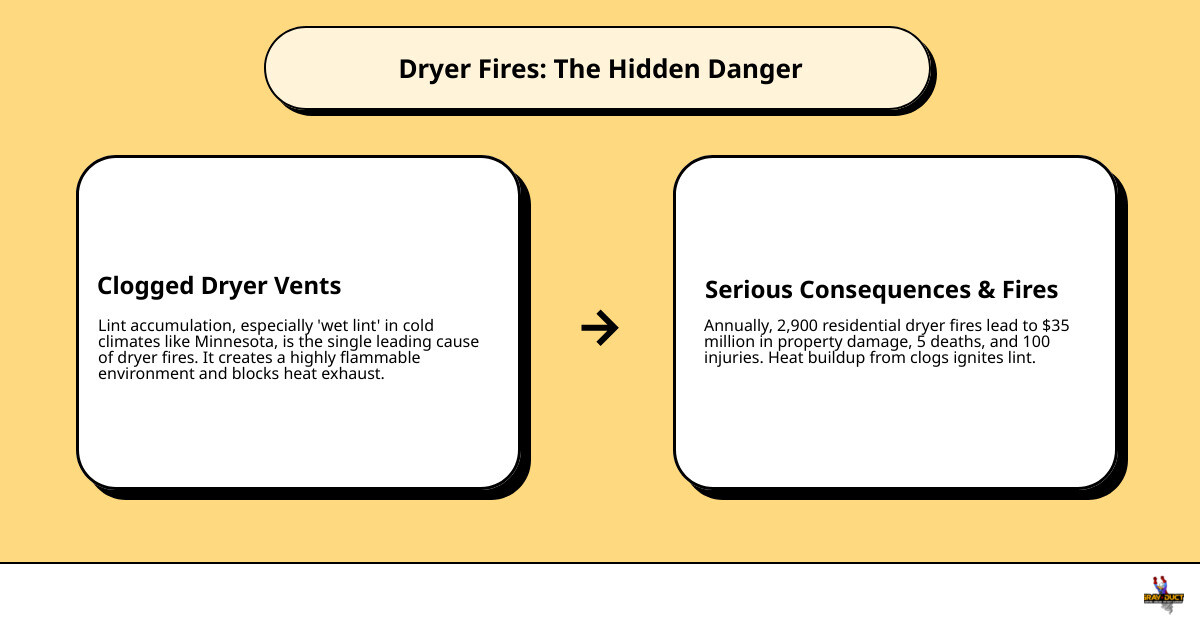
Most homeowners don’t think about their dryer vent until something goes wrong. But by the time clothes stop drying or a burning smell fills the laundry room, the problem has often been building for months. According to the U.S. Fire Administration, nearly 2,900 residential dryer fires break out in the United States every year, causing an estimated $35 million in property damage — and the leading cause is simply failure to clean the vent. Lint is highly flammable, and when it builds up inside a restricted duct, it only takes one heat spike to ignite. For Twin Cities homeowners, where cold Minnesota winters can cause moisture to condense inside vent lines and compact lint even faster, the risk is especially real.
I’m Jason Giandalia, founder of Gray Duct Heating, Cooling & Air Duct Cleaning, and I’ve seen how easy it is to overlook the signs your dryer vent needs repair — until a clog causes a near-miss or forces an expensive dryer replacement that could have been avoided entirely. Let’s walk through exactly what to look for so you can catch problems before they become emergencies.
Why You Shouldn’t Ignore Signs Your Dryer Vent Needs Repair in the Twin Cities
In our line of work across the South Metro, we often encounter homeowners who assume a “tired” dryer just needs a few more minutes to get the job done. However, ignoring the signs your dryer vent needs repair is playing a dangerous game with fire safety. Lint is essentially highly flammable tinder. When your vent is restricted, heat backs up into the dryer drum and the internal cabinet.
The National Fire Protection Association (NFPA) identifies clogged dryer vents as the single leading cause of dryer fires. Every year, these incidents result in approximately 5 deaths, 100 injuries, and millions in property loss. In Minnesota, our long winters mean we use our dryers more frequently, and the temperature differential between the hot exhaust and the freezing outdoor air can cause “wet lint” to stick to the sides of the duct, accelerating the clogging process.
Beyond the immediate danger, a damaged or blocked vent forces your appliance to work significantly harder. This doesn’t just wear out the motor or heating element; it hits your wallet directly through increased utility costs. Can a Clogged Dryer Vent Cause a Fire? The answer is a resounding yes, and the risk increases every day the problem is ignored.
Risk Comparison: Clean vs. Clogged Dryer Vents
| Feature | Clean Vent System | Clogged/Damaged Vent |
|---|---|---|
| Fire Risk | Minimal | Extremely High (Leading cause of dryer fires) |
| Drying Time | ~45 Minutes | 60-90+ Minutes (Multiple cycles) |
| Energy Usage | Standard | Up to 30% Increase |
| Appliance Lifespan | 10–13 Years | 5–7 Years (Premature failure) |
| Air Quality | Safe | Potential for mold or Carbon Monoxide |
Performance and Visual Red Flags in Your Minnesota Laundry Room
Identifying signs your dryer vent needs repair starts with paying attention to how your machine behaves. We often see homeowners in Bloomington or Lakeville replace a perfectly good dryer because they think it’s “dying,” when in reality, the vent line is simply choked with lint. If you find yourself troubleshooting dryer vent problems, start with these performance indicators.
Signs your dryer vent needs repair: Extended Drying Cycles
The most common symptom of a failing vent system is the “double dry.” A standard load of laundry should be dry and warm after a single 45-minute cycle. If you find yourself running the dryer for 90 minutes or restarting it for a second round, your vent is likely restricted.
When airflow is blocked, the moist air cannot escape the drum. Instead of being exhausted outside, that moisture stays trapped with your clothes, essentially steaming them instead of drying them. This puts massive strain on the heating element and can lead to a dryer vent cleaning frequency that is much higher than the recommended annual visit if the duct isn’t properly repaired.
Signs your dryer vent needs repair: Overheating and Mid-Cycle Shutdowns
Modern dryers are equipped with safety features like thermal fuses. If the internal temperature exceeds safe limits because hot air can’t escape through the vent, the machine will shut itself off to prevent a fire.
If your dryer frequently stops mid-cycle, don’t just wait for it to cool down and restart it. This is an emergency shutdown. Furthermore, if the top of the dryer or the clothes themselves are “scorching” hot to the touch, it’s one of the major 7 warning signs your dryer vent is clogged. Heat should be moving through the vent, not soaking into the appliance’s metal cabinet.
Sensory Cues and Physical Damage
Your senses are great diagnostic tools. Do you notice a faint burning odor when the dryer is running? This is the smell of lint fibers beginning to scorch near the heating element. Stop the dryer immediately and unplug it if you smell burning.
Alternatively, a musty or moldy smell indicates that moisture is being trapped in the vent line. Over time, this can lead to mold growth inside your walls where the vent travels. You might also see physical evidence, such as excessive lint accumulating on the floor behind the dryer or stuck to the wall. This happens when the back-pressure in the vent is so high that lint is forced out of the connection joints. If you identify and fix dryer vent issues early, you can avoid the structural damage caused by long-term moisture leaks.
Exterior Vent Flap and Duct Integrity
Take a walk outside while the dryer is running. You should see the exterior vent flap or louvers open wide, and you should feel a steady, strong stream of warm air. If the flap is barely moving or is stuck shut with lint, your dryer is “choking.”
In the Twin Cities, we also see issues with pests like birds or squirrels nesting in vents during the spring. This creates a total blockage that is a major fire hazard. Additionally, look at the transition hose behind the dryer. If it’s a flexible plastic or foil hose that is crushed or kinked against the wall, it needs to be replaced. We often recommend dryer hose repair in Lakeville, MN to switch homeowners over to rigid metal ducting, which is safer and doesn’t crush as easily.
Professional Solutions for Dryer Vent Maintenance in the South Metro
While a homeowner can easily clean a lint trap, cleaning a 20-foot vent line that runs through a ceiling or floor joist requires specialized equipment. At Gray Duct Heating, Cooling & Air Duct Cleaning, our team uses high-pressure air nozzles and industrial-grade brushes to ensure the entire length of the duct is clear.
We don’t just “blow out” the lint; we perform a comprehensive inspection. This often includes using cameras to check for disconnected joints inside the walls or hidden damage from rodents. If we find that your vent was installed using unsafe materials like plastic “slinky” tubing, we can provide professional dryer vent repair services to bring your home up to modern building codes.
Our dryer vent cleaning services are designed to restore airflow, reduce your energy bills, and—most importantly—give you peace of mind that your home is safe from preventable fires.
Frequently Asked Questions
How often should I have my dryer vent professionally cleaned?
For most households in the Twin Cities, we recommend a professional inspection and cleaning at least once a year. However, if you have a large family and run several loads a day, or if your vent line is particularly long (over 15 feet) with multiple bends, you may need service every 6 to 9 months. Keeping a consistent dryer vent cleaning frequency is the best way to prevent the performance issues mentioned above.
What are the specific risks for gas dryers with clogged vents?
Gas dryers carry an additional risk: Carbon Monoxide (CO). A gas dryer produces CO as a byproduct of combustion. Normally, this odorless, colorless, and deadly gas is exhausted safely outside through the vent. If the vent is clogged, CO can back up into your laundry room and living spaces. If you notice a “gas” smell or see dark discoloration/soot around the dryer, shut it off immediately and call a professional. Ensuring proper airflow is critical for preventing dryer vent fires and CO poisoning.
Can I repair or clean my dryer vent myself?
You can certainly perform basic maintenance, like cleaning the lint trap after every load and vacuuming behind the dryer. However, DIY vent cleaning kits sold at hardware stores can often get stuck or break off inside the vent, making the problem much worse. Professionals use “reverse-spinning” brushes and compressed air that can navigate bends without damaging the duct. To avoid ignoring dryer vent repairs that are too deep for a vacuum attachment, it’s always safer to call in a certified team.
Conclusion
Your laundry room shouldn’t be a source of stress or a hidden hazard. By staying vigilant and watching for the signs your dryer vent needs repair—from longer drying times to unusual heat—you can protect your home, extend the life of your appliances, and keep your energy bills in check.
Whether you’re in Minneapolis, Eagan, or Savage, our family-owned team at Gray Duct Heating, Cooling & Air Duct Cleaning is here to help. We don’t use third-party contractors; our in-house experts are dedicated to the safety and comfort of our Minnesota neighbors. Don’t wait for a burning smell to take action. Schedule your professional dryer vent cleaning today and breathe easier knowing your home is protected.
<div class="elementor-element elementor-element-b5c55cb elementor-position-left elementor-widgetwidth-initial elementor-widget-tabletwidth-initial elementor-vertical-align-top elementor-widget elementor-widget-image-box" data-id="b5c55cb" data-elementtype="widget" data-e-type="widget" id="post-call-text" data-widgettype="image-box.default">Need HVAC Help?
Our NADCA-certified technicians are ready to help with all your heating, cooling, and air quality needs.
Get Free EstimateMore Articles
 HVAC Tips
What to Do When Your AC and Furnace Share the Same Air Filter
 HVAC Tips
Addressing Drafty Rooms Before Winter: Duct Sealing vs. Window Replacement
 HVAC Tips
Dryer Vent Routing: Rigid Metal vs. Flexible Foil in Cold Climates
 HVAC Tips
Why We Inspect the Heat Exchanger So Closely During Fall Maintenance
 HVAC Tips
Upgrading to a Two-Stage Furnace: Is the Investment Worth It in Minnesota?
Related Articles
Ready to Get Started?
Whether you need a repair, maintenance, or a new system installation, our expert team is here to help.