Comprehensive HVAC Cleaning Explained: Don’t Leave Your Vents Hanging
Gray Duct
Discover what parts of your HVAC system need cleaning for peak efficiency, air quality & longevity. Expert guide with pro tips!
Your HVAC System Has More Parts That Need Cleaning Than You Think
What parts of your HVAC system need cleaning is a question most Twin Cities homeowners don’t ask until something goes wrong — a musty smell, a spike in the energy bill, or allergy symptoms that won’t quit. Here’s the short answer:
Parts of your HVAC system that need cleaning:
| Component | Cleaning Frequency |
|---|---|
| Air filters | Every 1–3 months |
| Supply registers and return grilles | Every 3–6 months |
| Evaporator coils (indoor) | Once a year |
| Condenser coils (outdoor) | Once or twice a year |
| Blower motor and fan blades | Once a year |
| Condensate drain line | Every few months during cooling season |
| Air ducts and plenum | Every 3–5 years (sooner after renovation or if pets/allergies are a factor) |
| Drain pan | At every professional inspection |
| Heat exchanger | Annually by a professional |
| Air filters/cleaners (media or UV) | Per manufacturer schedule |
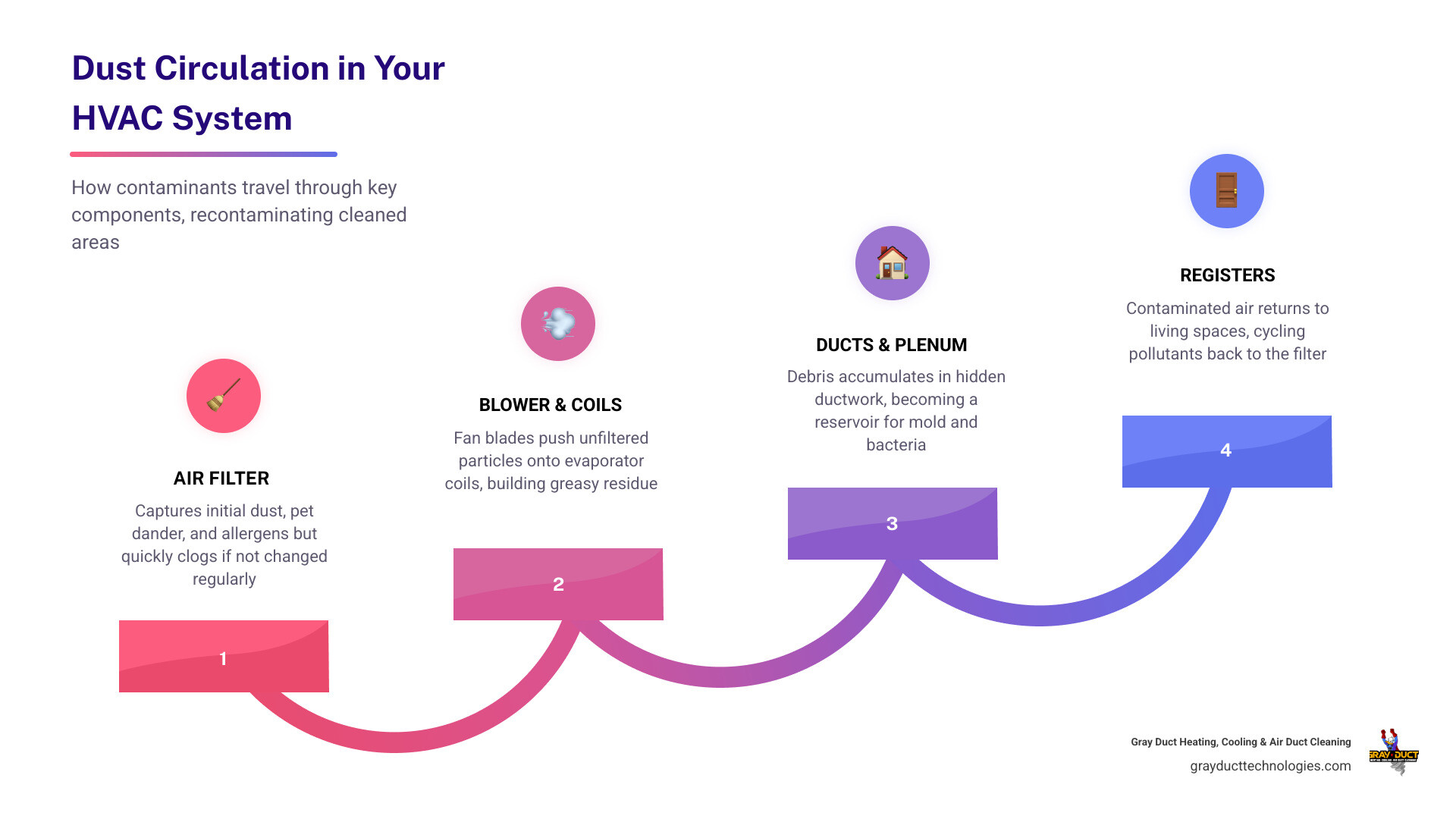
Most people think “HVAC cleaning” just means swapping out a filter. It doesn’t. The National Air Duct Cleaners Association (NADCA) is clear on this: cleaning only part of your system is about as useful as mopping half your kitchen floor. Dust and debris left in one component will simply recontaminate the parts you just cleaned. The entire system needs attention — from the air handler in your utility room to the condenser sitting outside in the Minnesota cold.
Here’s what makes this matter beyond comfort: HVAC systems account for roughly 43% of a home’s total energy use, and a dirty system can waste 25 to 40% of that energy. A fouled condenser coil alone can push energy consumption up by 20 to 30%. Meanwhile, indoor pollutant concentrations typically run 2 to 5 times higher than outdoor levels — meaning your system’s condition is directly tied to the air your family breathes every day.
I’m Jason Giandalia, founder of Gray Duct Heating, Cooling & Air Duct Cleaning, and after pulling access panels on hundreds of residential HVAC systems across the Twin Cities, I can tell you that what parts of your HVAC system need cleaning is almost always a longer list than homeowners expect — and the most critical items, like coils and drain lines, are the ones most often skipped. In the sections below, we’ll walk through every component, what warning signs to watch for, and what you can safely handle yourself versus what needs a certified professional.
What parts of your hvac system need cleaning?
When we talk about a “complete” system cleaning, we aren’t just talking about the vents you see on the floor or ceiling. A comprehensive approach involves every component that air passes through. If you miss one, the system remains a reservoir for dust, pet dander, and allergens.
The primary components that require attention include:
- Air Ducts: These are the “arteries” of your home. Over time, they accumulate significant debris. In the Twin Cities, where we keep our windows shut for much of the year, this buildup happens steadily. Air Duct Cleaning is essential to prevent these contaminants from recirculating.
- Supply Registers and Return Grilles: These are the visible entry and exit points. They often act as magnets for sticky kitchen grease and pet hair, which then trap more dust.
- Air Plenum: This is the box that connects your ductwork to the air handler. It is a high-velocity area where dust often settles in thick layers.
- Heat Exchanger: In our Minnesota winters, the heat exchanger works overtime. Dust buildup here isn’t just an efficiency issue; it can lead to overheating and system stress.
- Air Filters: While these are the most commonly replaced parts, they are also the first line of defense. Understanding Regular AC Duct Cleaning Importance starts with realizing that a clogged filter forces dust to bypass the edges and settle directly on your expensive internal components.
Identifying what parts of your hvac system need cleaning in the air handler
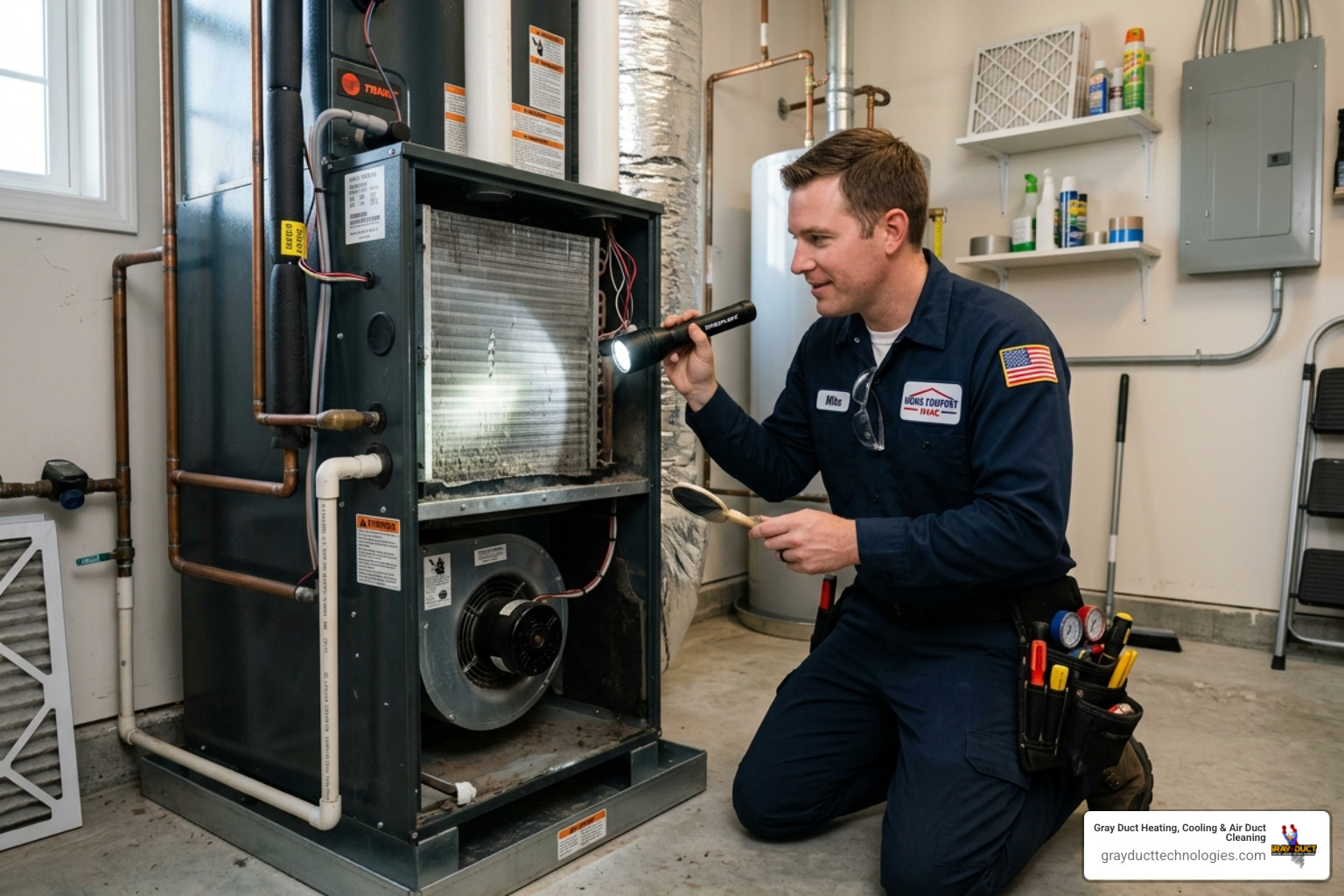
The air handler is the heart of the operation, usually tucked away in a basement or utility closet in homes from Minneapolis to Lakeville. Inside this unit, several moving parts require precision cleaning.
The blower motor and fan blades are particularly sensitive. As dust accumulates on the fan blades (the blower wheel), it adds weight. This weight creates an imbalance, causing the motor to work harder and increasing “static pressure”—the resistance the system must overcome to move air. This extra friction leads to premature motor failure and higher electricity bills. Cleaning the motor housing and wiping down each individual blade ensures the system stays balanced and quiet. Regular HVAC Maintenance in Minneapolis MN focuses heavily on these internal mechanics to extend the lifespan of your equipment.
What parts of your hvac system need cleaning for better efficiency?
If you want to see a direct impact on your utility bills, look at your coils. Your HVAC system uses two types of coils to transfer heat: evaporator coils (indoor) and condenser coils (outdoor).
The indoor evaporator coil is usually cold and damp, making it a perfect trap for fine dust. Even a thin layer of “fuzz” on these coils acts as insulation, preventing the refrigerant from absorbing heat from your home’s air. This forces the system to run longer cycles to reach your thermostat setting. Meanwhile, the outdoor condenser coil is exposed to cottonwood seeds, grass clippings, and road dust. When these coils are blocked, the system cannot release heat effectively.
Professional AC Coil Cleaning can recover 10% to 15% of your system’s efficiency almost instantly. For a deeper dive into why this matters, check out our Guide to A/C Coil Cleaning.
Essential Maintenance: Coils, Drains, and Blower Assemblies
Maintenance isn’t just about removing dry dust; it’s about managing moisture and protecting delicate metal surfaces.
The Coils and Fins: The aluminum fins on your coils are incredibly fragile. If they are bent, airflow is restricted. We use specialized fin combs to straighten these out, ensuring air can pass freely through the coil. For cleaning, we often utilize no-rinse foaming cleaners. These expand into the tight spaces between the fins, breaking down grime and then draining away naturally as the system creates condensation. You can read more about these methods in our post on Efficient A/C Coil Cleaning Solutions.
The Condensate Drain Line: As your AC removes humidity from the air, that water has to go somewhere. It drips into a drain pan and flows out through a PVC pipe. Because this environment is dark and wet, it’s a breeding ground for algae and “slime.” If this line clogs, the water will back up, potentially causing thousands of dollars in water damage to your floors or ceiling.
A simple DIY tip for homeowners in areas like Edina or Woodbury is to pour a cup of distilled white vinegar down the drain line clean-out port every few months during the summer. This helps break down algae before it turns into a solid blockage.
Recognizing the Signs: When Your System is Clogged or Dirty
How do you know it’s time to look into what parts of your HVAC system need cleaning? Your home will usually give you a few hints:
- The “Dirty Sock” Smell: This musty odor is a classic sign of mold or bacterial growth on your evaporator coils.
- Weak Airflow: If some rooms feel warmer than others, or you can barely feel air coming out of the registers, your blower motor or air filter is likely choked with debris.
- Visible Dust “Poof”: Do you see a cloud of dust when the heat or AC first kicks on? That’s a sign your ducts are overloaded.
- Rising Utility Bills: If your May 2026 energy bill is significantly higher than May 2025 without a major change in weather, your system is likely struggling against dirt.
- Allergy Flare-ups: Increased sneezing or itchy eyes while indoors suggests your HVAC system is recirculating pollen and pet dander rather than filtering it out.
Don’t forget that your HVAC system isn’t the only thing moving air in your home. A clogged dryer vent can also impact your indoor air quality and pose a significant fire hazard. We always recommend checking your Dryer Vent Cleaning needs alongside your HVAC maintenance.
Professional Standards vs. DIY Safety Precautions
While there are tasks a homeowner can handle, a deep system cleaning requires specialized equipment and a “safety-first” mindset.
| Task | DIY Safety Level | Professional Requirement |
|---|---|---|
| Filter Replacement | Safe & Recommended | N/A |
| Register/Grille Vacuuming | Safe | Included in full service |
| Outdoor Unit Debris Removal | Safe (Hose only) | Deep coil chemical cleaning |
| Internal Blower Cleaning | Risky (Fragile parts) | High-suction HEPA vacuum |
| Air Duct Agitation | Not Possible | Rotary brushes & air whips |
| Condensate Drain Flush | Safe (Vinegar) | Vacuuming active clogs |
Safety Precautions: Before you attempt any DIY cleaning, you must power down the system. This means turning it off at the thermostat AND flipping the switch at the breaker box. For the outdoor unit, there is usually a disconnect box nearby that should be pulled.
Professional Tools: When our team arrives at a home in Bloomington or Plymouth, we use negative pressure machines. We hook a high-powered vacuum to your main trunk line, creating a vacuum throughout the entire house. As we use agitation tools like air whips and brushes to knock dust loose, the vacuum pulls it directly out of your home and into our truck.
In some cases, especially where odors or mold are present, we may use EPA-registered antimicrobial chemicals or System Fogging. These biocides are only used after the physical “source removal” of dust is complete, ensuring the treatment actually reaches the surfaces of the system.
Post-Renovation Recovery and Advanced Air Purification
If you’ve recently finished a kitchen remodel in Saint Paul or a basement finishing project in Maple Grove, your HVAC system has likely inhaled a massive amount of drywall dust and sawdust. Construction debris is heavy and abrasive; it can wear down motor bearings and completely coat your coils in a matter of days.
Post-Renovation Steps:
- Seal Registers: During the project, keep vents taped off with plastic.
- Change Filters Immediately: Do this the day the contractors leave.
- Schedule a Deep Clean: Even with the best precautions, fine dust finds its way into the return air plenum.
For homeowners looking for long-term protection, we often recommend upgrading to polarized media air cleaners and UV lights. Unlike standard filters that just wait for dust to hit them, Polarized Media Air Cleaners & UV Lights use an electric charge to “grab” tiny particles out of the air.
Pairing these with APCO-X Air Purifiers provides a pharmaceutical-grade level of clean by neutralizing odors and biological contaminants. If you are exploring Air Purifiers in Minneapolis MN, these in-duct solutions are far more effective than small portable units because they treat every cubic foot of air in your home.
Frequently Asked Questions about HVAC Cleaning
How often should different parts of the system be serviced?
As a general rule for the Twin Cities area, change your filters every 1 to 3 months. Your coils and blower assembly should be inspected and cleaned annually—usually in the spring before the cooling season hits. Air ducts typically need a deep cleaning every 3 to 5 years, though this should be more frequent if you have multiple pets or family members with severe allergies.
Which HVAC cleaning tasks are safe for a DIY approach?
Homeowners can safely replace air filters, vacuum out floor registers, and clear away leaves or tall grass from around the outdoor condenser unit. You can also use a garden hose (at low pressure—never a power washer!) to rinse dust off the outdoor coils. However, cleaning the indoor evaporator coils, the blower motor, and the deep interior of the ductwork requires professional tools to avoid damaging the system or blowing dust back into your living space.
When is the use of antimicrobial chemicals appropriate in duct cleaning?
Antimicrobial treatments or biocides should only be used after the system has been mechanically cleaned. They are appropriate when there is evidence of mold growth, persistent musty odors (like the “dirty sock” smell), or after a home has suffered water damage or a sewage backup. Always ensure the technician is using EPA-registered products designed specifically for HVAC use.
Conclusion
Understanding what parts of your HVAC system need cleaning is the first step toward a healthier, more efficient home. From the hidden blower blades in your basement to the outdoor coils facing the Minnesota elements, every component plays a role in the air you breathe and the money you spend on utilities.
As of May 2026, the technology for indoor air quality has never been better, but it all starts with the basics: keeping the system clean. At Gray Duct Heating, Cooling & Air Duct Cleaning, we take pride in serving our neighbors across the Twin Cities and South Metro. We are a family-owned business, and our in-house certified team handles everything from routine maintenance to complex Air Duct Cleaning without ever using third-party contractors.
Don’t wait for your system to struggle or for your allergies to flare up. Whether you are in Minneapolis, Rochester, or anywhere in between, a clean HVAC system is an investment in your home’s longevity and your family’s health. Give us a call today to ensure your vents aren’t left hanging.
Need HVAC Help?
Our NADCA-certified technicians are ready to help with all your heating, cooling, and air quality needs.
Get Free EstimateMore Articles
 HVAC Tips
What to Do When Your AC and Furnace Share the Same Air Filter
 HVAC Tips
Addressing Drafty Rooms Before Winter: Duct Sealing vs. Window Replacement
 HVAC Tips
Dryer Vent Routing: Rigid Metal vs. Flexible Foil in Cold Climates
 HVAC Tips
Why We Inspect the Heat Exchanger So Closely During Fall Maintenance
 HVAC Tips
Upgrading to a Two-Stage Furnace: Is the Investment Worth It in Minnesota?
Related Articles
Ready to Get Started?
Whether you need a repair, maintenance, or a new system installation, our expert team is here to help.