Busting the Biggest Myths About Air Quality and Your Ducts
Gray Duct
Discover if duct cleaning really improves air quality. Bust myths on allergies, efficiency, and EPA guidelines for healthier Twin Cities homes.
Does Duct Cleaning Really Improve Air Quality? Here’s What the Evidence Actually Says
Does duct cleaning really improve air quality? The honest answer is: it depends — and the science is more nuanced than most cleaning companies will tell you.
| Situation | Does Cleaning Help? |
|---|---|
| Visible mold inside ducts or HVAC components | Yes — cleaning (plus fixing the moisture source) is recommended |
| Rodent or insect infestation in ductwork | Yes — professional cleaning is warranted |
| Excessive dust or debris actively blowing into living spaces | Yes — cleaning can make a real difference |
| Routine cleaning “just in case” | Not supported by evidence — EPA does not recommend this |
| Allergy or asthma symptoms, no visible contamination | Inconclusive — filter upgrades often help more |
| Improving HVAC energy efficiency | Limited evidence — coil and fan cleaning matters more than duct cleaning alone |
The EPA is clear: duct cleaning has never been proven to prevent health problems, and studies don’t conclusively show that dirty ducts raise particle levels in your home. Much of the dust inside ducts sticks to duct surfaces and never actually enters your breathing space. That said, there are specific conditions where cleaning makes sense — and doing it wrong can actually make things worse.
I’m Jason Giandalia, founder of Gray Duct Heating, Cooling & Air Duct Cleaning, and I hold both ASCS certification from NADCA and C-DET certification from CSIA — the credentials that matter most when answering the real-world question of does duct cleaning really improve air quality in homes like yours.
What the Evidence Shows
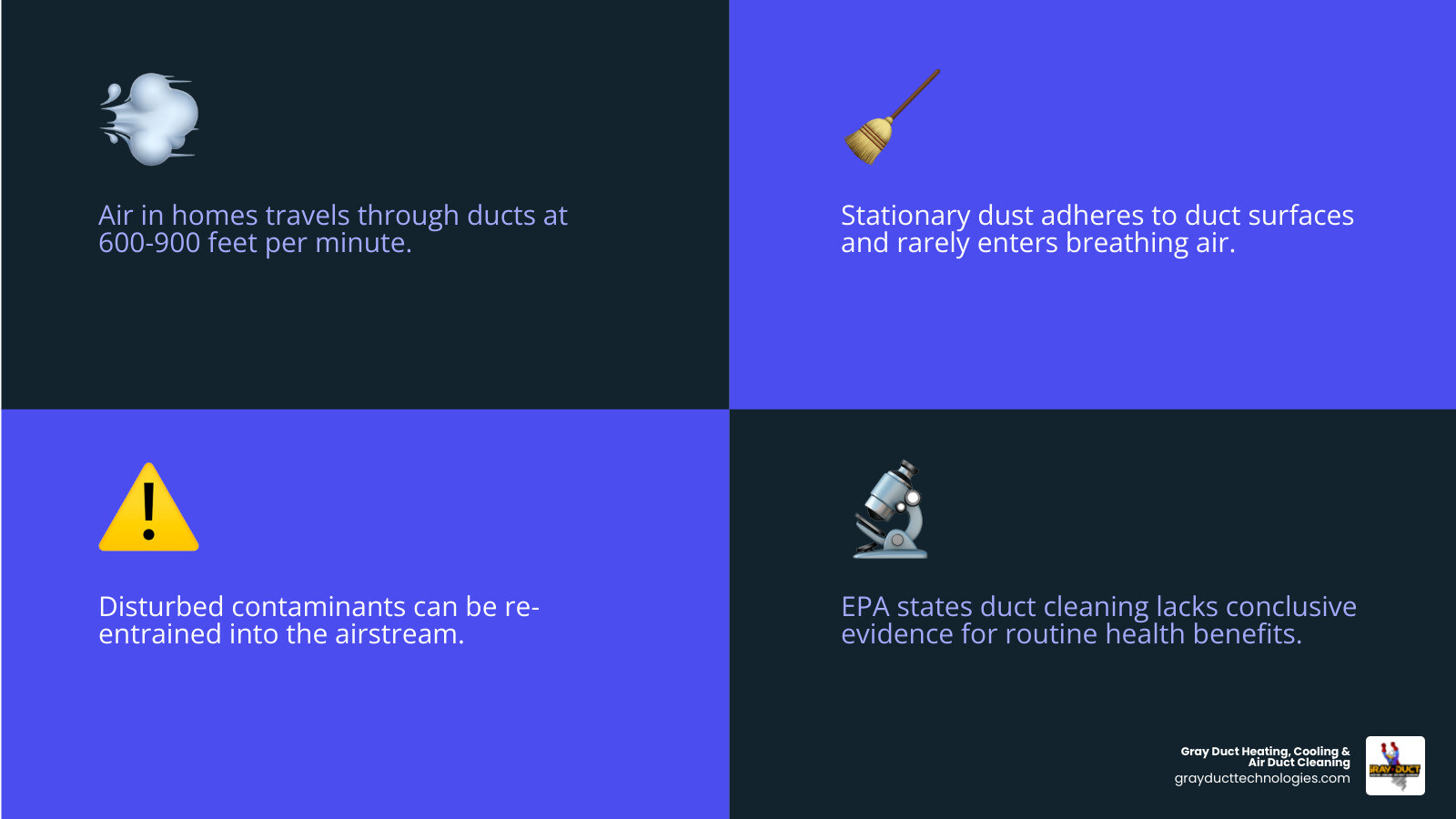
The consensus remains that “dirty” ducts aren’t always a health hazard. The EPA and various scientific reviews highlight that much of the dust found in a typical residential system adheres to the duct surfaces. Because this dust is stationary, it doesn’t necessarily enter the air you breathe.
However, cleaner indoor air quality becomes much more relevant when those contaminants are disturbed. While light dust might stay put, heavier accumulations or biological growth can be re-entrained into the air stream. It is important to distinguish between the reservoir (the ducts) and the breathing zone (your rooms).
For allergy sufferers in Minneapolis
For our neighbors in Minneapolis and Saint Paul, allergies are a serious seasonal struggle. In these cases, ducts can act as massive reservoirs for pet dander, pollen, and dust mite matter. Even if the EPA notes that routine cleaning isn’t always necessary for the general population, those with heightened sensitivities often find that air duct cleaning provides a noticeable difference. When we perform a thorough cleaning, we are removing the biological load that your HVAC system recirculates.
Duct cleaning and system efficiency
There is a common claim that cleaning your ducts will drastically lower your energy bills. The scientific reality is more conservative. Cleaning the ducts alone provides limited evidence of energy savings. However, a full-system cleaning that includes the blower motor, heat exchanger, and cooling coils can significantly improve airflow and efficiency. When dust builds up on the heat exchanger or coils, it acts as an insulator, forcing the system to work harder — especially during our harsh Minnesota winters.
When Professional Cleaning is Essential: EPA Guidelines
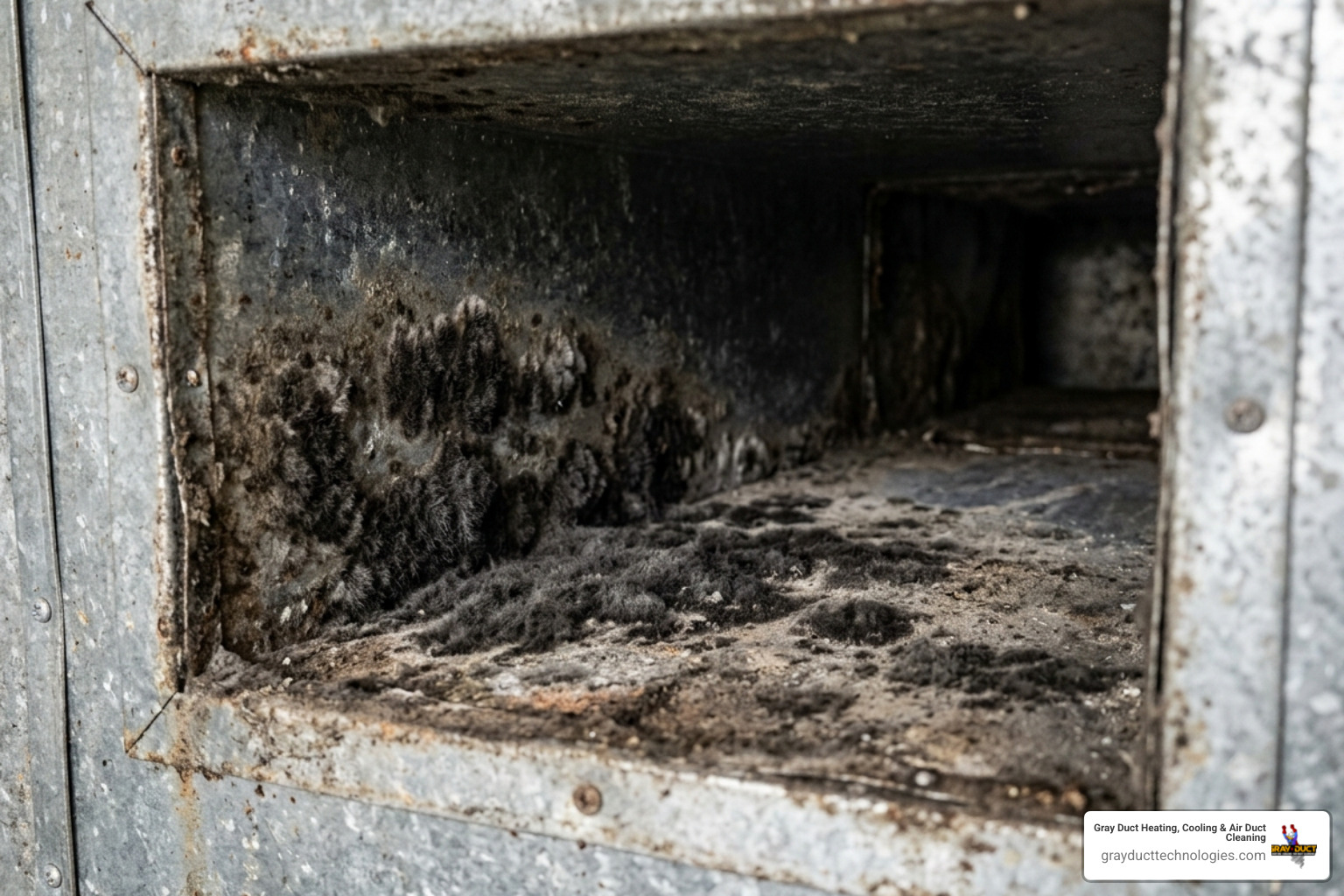
While we don’t believe every home needs an annual cleaning, there are red-flag scenarios where the EPA and health experts agree that professional intervention is necessary:
- Visible Mold: Substantial, visible mold growth inside hard-surface ducts or on other HVAC components. Mold inside fiberglass duct board often requires the material to be replaced, as it cannot be effectively cleaned.
- Vermin Infestation: Rodents or insects nesting in your ductwork. Their droppings and nesting materials pose legitimate health risks.
- Excessive Debris: Ducts clogged with so much dust that particles are actually blowing out of your registers.
- Renovation Dust: Post-construction sawdust, drywall dust, and carpet fibers are heavy and abrasive; they don’t just go away on their own.
Potential Risks: Can Cleaning Worsen Your Air?
It might sound counterintuitive, but a poorly executed cleaning can actually make your indoor air quality worse through contaminant resuspension. If a technician knocks dust loose but doesn’t have the system under proper negative pressure with a HEPA-filtered vacuum, that dust simply gets pushed into your living room. A reputable company will always seal the system to create a vacuum, use specialized tools to agitate dust, and ensure all dislodged particles are captured in a containment unit or HEPA filter.
There are also risks with chemicals. Some companies push biocides or sealants to “kill mold” or “seal in dust,” but the EPA has not registered any biocides for use in internally insulated duct systems. If you don’t address the moisture source causing the mold, the problem will simply return.
Better Alternatives for Long-Term Air Quality
- High-Efficiency Filtration: Upgrading to a MERV 11 or MERV 13 filter can catch the fine particulates (PM2.5) that duct cleaning might miss.
- Moisture Control: Mold cannot grow without water. Ensuring your AC condensate pan drains properly and your humidifier is maintained prevents biological growth.
- Routine Maintenance: Annual inspection catches small leaks or dust build-ups before they become major problems — especially since we seal our homes tight in winter and any existing pollutants become concentrated.
How to Identify Reputable Services in the Twin Cities
The duct cleaning industry has unfortunately been a target for blow-and-go scams. To protect your home, look for NADCA certification (the gold standard), visual before/after verification, comprehensive service (the entire system, not just the vents), and transparency. A trustworthy pro will tell you cleaning is usually needed every 3 to 5 years, or as needed based on conditions.
Frequently Asked Questions about Air Quality
How often should I have my ducts inspected in Minnesota?
In the Twin Cities metro, we recommend a visual inspection every 2 to 3 years. Because our HVAC systems run almost year-round between summer humidity and winter freezes, they accumulate debris faster than systems in more temperate climates.
Can dirty ducts cause my furnace to fail?
While dirty air itself won’t break a furnace, the restriction caused by heavy dust buildup on the blower wheel or A/C coil can cause the system to overheat. This leads to cracked heat exchangers or failed motors — expensive repairs that could have been avoided with basic cleanliness.
Is it normal to see dust on my supply registers?
A little dust on the grilles is normal. However, if you see dark streaks on the ceiling around the vents or puffs of dust when the air kicks on, that indicates a larger reservoir of debris inside the ducts that needs professional attention.
Conclusion
At Gray Duct Heating, Cooling & Air Duct Cleaning, we take a no-nonsense approach to your home’s air. We are a family-owned business serving the Twin Cities from Apple Valley to White Bear Lake, and we don’t believe in upselling services you don’t need. If you have a specific problem like mold, pests, or post-construction dust, professional cleaning is genuinely worth it. Schedule your professional air duct cleaning today with the Twin Cities’ local experts and breathe easier knowing the job was done right.
Need HVAC Help?
Our NADCA-certified technicians are ready to help with all your heating, cooling, and air quality needs.
Get Free EstimateMore Articles
 HVAC Tips
How to Clean Air Ducts Yourself: DIY Maintenance Before a Furnace Upgrade
 HVAC Tips
How to Clean Air Ducts Yourself: Safe DIY Steps vs. Deep Cleaning Realities
 HVAC Tips
How to Clean Air Ducts Yourself: Safe DIY Steps vs. Deep Cleaning Realities
 HVAC Tips
How to Clean Air Ducts Yourself: Safe DIY Steps vs. Deep Cleaning Realities
 HVAC Tips
How to Clean Air Ducts Yourself: Answering Common Homeowner Questions About the Fall Heating-Startup
Related Articles
Ready to Get Started?
Whether you need a repair, maintenance, or a new system installation, our expert team is here to help.