An Essential Guide to How Duct Sealing Reduces Winter Energy Waste
Gray Duct
Learn how duct sealing reduces winter energy waste, improves comfort, and cuts furnace runtime in Minnesota homes.
Why Winter Energy Waste Often Starts Inside Your Walls
Understanding how duct sealing reduces winter energy waste is one of the most practical things a Twin Cities homeowner can do before the cold months hit. Most people assume their furnace is the problem when heating bills climb — but the real culprit is often hidden in the attic, crawlspace, or basement: leaky ductwork quietly bleeding out the warm air your system already worked hard to produce.
How duct sealing reduces winter energy waste — quick answer:
- Leaky ducts allow 20–30% of heated air to escape before it reaches your living spaces
- That lost air forces your furnace to run longer and work harder to hit the same thermostat target
- Sealing those leaks means more warm air actually arrives in your rooms, so your furnace runs less often
- Sealed ducts can meaningfully reduce furnace runtime during peak winter months
- Many homeowners see 15–20% lower heating costs after professional duct sealing
It sounds simple, but the impact on your comfort and utility bills is significant — especially in a Minnesota winter, where temperatures routinely drop well below zero and your heating system runs almost continuously for months at a time.
I’m Jason Giandalia, founder of Gray Duct Heating, Cooling & Air Duct Cleaning, a family-owned indoor air quality and HVAC company serving the Twin Cities metro. With hands-on experience diagnosing airflow problems and sealing duct systems across hundreds of Minnesota homes, I’ve seen how much heating energy leaky ductwork wastes — and exactly how duct sealing reduces winter energy waste in measurable, lasting ways.
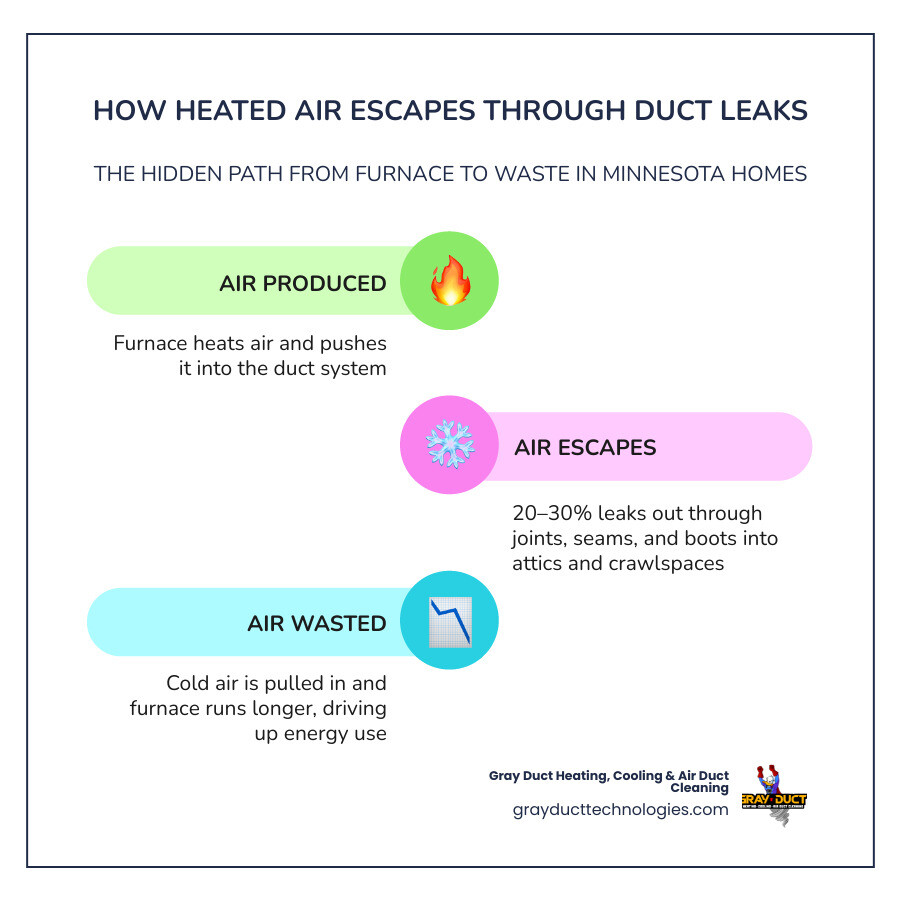
How Duct Sealing Reduces Winter Energy Waste
When we heat a home in Minneapolis, Saint Paul, Lakeville, Eden Prairie, or anywhere else in our Minnesota service area, the goal is simple: produce warm air and deliver it to the rooms where people actually live. Leaky ducts interrupt that process.
Instead of sending heated air to bedrooms, family rooms, and upper floors, leaks dump part of that air into unconditioned spaces like attics, crawlspaces, garages, wall cavities, and unfinished basements. At the same time, return-side leaks can pull in cold, dusty air from those same spaces. That combination wastes heat, disrupts airflow, and makes the furnace run longer than it should.
How duct sealing reduces winter energy waste in real numbers
The numbers are the reason duct sealing matters so much:
- Typical homes can lose 20% to 30% of conditioned air through duct leaks
- Even 20% leakage can make heating equipment work substantially harder
- Proper sealing commonly reduces overall HVAC energy use by 15% to 30%
That is the real answer to how duct sealing reduces winter energy waste: it cuts losses in the delivery system, so your heating system spends less time compensating for air that disappeared before it ever reached a room.
Why winter duct leaks waste more heat than homeowners expect
Duct leaks are a problem year-round, but winter makes them more expensive. In cold weather, any heated air escaping into an attic or crawlspace is basically being donated to a space that does not need it. Meanwhile, return leaks can pull in very cold air, which lowers supply temperatures and makes your system work harder to recover.
Winter also magnifies pressure problems. If supply ducts leak, rooms at the ends of long duct runs may get less warm air. If return ducts leak, the system can draw in cold, dusty air from unconditioned spaces. The result is longer heating cycles, more thermostat overshoot, and more wasted energy.
The rooms-and-runtime connection behind higher winter utility use
Many homeowners think a cold back bedroom or chilly upstairs office is just “how the house is.” Often, it is a duct issue. When some rooms do not receive enough delivered heat, the thermostat keeps calling for more. The furnace runs longer trying to satisfy the set temperature near the thermostat, while farther rooms still stay cool. This is one reason leaky duct systems often create cold spots, uneven temperatures between floors, weak airflow from certain registers, longer furnace cycles, and higher winter utility bills.
Where Winter Duct Leaks Happen Most Often
Duct leaks usually are not random. They show up at stress points, connections, and older sealing materials that have dried out or pulled apart over time.
The most common duct leak locations in older and newer homes
The leak points we most often look for include:
- Joints and seams in metal ductwork
- Connections between trunk lines and branch runs
- Register boots where ducts meet floors, walls, or ceilings
- Return plenums and air handler cabinets
- Filter slots and access panels
- Flex duct connections and bends
- Duct sections in attics, crawlspaces, and unfinished basements
- Disconnected or partially separated runs
Older homes often have dried, cracked sealant or cloth-backed tape that has failed. Newer homes can still have leakage from rushed installation, loose fittings, or gaps around boots and takeoffs.
What causes duct leaks to get worse during cold months
Cold weather does not create every duct leak, but it can make existing ones worse. Common causes include aging sealants losing adhesion, vibration from normal furnace operation, expansion and contraction from temperature changes, sagging or unsupported flex duct, accidental damage during storage or other work in attics and basements, and poor original installation. Minnesota winters are especially hard on systems that run for long periods.
How to spot signs of leakage without opening walls
You do not need to tear into walls to notice clues. Common signs of leaky ducts include:
- Rooms that stay colder than the rest of the house
- Higher heating bills without another obvious cause
- Weak airflow from one or more vents
- Dust collecting around supply registers
- Whistling or rushing sounds near duct joints
- More frequent furnace cycling
- Dirty insulation around exposed ducts
- Musty or attic-like smells when the system runs
A simple homeowner test is to feel around accessible duct joints while the furnace is running. If you notice escaping air, that section needs attention.
How Duct Sealing Improves Comfort and Air Quality
Duct sealing is not only about energy bills. It also helps the house feel more even, cleaner, and easier to heat.
Shorter furnace runtime
A sealed duct system delivers more of the heat your furnace already produced. That improves airflow efficiency, reduces wasted supply air, and lowers strain on the blower and heat exchanger. That translates into shorter heating cycles, less unnecessary runtime, more stable temperatures, improved HVAC efficiency, and less stress on major components.
How sealed ducts help eliminate cold spots and uneven room temperatures
Comfort improves when airflow is more balanced. Sealing supply leaks helps warm air make it to the rooms at the far ends of the system. Sealing return leaks helps the HVAC system pull air back properly, which supports better circulation throughout the home. This often helps with cold bedrooms at the end of a hallway, drafty-feeling upstairs rooms, rooms over garages, and lower-level spaces that never feel warm enough.
How return-side sealing protects indoor air quality in winter
Return leaks are sneaky. Instead of only losing heated air, they can pull contaminants into the system before the air even reaches the filter properly — dust and dirt, insulation fibers, pollen and allergens, mold spores from damp areas, pet dander, and chemical odors from stored products. This matters during winter because houses stay closed up for long stretches. Sealing return ducts helps keep those contaminants out of the system and supports better filter performance. It also pairs well with regular air duct cleaning and maintenance.
Best Duct Sealing Methods for Homeowners
Not all duct sealing materials are equal. And despite the name, standard cloth “duct tape” is usually the wrong choice for HVAC ductwork because it tends to dry out and fail. For local service details, visit our duct sealing page.
| Method | Best use | Key advantage |
|---|---|---|
| Mastic sealant | Irregular joints, seams, boots, small-to-medium gaps | Durable, flexible, long-lasting seal |
| UL-listed foil tape | Straight seams and accessible metal connections | Clean application and strong adhesion |
| Aerosol-based internal sealing | Hidden leaks in hard-to-access duct systems | Reaches leaks manual sealing may miss |
A few best practices matter here: seal leaks before adding insulation, clean surfaces before applying sealant, use mechanical fastening where connections are loose, patch larger holes before finishing with mastic, and focus on plenums, branch connections, register boots, and return leaks first.
When DIY duct sealing makes sense and when it does not
DIY can make sense if the ducts are fully accessible, the leak is visible, the gap is small, and you can safely reach the area. DIY is usually not the best path if the leaks are hidden behind walls or ceilings, the system has major airflow problems, rooms are still cold after basic sealing, duct sections are disconnected, or you are dealing with older, complex, or heavily damaged ductwork.
When homeowners should schedule professional duct testing or inspection
We recommend professional inspection when you notice persistent cold rooms, heating bills that keep climbing without a clear reason, excessive dust around vents, whistling or airflow noise, ductwork older than about 10 to 15 years, signs of disconnected runs or damaged insulation, or poor comfort even after changing filters and scheduling maintenance. Professional testing may include pressure diagnostics, duct leakage testing, and thermal imaging to locate leaks that are not visible.
Combining Duct Sealing With Other Winter Efficiency Upgrades
Duct sealing works best as part of a broader winter efficiency strategy, especially in Minnesota homes where long heating seasons expose every weak point.
Why sealing ducts before insulating them delivers better results
This order matters: seal first, insulate second. If you insulate leaky ducts without sealing them, you are basically wrapping a problem instead of fixing it. Sealing first helps stop warm air loss at the source, improve delivered airflow before insulation is added, reduce condensation and moisture risk, and make duct insulation more effective in attics, crawlspaces, and garages.
How duct sealing supports equipment lifespan and fewer winter repairs
When duct leakage drops, your HVAC equipment does not have to fight as hard to heat the house. That reduced strain can support longer equipment life and fewer wear-related problems over time — less blower stress, reduced furnace cycling, more stable airflow, and less maintenance caused by dust and debris entering through return leaks.
Frequently Asked Questions About Duct Sealing and Winter Energy Waste
How much heating energy can leaky ducts waste in winter?
In many homes, leaky ducts waste 20% to 30% of heated air before it reaches living spaces. That can reduce system efficiency significantly and force the furnace to run much longer to satisfy the thermostat. In cold Minnesota winters, those losses add up fast because the heating system runs so often.
Can duct sealing really improve indoor air quality during the heating season?
Yes. Sealing ducts, especially return ducts, helps prevent dust, insulation fibers, allergens, and other contaminants from being pulled into the HVAC system from attics, crawlspaces, basements, and wall cavities. That means cleaner circulated air and better filtration performance during the months when windows stay shut.
Should I seal ducts myself or have them professionally tested first?
If you can safely access visible ducts and spot a small leak, DIY sealing with proper materials can help. But if you have persistent cold rooms, unexplained winter energy use, dust issues, or hidden duct runs, professional testing is the better route.
Conclusion
In many Minnesota homes, duct leakage quietly wastes a surprising amount of heated air, drives up furnace runtime, creates cold rooms, and pulls unwanted contaminants into the system. Sealing those leaks helps warm air get where it belongs, supports cleaner indoor air, and improves winter comfort across the home.
At Gray Duct Heating, Cooling & Air Duct Cleaning, we help homeowners across Minneapolis, Saint Paul, Bloomington, Eagan, Woodbury, Maple Grove, Lakeville, Rochester, and the surrounding Twin Cities communities improve comfort, airflow, and winter efficiency with in-house HVAC and air quality services. If your home has stubborn cold spots, weak airflow, or heating bills that seem higher than they should be, the next smart step is to have your ductwork evaluated. Learn more about our duct sealing services.
Need HVAC Help?
Our NADCA-certified technicians are ready to help with all your heating, cooling, and air quality needs.
Get Free EstimateMore Articles
 HVAC Tips
What to Do When Your AC and Furnace Share the Same Air Filter
 HVAC Tips
Addressing Drafty Rooms Before Winter: Duct Sealing vs. Window Replacement
 HVAC Tips
Dryer Vent Routing: Rigid Metal vs. Flexible Foil in Cold Climates
 HVAC Tips
Why We Inspect the Heat Exchanger So Closely During Fall Maintenance
 HVAC Tips
Upgrading to a Two-Stage Furnace: Is the Investment Worth It in Minnesota?
Related Articles
Ready to Get Started?
Whether you need a repair, maintenance, or a new system installation, our expert team is here to help.