


Why How Clean Ducts Improve Indoor Air Quality Matters for Twin Cities Homeowners
Understanding how clean ducts improve indoor air quality is one of the most practical things you can do for your family’s health and comfort — especially in Minnesota, where we spend the majority of the year sealed indoors with the windows shut.
Here’s a quick answer before we dive deeper:
How clean ducts improve indoor air quality:
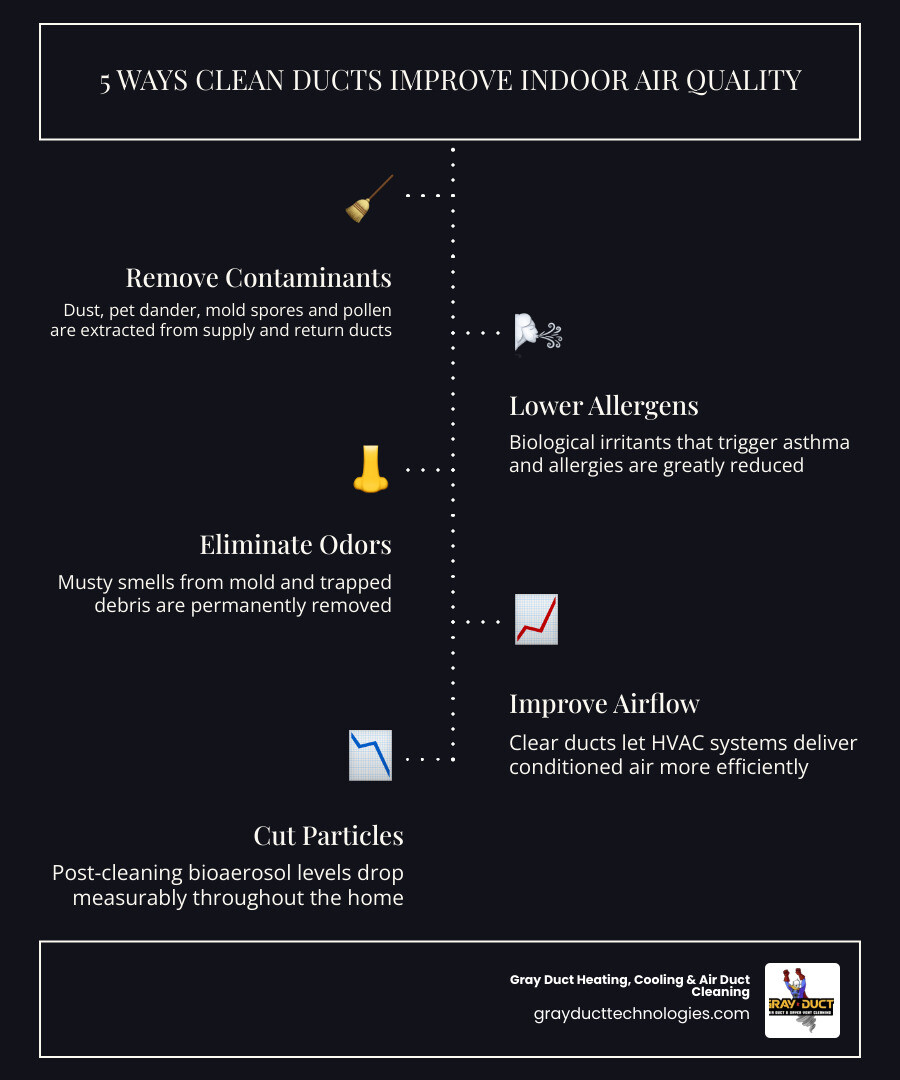
- Remove accumulated contaminants — Dust, pet dander, mold spores, and pollen build up inside ductwork over time and circulate through your home every time the HVAC system runs.
- Reduce allergen and irritant load — Cleaning removes biological material that triggers allergy and asthma symptoms, especially in sensitive household members.
- Eliminate musty odors — Mold growth and debris trapped in ducts create stale, unpleasant air that no amount of air freshener will fix.
- Support better airflow — Clear ducts allow your HVAC system to move conditioned air more efficiently, reducing strain on equipment.
- Lower the concentration of airborne particles — Research shows post-cleaning bioaerosol levels are measurably lower than pre-cleaning levels when cleaning is performed correctly.
The catch? Not every home needs duct cleaning on the same schedule — and not every cleaning job is done right. The EPA is clear that duct cleaning should be done as needed, not as a blanket annual ritual. That nuance matters, and it’s exactly what this guide is built around.
For Twin Cities homeowners dealing with worsening allergy symptoms, musty smells from vents, or HVAC systems that just don’t seem to keep up, this is the guide you’ve been looking for. We’ll walk you through what the research actually says, when cleaning is genuinely justified, and what a professional job should look like — no fluff, no scare tactics.
For more on what’s really in your home’s air, start with The Dirty Truth About Your Home’s Air Quality.
I’m Jason Giandalia, founder of Gray Duct Heating, Cooling & Air Duct Cleaning, and I’ve spent years helping Twin Cities homeowners understand exactly how clean ducts improve indoor air quality — and, just as importantly, when cleaning is truly warranted versus when it isn’t. My NADCA ASCS certification and hands-on experience across hundreds of Minnesota homes give me a ground-level view of what actually works, and I’m sharing all of it here.
What is Professional Air Duct Cleaning?
When we talk about professional air duct cleaning, we are referring to a comprehensive, systemic cleaning of your entire forced-air heating and cooling system. It is a common misconception that duct cleaning simply involves sticking a vacuum hose down a few registers. In reality, a true professional service targets every component that air passes through.
Your home’s HVAC system is a continuous loop. If you only clean one part of it, the remaining dirty sections will quickly re-contaminate the rest. A thorough professional cleaning includes:
- Supply and Return Ducts: The metal or flexible conduits that distribute conditioned air to your rooms and bring stale air back to the furnace.
- Registers, Grilles, and Diffusers: The physical vents on your floors, walls, or ceilings where air enters and exits the rooms.
- Heat Exchangers and Heating Elements: The core components of your furnace that warm the air.
- A/C Evaporator Coils and Drain Pans: The cooling coils that extract heat and moisture from the air. Because these coils are constantly damp during our humid Twin Cities summers, they easily collect dust and can become breeding grounds for mold.
- Blower Motor and Housing: The fan assembly that physically forces air through your ductwork.
To clean these components without releasing dust and debris into your living spaces, we use a specialized process centered on negative pressure.
First, we hook up a high-powered, truck-mounted HEPA vacuum system directly to your main trunk lines. This creates a powerful vacuum throughout the entire system. Because the air pressure inside the ducts is lower than the air pressure in your rooms, any dust loosened during the cleaning is immediately pulled into the vacuum collection unit outside your home, rather than drifting into your living room.
Once negative pressure is established, we seal off individual registers and use specialized mechanical agitation tools. These include rotating brushes, air whips, and compressed-air sweeps. We feed these tools through the ductwork to dislodge stuck-on debris, dust, and biological matter from the interior walls of the ducts. The negative pressure then safely whisks these airborne particles directly out of your home.
To see how this comprehensive process fits into a broader approach to home health, take a look at our detailed guide on Air Duct Cleaning for Indoor Air Quality.
How Clean Ducts Improve Indoor Air Quality by Removing Contaminants
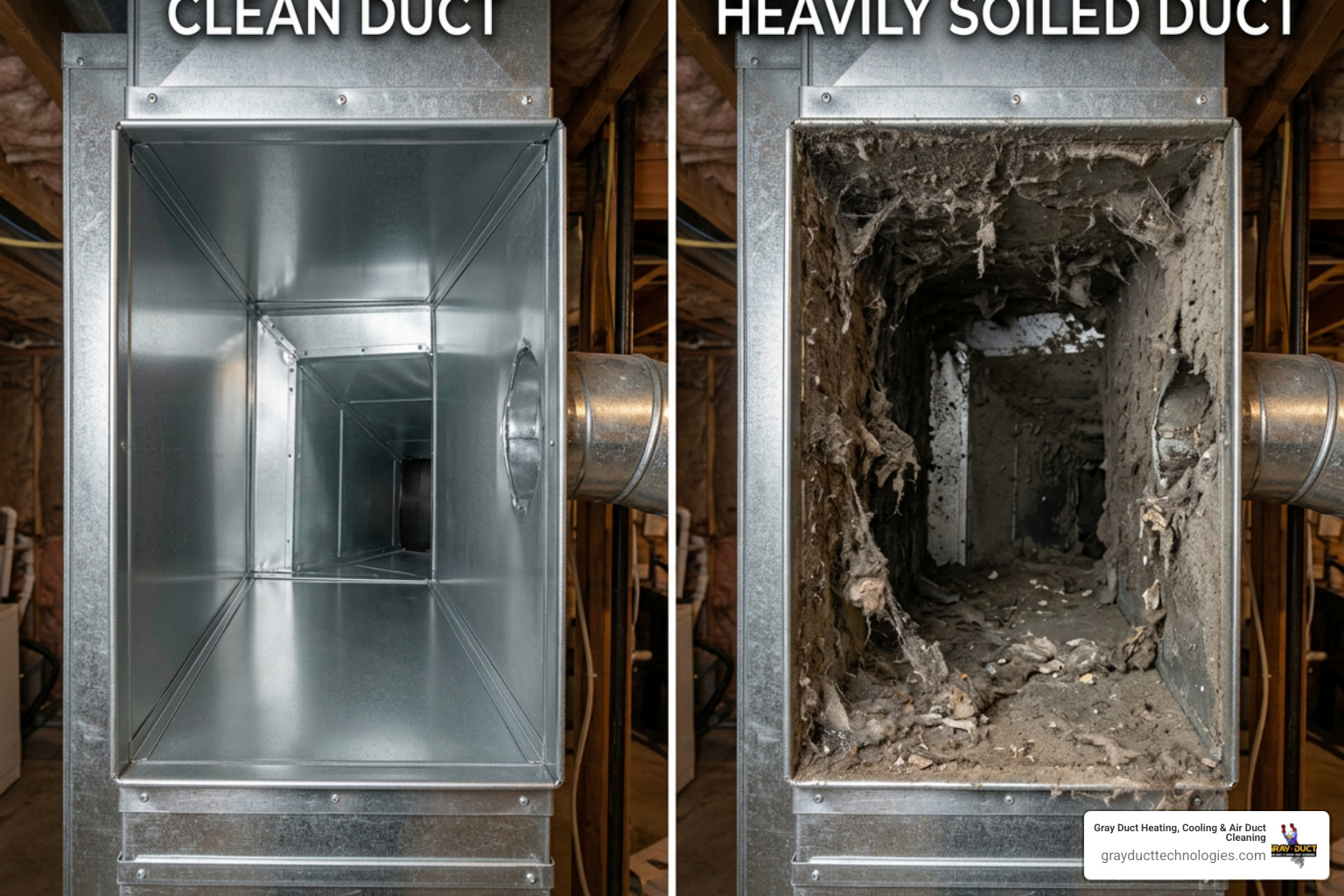
To understand how clean ducts improve indoor air quality, we have to look at what actually settles inside your ductwork over time. Your HVAC system acts like the lungs of your home, pulling air in and breathing it back out. Along with that air, it pulls in a massive volume of microscopic particles.
Here is a breakdown of the primary contaminants that commonly accumulate inside residential ductwork:
- Household Dust and Dirt: Composed of dead skin cells, clothing fibers, soil tracked in from outside, and microscopic debris. Over years, this forms a thick, felt-like layer on the bottom of your horizontal duct runs.
- Pet Dander and Hair: If you share your home with dogs or cats, their dander (microscopic skin flakes) and hair are pulled directly into the return vents. Pet dander is sticky and clings to duct walls, serving as a food source for dust mites.
- Pollen and Outdoor Allergens: Every time doors or windows are opened in places like Eden Prairie, Plymouth, or Minnetonka, outdoor pollen enters. It gets pulled into the HVAC system and settles in the quiet, dark corners of your ductwork.
- Mold Spores: When warm, humid air meets the cold surfaces of your air conditioning system, condensation forms. If moisture accumulates inside the ducts or near the evaporator coils, mold spores can take root and multiply, releasing millions of new spores into your breathing air.
- Insect Debris and Pest Waste: Small insects, spiders, and occasionally rodents can find their way into duct systems, leaving behind droppings, nesting materials, and decaying matter.
- Bioaerosols: These are airborne biological particles, including bacteria, viruses, and fungal fragments, that can attach to dust particles and circulate throughout your living spaces.
When these contaminants accumulate, they don’t always stay put. Air travels through residential ductwork at high velocities—typically between 600 and 900 feet per minute. While a light layer of dust may adhere to the duct walls, heavier accumulations, pet dander, and mold spores are easily disturbed by this powerful airflow. Every time your furnace or air conditioner kicks on, a portion of these settled particles is resuspended and blown directly into your bedrooms, kitchen, and living areas.
Scientific field studies have evaluated how different duct cleaning methods affect these contaminants. For example, researchers comparing contact vacuuming, rotary brushing, and air sweeping found that while cleaning temporarily agitates particles, a proper professional cleaning leads to a measurable, long-term reduction in bioaerosols and airborne particulate matter once the system settles.
By physically removing these reservoirs of dust, dander, and biological matter, you eliminate the source of the pollution. The air circulating through your home is no longer picking up hitchhiking contaminants on its way to your living spaces.
For a deeper dive into how these airborne particles interact with your body, read our article on How Indoor Air Quality Affects Health.
Signs Your Twin Cities Home Needs Air Duct Cleaning
Because ductwork is hidden behind drywall, in crawlspaces, and up in the attic, it is easy to forget about. How do you know when it is actually time to have them cleaned?
We always advise Twin Cities homeowners to look for specific physical indicators rather than relying on a calendar alone. To help you evaluate your system, we have put together this comparison table:
| Indicator / Area | Normal Household Conditions | Severe Duct Contamination (Needs Cleaning) |
|---|---|---|
| Supply Registers & Vents | A light dusting on the outer grilles that easily wipes away during routine house cleaning. | Visible dark, fuzzy buildup clinging to the inside of the slats; dark streaks or “ghosting” on the ceiling around the vent. |
| Airflow Consistency | Consistent, balanced airflow across all registers in the home. | Weak or uneven airflow, where some rooms feel stuffy or significantly warmer/cooler than others due to debris blockages. |
| System Odors | Neutral air or a brief, dusty smell when the furnace is turned on for the very first time in autumn. | A persistent musty, stale, or moldy odor that recirculates every single time the blower motor kicks on. |
| Allergy & Respiratory Symptoms | Typical seasonal allergies that improve when you are indoors. | Worsening allergy symptoms, coughing, or sneezing specifically when you are inside the house, especially when the HVAC is running. |
| Dust Accumulation | Surfaces need dusting every week or two under normal living conditions. | A thick layer of fine grey dust settling on furniture within 24 to 48 hours of a thorough cleaning. |
| Recent Home History | Standard, undisturbed living conditions with regular filter changes. | Recent major renovations, remodeling projects, or a history of water leaks and pest infestations. |
Let’s look at a few of these indicators in detail.
Post-Renovation Debris
If you have recently completed a kitchen remodel in Edina, finished your basement in Woodbury, or done drywall work in Saint Paul, your ducts are likely filled with construction dust. Drywall sanding creates an incredibly fine, powdery dust that bypasses standard HVAC filters. This heavy particulate matter settles deep inside both the supply and return lines, where it will continue to blow out and cover your furniture for months if it isn’t professionally extracted.
Musty Odors
A persistent musty smell is a strong indicator of moisture issues and potential mold growth. Because Minnesota experiences highly humid summers, condensation can pool in unconditioned spaces where ducts run, such as crawlspaces or attics. If mold takes root in these damp areas, the spores will be distributed directly into your breathing air.
If you are noticing these signs and want to understand how cleaning can help relieve your physical discomfort, check out our guide on Improving Allergy Symptoms Through Cleaner Air Ducts.
The Health and Efficiency Benefits of Clean Ductwork
When we clear away years of accumulated dust, pet hair, and microbial growth, the benefits extend far beyond just having less dust to wipe off your coffee table. The positive impacts of how clean ducts improve indoor air quality are felt in both your physical well-being and the mechanical performance of your heating and cooling system.
Health Benefits: Respiratory Relief and Fewer Triggers
For healthy individuals, clean ducts simply mean cleaner, fresher indoor air. But for the millions of Americans living with asthma, chronic allergies, or compromised respiratory systems, clean ductwork can make a world of difference.
Indoor allergens like dust mite waste, pet dander, and mold spores are classic asthma triggers. When these biological materials settle inside your ducts, they are constantly recirculated. Removing this biological load from your HVAC system reduces the concentration of these airborne irritants.
While duct cleaning is not a cure-all, many allergy sufferers in our Twin Cities service areas—from Bloomington to Lakeville—report noticeable relief from nighttime coughing, nasal congestion, and itchy eyes once their home’s major dust reservoirs are eliminated.
Mechanical Benefits: HVAC Efficiency and Longevity
Your heating and cooling system relies on unrestricted airflow to function correctly. When return vents, blower wheels, and A/C evaporator coils are choked with dust, your system has to work significantly harder to move the same volume of air.
Consider these efficiency factors:
- Airflow Restriction: Thick layers of dust on your return grilles and internal duct bends create static pressure, restricting airflow. A scientific field study conducted across several homes showed that mechanical duct cleaning increased supply airflow rates by 4% to 32%, demonstrating how much easier it is for a clean system to breathe.
- Coil Insulation: Your air conditioner’s evaporator coil relies on direct contact with warm indoor air to cool your home. If a fine layer of dust coats those coils, it acts as an insulator. Your A/C will have to run longer cycles to reach the temperature set on your thermostat, wasting energy and accelerating wear and tear on the compressor.
- System Longevity: When a furnace or A/C has to run longer and work harder against restricted airflow, its components wear out prematurely. Dirty blower motors run hotter, and restricted airflow can cause heat exchangers to overheat and crack. Keeping the system clean protects your investment.
To learn more about how clean systems support your physical health, read our article on the Health Benefits of Clean Air Ducts.
Frequently Asked Questions About Air Duct Cleaning
We believe in keeping our clients fully informed. Here are the honest, evidence-based answers to the questions we hear most often from homeowners in Minneapolis, Saint Paul, and the surrounding suburbs.
How often should I schedule service to ensure how clean ducts improve indoor air quality?
For most typical suburban households in the Twin Cities metro, we recommend having your air ducts professionally inspected every 2 to 3 years and cleaned every 3 to 5 years.
However, this frequency depends heavily on your household’s lifestyle and specific health needs. You should consider scheduling a cleaning sooner if:
- You have multiple pets: Dogs and cats shed hair and dander constantly, which fills up return lines much faster than in pet-free homes.
- Someone has severe allergies or asthma: If a family member is highly sensitive to indoor allergens, keeping the ducts on a stricter 2-to-3-year cleaning cycle can help manage their triggers.
- You’ve recently remodeled: As mentioned, construction dust is a primary reason to get your ducts cleaned immediately, regardless of when they were last serviced.
- You are moving into a new home: Cleaning the ducts ensures you aren’t breathing in the dander, hair, and dust left behind by the previous occupants.
For more information on managing indoor allergens, see our post on Air Duct Cleaning for Allergy Relief.
What does the EPA say about how clean ducts improve indoor air quality?
The U.S. Environmental Protection Agency (EPA) takes a highly practical, balanced stance on duct cleaning. The EPA does not recommend that air ducts be cleaned routinely as a preventative maintenance measure. Instead, they advise that you should have your air ducts cleaned on an as-needed basis when specific conditions are present.
According to official EPA guidelines, you should have your ducts cleaned if:
- There is visible, substantial mold growth inside hard-surface ducts or on other components of your heating and cooling system.
- Ducts are infested with vermin (such as rodents or insects).
- Ducts are clogged with excessive amounts of dust and debris, or if you actually see particles being released from your supply registers into your home.
We completely agree with this common-sense approach. We never pressure homeowners into unnecessary annual cleanings. If your system is clean and well-maintained, we will tell you.
For a realistic look at common industry myths, check out Busting the Biggest Myths About Air Quality and Your Ducts.
How does duct cleaning compare to changing air filters?
Duct cleaning and changing your air filters are two entirely different parts of a healthy home maintenance routine. They work together, but one cannot replace the other.
Think of your HVAC filter as your system’s shield. Its job is to catch incoming particles before they can enter your furnace and ductwork. High-quality pleated filters (such as those rated MERV 11 or MERV 13) are highly effective at capturing fine dust, pollen, and dander. However, filters only catch particles that actually pass through them. They cannot clean the dust, construction debris, or mold that has already settled inside your metal duct runs over the years.
- Filter Changes are a continuous, preventative maintenance task. They keep your system running smoothly month to month.
- Duct Cleaning is a deep, restorative process. It physically removes the accumulated “source” of contamination from inside your walls. Once your ducts are clean, keeping up with regular filter changes will ensure they stay clean for a much longer period.
To understand how seasonal shifts affect this balance, read our article on Why Indoor Air Quality Gets Worse in Winter.
Conclusion
At the end of the day, understanding how clean ducts improve indoor air quality helps you make smart, informed decisions for your home. Duct cleaning is not a magic cure for every respiratory issue, nor is it something you need to do every single year. But when your system has accumulated pet dander, construction dust, mold spores, or insect debris, physically removing those contaminants is a highly effective way to clear the air you breathe.
To keep your home’s air fresh, healthy, and flowing freely, remember these three simple steps:
- Inspect your system regularly: Keep an eye out for visible dust buildup on grilles, musty smells, or uneven airflow.
- Maintain your filters: Change your HVAC filters every 2 to 3 months, using high-quality pleated filters that fit your system perfectly.
- Choose a certified professional: When it is time for a cleaning, ensure you hire a team that cleans the entire system under negative HEPA pressure, following NADCA standards.
As a family-owned business deeply rooted in the Twin Cities and South Metro area, we are proud to serve our neighbors in Minneapolis, Saint Paul, Eden Prairie, Plymouth, Woodbury, and throughout the surrounding communities. Our in-house, certified team handles every job with care, ensuring your system is cleaned safely and thoroughly without shortcuts.
If you want to learn more about preparing your home for the colder months, read Breathe Easier This Winter: Why Air Duct Cleaning Matters More in Cold Weather.
Ready to improve your home’s comfort? Explore our comprehensive Indoor Air Quality Services in Minneapolis MN or visit our dedicated Air Duct Cleaning Service Page to schedule a professional inspection and cleaning for your home today.
