


The Dirty Truth About What’s Living in Your Air Ducts
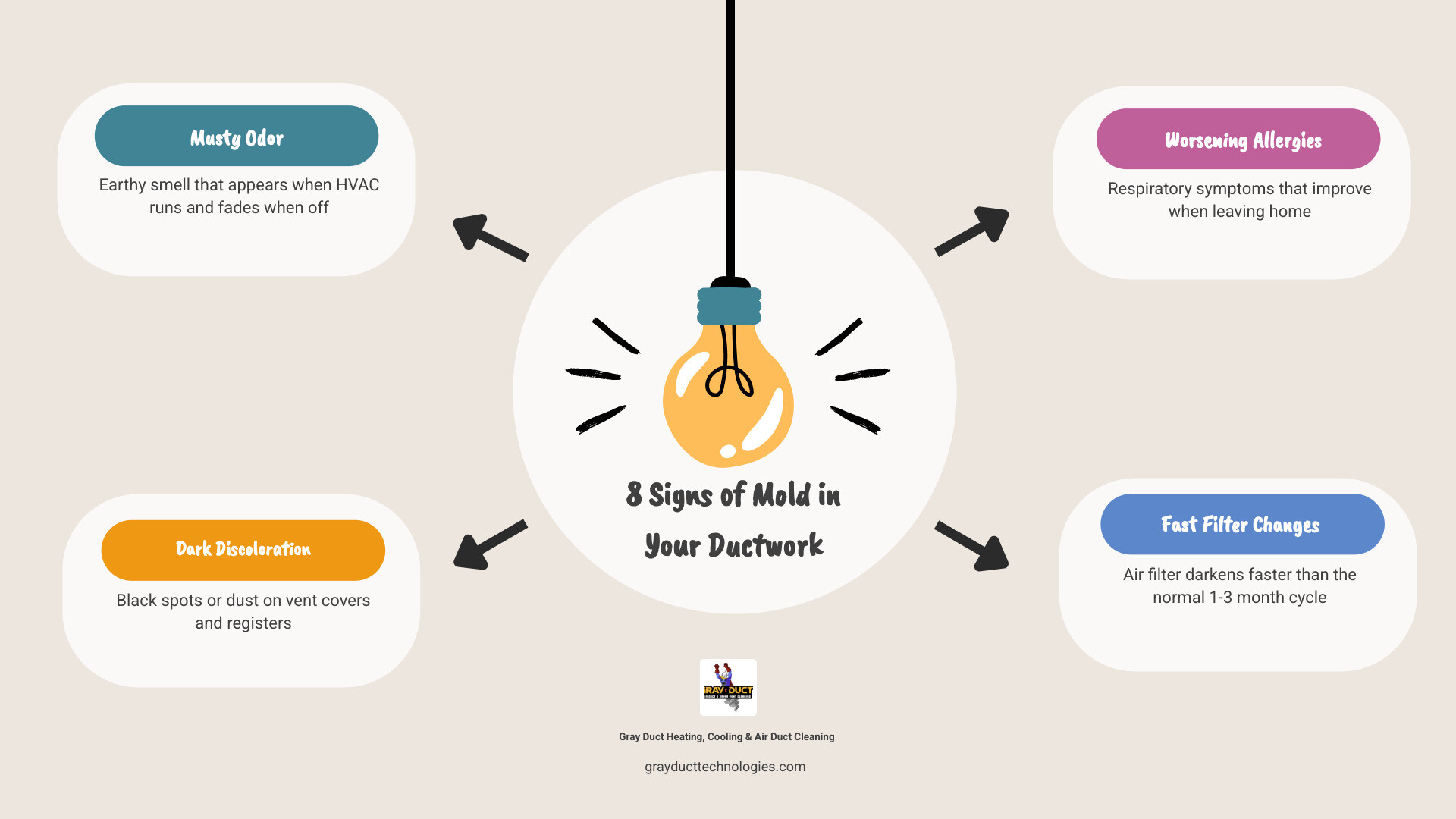
The signs of mold in your ductwork are easy to miss — until they’re not. Most Twin Cities homeowners don’t discover a mold problem in their HVAC system by looking inside the ducts. They notice it through a musty smell that kicks on with the AC, allergy symptoms that flare up at home but ease up when they leave, or dark dust collecting around the vents.
Here’s a quick look at the most common signs:
- Musty or earthy odor that appears when the HVAC system runs and fades when it’s off
- Dark spots or discoloration around vent registers or on vent covers
- Black dust or particles blowing from supply vents
- Worsening allergy or asthma symptoms indoors, affecting multiple rooms
- Condensation or water stains near ductwork or registers
- Air filter turning dark faster than the normal 1–3 month lifespan
- Visible fuzzy or slimy growth inside ducts when you remove a vent cover and look inside with a flashlight
- Symptoms that improve when you leave the house and return when you come back
The reason this matters so much is the way your HVAC system works. Every time it runs, it circulates air — and whatever is inside those ducts — through every room in your home. Mold in ductwork isn’t a localized problem. It becomes a whole-house exposure issue, every single day the system operates.
What makes it worse is how fast it can take hold. Under the right conditions — moisture, organic dust, and darkness — mold can begin growing inside ductwork within as little as 24 to 48 hours. Minnesota’s climate, with its humid summers and the significant temperature swings between conditioned living spaces and unconditioned attics, creates exactly those conditions in many homes across the Twin Cities metro.
I’m Jason Giandalia, founder of Gray Duct Heating, Cooling & Air Duct Cleaning, and over the years I’ve inspected hundreds of HVAC systems across the Twin Cities where hidden moisture and overlooked maintenance had allowed mold to quietly take hold — making this guide on signs of mold in your ductwork something I’m especially focused on getting right for homeowners. In the sections below, I’ll walk you through exactly what to look for, what causes it, and what to do about it.
What Causes Mold to Grow in Your HVAC System?
To understand how mold invades your ventilation system, we have to look at the basic science of microbial growth. Mold spores are naturally present in the air both indoors and outdoors. In their dormant state, these microscopic spores are completely harmless. However, they are constantly searching for the perfect environment to settle, colonize, and multiply.
Your HVAC system and ductwork can easily become that perfect breeding ground if three specific elements align: moisture, a food source, and a stable temperature.
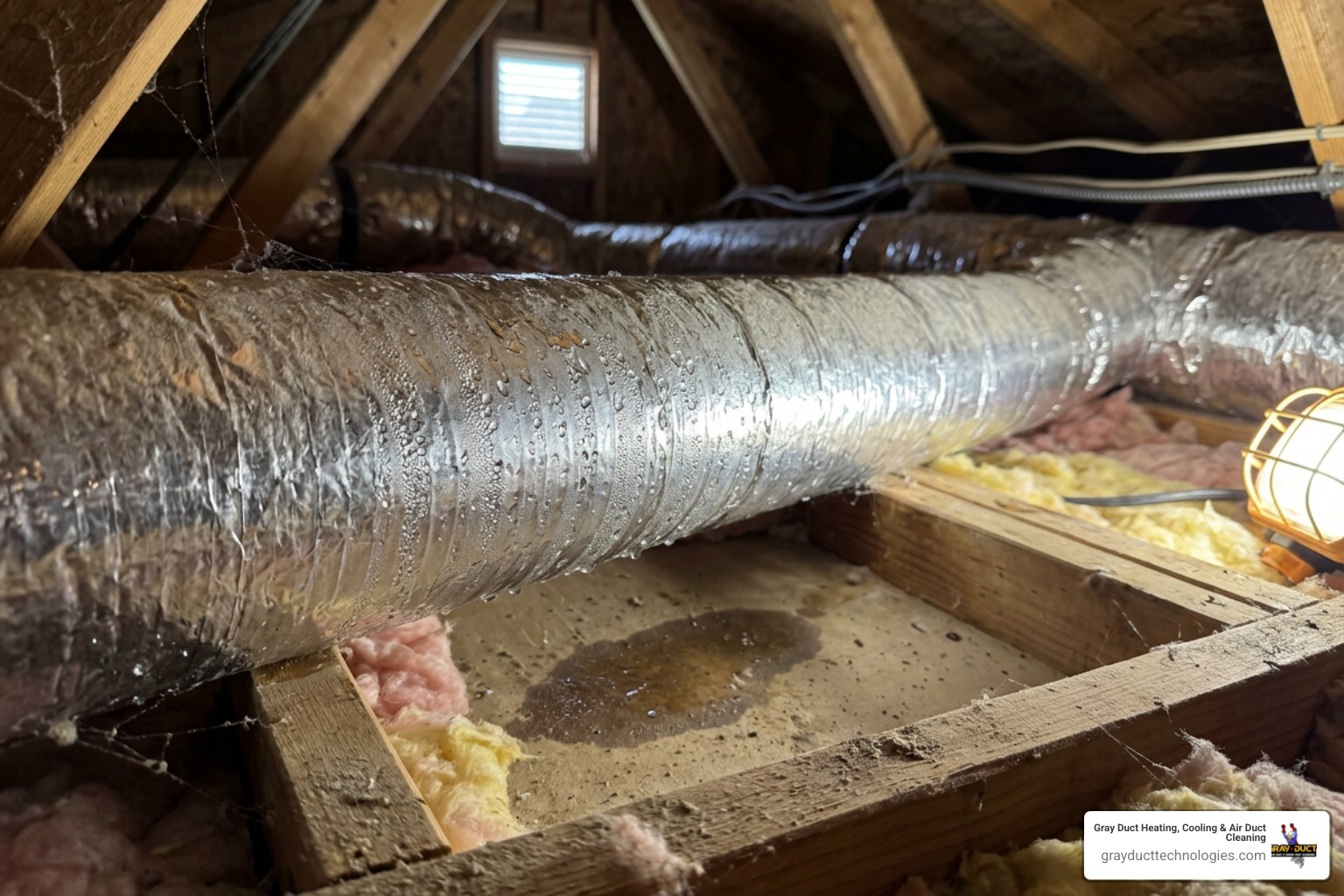
The first and most critical element is moisture. Without moisture, mold simply cannot grow. In the Twin Cities, our summers bring high outdoor relative humidity, often pushing indoor levels up if they aren’t properly managed. When warm, humid air comes into contact with the cold metal surfaces of your air conditioning ducts, condensation forms. This is often referred to as “sweating” ductwork. If your ducts run through unconditioned spaces like a hot attic or a damp crawl space, the extreme temperature differentials accelerate this condensation process.
The second element is a food source. Many homeowners believe that because their ducts are made of sheet metal, mold has nothing to feed on. Unfortunately, this is one of the biggest misconceptions about indoor air quality. Over time, your return ducts collect a steady accumulation of organic dust. This dust is made up of skin cells, pet dander, pollen, and textile fibers. When this organic debris settles on damp metal or clings to the porous fiberglass liners inside your ductwork, it provides an abundant, ongoing buffet for mold spores.
Finally, mold thrives in the dark, undisturbed, and temperature-controlled environment of your HVAC system. Once a spore finds a damp patch of organic dust inside your dark ductwork, it can establish a colony in as little as 24 to 48 hours. To dive deeper into how these physical and chemical reactions occur, you can read our comprehensive article on Understanding the Science of Mold Growth in Ductwork.
Identifying the Signs of Mold in Your Ductwork
Because your ductwork is hidden behind drywall, ceilings, and floorboards, identifying a mold problem requires a bit of detective work. You have to rely on your senses — specifically your sense of smell and your physical well-being.
The most common indicator of mold in your system is a distinct, persistent musty or earthy odor. This smell is caused by microbial volatile organic compounds (mVOCs), which are gases released by mold as it actively grows and digests its food source.
Pay close attention to when this smell occurs. If you only notice the musty odor when your air conditioner or furnace kicks on, and the smell begins to fade once the system cycles off, the source of the odor is almost certainly within your HVAC system. When the blower motor runs, it forces air over the active mold colonies, carrying these smelly mVOCs directly into your living spaces. Ignoring these early warning signs can lead to severe system degradation and structural issues. To understand what happens when these warning signs are overlooked, take a look at the Air Duct Cleaning Neglect Dangers.
Visual Signs of Mold in Your Ductwork
While odor is often the first warning sign, visual clues provide the concrete evidence you need to confirm your suspicions.
To conduct a basic visual inspection, grab a flashlight and head to your register vents. Look closely at the metal grates and the drywall immediately surrounding the vents. Do you see dark spots, green patches, or fuzzy white patterns? Mold often manifests as spotty, circular growth on the backside of your vent covers or along the edges where the vent meets the ceiling.
Another common visual sign is the presence of black dust. Many homeowners mistake this for ordinary soot or dirty air, but if you notice fine, black particles blowing out of your vents and settling on nearby furniture, it could be dried mold spores or microbial growth breaking free from the supply trunks.
Additionally, check your system’s drip pans and evaporator coils. If you see a slimy film in the condensate pan or a layer of fuzzy gray-green growth on the copper coils, mold has already established a strong foothold in your system. This localized growth can quickly spread throughout your entire home as spores are carried by the airflow. For more details on what a clean, healthy system should look like, read our guide on Air Duct Cleaning for Indoor Air Quality.
Health Signs of Mold in Your Ductwork
Sometimes, your body will tell you that there is mold in your ducts before you ever see or smell it. When mold grows inside your HVAC system, the continuous cycle of air distributes millions of microscopic spores into every room. This constant exposure can trigger a range of health issues, particularly for sensitive individuals.
The most common health signs include:
- Persistent sneezing, nasal congestion, and runny nose
- Itchy, watery, or red eyes
- A scratchy throat or chronic, unexplained cough
- Frequent headaches that seem to worsen when you are at home
- Unexplained fatigue and difficulty concentrating (cognitive symptoms linked to prolonged mold exposure)
- Worsening of asthma symptoms or more frequent asthma attacks
A key indicator that your symptoms are tied to your ductwork is their seasonal or situational pattern. If your “allergies” flare up the moment you spend a weekend inside your home but completely clear up when you go to work or travel, your indoor air quality is the likely culprit. This is because your system is delivering a concentrated dose of allergens directly to you. To learn more about how airborne contaminants interact with your respiratory system, explore our detailed analysis of How Indoor Air Quality Affects Health.
Mold vs. Dust: How to Tell the Difference
It is incredibly common for homeowners to mistake ordinary household dust for mold, or vice versa. After all, both accumulate around air vents and registers. However, treating mold as if it were simple dust will not solve the problem, and ignoring mold can lead to widespread contamination.
To help you tell the difference, we have put together this straightforward comparison:
| Characteristic | Household Dust | Active Mold Growth |
|---|---|---|
| Texture | Dry, powdery, fibrous, and easily wiped away | Fuzzy, slimy, or velvety; clings to surfaces |
| Color | Light gray, tan, or brown | Black, dark green, olive, or bright white patches |
| Odor | No distinct smell, or a faint “dry” dusty odor | Strong, musty, damp, or earthy smell |
| Behavior | Accumulates slowly and evenly over months | Spreads in localized, circular, or irregular patches |
| Moisture | Remains dry and does not require water to exist | Always associated with dampness or condensation |
If you wipe a vent cover with a cloth and the residue is dry and powders off easily, you are likely dealing with standard dust. However, if the residue feels damp, smeared, or has a distinct, earthy smell, you are dealing with a microbial issue. For a deeper look into common misconceptions about home ventilation, check out our article on Busting the Biggest Myths About Air Quality and Your Ducts.
What to Do If You Suspect Mold: DIY vs. Professional Remediation
If you have confirmed the signs of mold in your ductwork, your immediate next step is crucial. Many homeowners naturally want to grab a bucket of soapy water or a bottle of bleach and start scrubbing. While cleaning your removable register covers with detergent and water is a safe and effective DIY task, attempting to clean deep inside your ductwork yourself is highly discouraged.
First, let’s talk about bleach. You should never use bleach to clean mold in air ducts. Bleach is highly corrosive to metal ductwork, and its fumes can be dangerous when circulated through your home’s ventilation. Furthermore, bleach does not effectively penetrate the root structures of mold on porous surfaces, meaning the mold will simply grow back within a few days.
Second, without professional containment and negative pressure equipment, DIY cleaning often does more harm than good. Agitating mold colonies without proper containment releases millions of spores into the air, allowing them to settle in other areas of your home and turn a localized duct issue into a widespread household mold problem.
The Environmental Protection Agency (EPA) recommends professional remediation whenever mold contamination covers more than 10 square feet or involves inaccessible areas like the interior of your air ducts.
A professional process involves:
- Source Identification: Finding and repairing the underlying moisture issue (like a clogged AC drain line or leaking seam) so the mold cannot return.
- Containment: Sealing off the work area and putting the duct system under negative pressure using specialized HEPA-filtered vacuums to prevent spores from escaping into your living space.
- Mechanical Agitation: Using specialized brushes and whips to safely dislodge mold from duct walls.
- Sanitization: Applying EPA-registered, HVAC-safe antimicrobials to non-porous surfaces.
- Porous Material Management: Safely removing and replacing contaminated porous materials, like fiberglass duct liners, which cannot be reliably cleaned.
To understand why this level of care is necessary for a lasting clean, read about Why Professional Air Duct Cleaning Matters and review The Cost vs Benefit Breakdown of Professional Air Duct Cleaning.
Frequently Asked Questions About HVAC Mold
Managing your home’s indoor air quality can feel overwhelming, but keeping your living environment safe doesn’t have to be complicated.
To help you keep your home’s air clean, dry, and healthy, here is a quick list of essential mold prevention steps every homeowner should follow:
- Monitor Humidity: Keep your indoor relative humidity below 50% year-round using dehumidifiers and exhaust fans.
- Change Filters Regularly: Replace your HVAC filters every 1 to 3 months to prevent dust buildup.
- Inspect Condensate Lines: Ensure your AC drain pan flows freely and is not holding standing water.
- Schedule Maintenance: Have your heating and cooling systems professionally inspected and serviced annually.
- Seal Duct Leaks: Insulate and seal ducts running through unconditioned attics or basements to prevent condensation.
Below, we answer some of the most common questions we hear from Twin Cities homeowners about mold in their ventilation systems.
Can mold in air ducts make my family sick?
Yes, mold in your air ducts can absolutely cause health issues for your family. Because your HVAC system acts as the respiratory system of your home, any active mold growth inside the ducts will continuously shed spores and mVOCs into the air you breathe.
While healthy adults may only experience mild symptoms like temporary nasal congestion, throat irritation, or minor headaches, vulnerable populations are at a much higher risk. This includes infants, young children, the elderly, individuals with chronic lung diseases like COPD, and anyone with a compromised immune system. For those with asthma or severe environmental allergies, breathing in mold spores can trigger severe, ongoing attacks. You can find more detailed information on this topic in our guide on How Indoor Air Quality Affects Health.
Will standard air duct cleaning remove mold permanently?
Standard air duct cleaning can successfully remove mold from hard, non-porous surfaces like sheet metal ductwork, but it is not a permanent fix on its own. Mold is always a moisture problem first and a cleaning problem second. If you clean the mold but do not fix the source of the moisture — whether it’s a sweating duct in a hot attic, a clogged condensate drain, or high indoor humidity — the mold will return, often within 24 to 48 hours.
Additionally, porous materials inside your HVAC system, such as fiberglass insulated duct liners or flexible ductwork that has been heavily contaminated, cannot be reliably cleaned of mold. According to EPA guidelines, these materials must be removed and replaced. To learn more about how professional cleaning prevents future microbial growth, read AC Duct Cleaning Prevent Mold Growth.
How can I prevent mold from returning to my ducts?
Preventing mold from returning requires consistent moisture control and regular system maintenance. First, keep your home’s relative humidity below 50% (ideally between 30% and 50%). You can easily monitor this with an inexpensive device called a hygrometer. Use exhaust fans in your kitchen and bathrooms, and run a dehumidifier in damp basements.
Second, use high-quality pleated MERV filters and change them on a strict schedule. This keeps dust (the mold’s food source) out of your system. Third, make sure your AC’s condensate drain lines are cleaned and inspected annually so water doesn’t back up into your air handler. If you want to know more about the long-term consequences of neglecting your ventilation system, take a look at our article on What Happens If You Don’t Clean Your Air Ducts.
Conclusion
Detecting the signs of mold in your ductwork early can save you from poor indoor air quality, ongoing allergy symptoms, and extensive home remediation. If you have noticed musty odors when your system runs, visible dark spots around your vents, or persistent respiratory symptoms that improve when you leave the house, it is time to take action.
At Gray Duct Heating, Cooling & Air Duct Cleaning, we are a family-owned business deeply rooted in the Twin Cities and South Metro area. We serve homeowners across Minneapolis, Saint Paul, and surrounding suburbs like Bloomington, Eagan, Plymouth, Woodbury, and Burnsville. We pride ourselves on using our own certified, in-house technicians — never third-party contractors — to ensure that every job is done safely, thoroughly, and to the highest standards.
Don’t let hidden mold compromise your family’s comfort and health. Contact us today to Schedule Professional Air Duct Cleaning and breathe easier in your home.
