

Is System Fogging Worth the Additional Cost? Here’s What Twin Cities Homeowners Should Know
Is system fogging worth the additional cost? For most homeowners dealing with mold, persistent odors, allergens, or poor indoor air quality, the answer is yes — but it depends on your specific situation. Here’s a quick breakdown:
System fogging is likely worth it if you:
- Have allergy or asthma sufferers in your home
- Notice persistent musty odors coming from vents
- Have experienced water damage, flooding, or high humidity
- Want to go beyond physical debris removal to sanitize biological contaminants
- Are already scheduling a professional duct cleaning and want deeper results
System fogging may be less urgent if you:
- Have recently had ducts cleaned with no signs of mold or odor
- Live in a newer, low-humidity home with no air quality complaints
- Have no household members with respiratory sensitivities
Standard duct cleaning removes dust, debris, and buildup you can see. System fogging goes a step further — it uses a fine mist of EPA-registered disinfectant dispersed through your ductwork to reach microscopic contaminants like mold spores, bacteria, and odor-causing agents that physical cleaning simply cannot address. For homeowners in the Twin Cities, where Minnesota’s humidity swings and cold winters create conditions that favor mold growth inside ductwork, this added layer of protection can make a real difference in how your home feels and how your family breathes.
That said, it’s not a one-size-fits-all solution. Understanding exactly what fogging does, how it compares to standard cleaning, and when it genuinely adds value will help you make a confident, informed decision — without spending more than you need to.
I’m Jason Giandalia, founder of Gray Duct Heating, Cooling & Air Duct Cleaning, and over the years I’ve helped hundreds of Twin Cities homeowners work through the exact question of is system fogging worth the additional cost — navigating everything from mold-affected ductwork to chronic allergy flare-ups tied directly to what’s living inside their HVAC systems. In this guide, I’ll walk you through everything you need to know to decide if fogging is the right next step for your home.
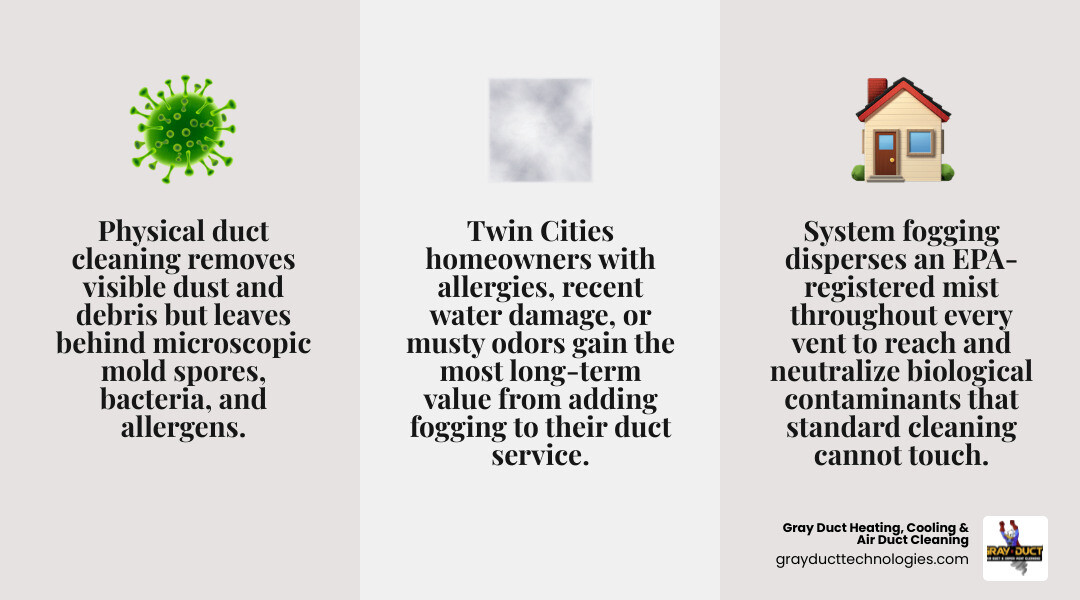
Is system fogging worth the additional cost terms simplified:
Understanding the Technology: What is HVAC System Fogging?
To understand whether this service is worth your hard-earned dollars, we first need to pull back the curtain on the technology itself. HVAC system fogging is not just spraying a glorified air freshener down your floor registers. It is a highly specialized, technical process designed to neutralize microscopic threats that physical tools simply cannot touch.
At its core, system fogging relies on advanced equipment called an Ultra-Low Volume (ULV) cold fogger. Unlike thermal foggers, which use heat and can sometimes cause chemical off-gassing or damage to delicate duct liners, a ULV cold fogger uses high air pressure to shear liquid disinfectant into microscopically tiny droplets. These droplets typically range from 5 to 20 microns in diameter. To put that in perspective, a single strand of human hair is about 70 microns wide.
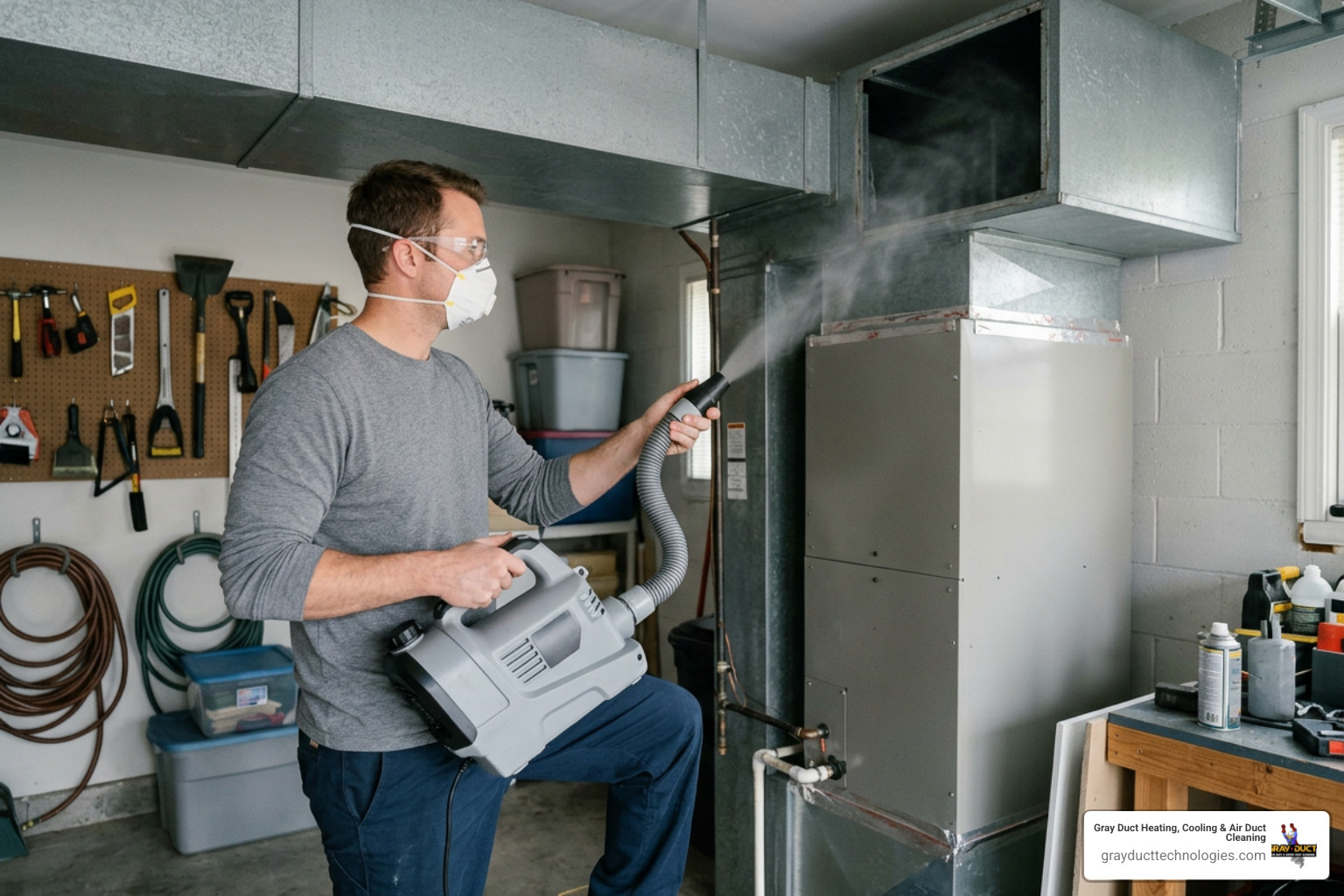
Because these droplets are so incredibly small and lightweight, they behave more like a gas than a liquid. When we introduce this fine mist into your HVAC system, the air currents carry the disinfectant deep into the entire network of supply and return ducts. The droplets remain suspended in the air for up to ten minutes, slowly settling in a uniform, microscopic layer over every single square inch of the internal duct walls, plenums, and even the hard-to-reach corners of your evaporator coils.
We exclusively use EPA-approved disinfectants that are specifically registered for use in HVAC systems, such as OXINE-AD. These specialized botanical and chemical solutions are engineered to destroy biological contaminants on contact. When the fog lands on mold spores, bacteria, or viruses, it breaks down their cellular walls, rendering them completely inactive. This process is also exceptionally effective for odor elimination, as it neutralizes the volatile organic compounds (VOCs) and biological residues that cause persistent, musty smells.
If you want to dive deeper into the science of how this process works at a microscopic level, check out our detailed guide on Duct Fogging 101: How It Kills Mold and Bacteria.
Comparing Standard Duct Cleaning and Advanced System Fogging
A common point of confusion for homeowners in Saint Paul, Plymouth, and Woodbury is the difference between a standard duct cleaning and advanced system fogging. Some assume that if they get their ducts cleaned, they are automatically getting a sanitized system. Others wonder if they can skip the physical cleaning altogether and just “fog” the problems away.
In reality, these two services do entirely different jobs, and they are designed to work hand-in-hand.
Standard duct cleaning is a physical debris removal process. We use high-powered, truck-mounted vacuums, specialized rotary brushes, and air whips to physically dislodge and pull out the heavy stuff: dust, pet hair, carpet fibers, construction debris, and dead skin cells. This is a critical first step. Think of it like sweeping a dirty floor. You have to get the dirt out of the way before you can mop and sanitize.
If you were to apply a fogging treatment to dirty, dusty ducts, the microscopic mist would simply land on the top layer of dust. The dust would act as a shield, protecting the mold spores, bacteria, and viruses hiding underneath. Furthermore, the moisture from the fog could mix with the heavy dust, creating a muddy paste inside your system—which is the exact opposite of what we want!
Once the physical debris is gone, system fogging provides microscopic sanitization. The fog makes direct surface contact with the clean metal or lined surfaces of your ductwork, neutralizing any remaining biological contaminants that are too small for brushes to catch.
To help you visualize how these two processes compare, we have put together this comparison table:
| Feature | Standard Duct Cleaning | Advanced System Fogging |
|---|---|---|
| Primary Method | Physical brushing, agitation, and high-powered vacuuming | ULV cold fogging with EPA-approved disinfectants |
| Target Contaminants | Large debris, dust, pet hair, cobwebs, and heavy dander | Mold spores, bacteria, viruses, and microscopic allergens |
| Odor Control | Moderate (removes the physical sources of dust-related odors) | Excellent (neutralizes odor-causing bacteria and chemical VOCs) |
| Reach | Limited to areas accessible by physical brushes and vacuum hoses | Complete (reaches every microscopic crevice, bend, and coil) |
| Biological Impact | Does not kill biological growth; only removes loose particles | Actively destroys active mold, bacteria, and viral pathogens |
| Best Used For | General maintenance, moving into a new home, post-construction | Homes with allergy sufferers, persistent odors, or history of moisture |
As you can see, choosing between these options depends heavily on what you are trying to solve. For a comprehensive look at how to weigh these two options for your specific home, take a look at our resource on Choosing Between System Fogging and Traditional Duct Cleaning.
Is System Fogging Worth the Additional Cost for Your Home?
Now we arrive at the heart of the matter: is system fogging worth the additional cost for your specific home?
When evaluating the value of this service, we encourage our neighbors across the Twin Cities—from Maple Grove to Burnsville—to look at it through the lens of long-term value, preventative maintenance, and health benefits.
If your home is dry, your family has no respiratory sensitivities, and your system has never experienced moisture issues, standard duct cleaning is an excellent baseline. However, for many families, the additional protection of a sanitized system pays massive dividends.
Think of system fogging as an insurance policy for your indoor air quality. When mold or bacteria take root in your ductwork, they don’t just stay there. Every time your air conditioner or furnace kicks on, it acts as a distribution system, blowing microscopic spores and pathogens into your living spaces. By proactively sanitizing the system, you prevent these biological contaminants from colonizing your home, protecting your family’s health and extending the life of your HVAC components by keeping coils and blowers free from organic growth.
To learn more about the full spectrum of advantages this treatment offers, read our comprehensive article on the Benefits of System Fogging.
Why is system fogging worth the additional cost for allergy sufferers?
If you or your children suffer from chronic seasonal allergies, asthma, or other respiratory conditions, the value of system fogging skyrockets.
During Minnesota’s spring and summer months, outdoor allergens like pollen reach incredibly high levels. These particles, along with indoor pet dander and dust mites, inevitably find their way into your return vents. Once inside the dark, cool environment of your ductwork, these organic materials can combine with trace moisture to create a breeding ground for mold and bacteria.
For an allergy sufferer, breathing in these circulating triggers night after night can lead to poor sleep, headaches, and chronic congestion. Standard duct cleaning removes the bulk of these allergens, but it cannot neutralize the microscopic mold spores that continue to replicate. System fogging provides immediate, noticeable respiratory relief by completely sanitizing the air path.
For our customers living in Minneapolis and the surrounding suburbs, we have put together a localized guide detailing how this process helps combat our unique regional allergen patterns: The Complete Guide to Fogging After Duct Cleaning in Minneapolis.
When is system fogging worth the additional cost for odor elimination?
We have all experienced it: you walk into a home, and there is a persistent, mystery smell that you just can’t shake. Maybe it’s a lingering mustiness, a stale pet odor, or the remnants of cooking oils and smoke from previous occupants. You can scrub the walls, wash the carpets, and light all the candles you want, but the moment the HVAC fan turns on, the smell returns.
This happens because porous materials inside your ductwork—especially fiberglass duct liners and plenums—excel at trapping odor molecules. Standard cleaning can remove the dust that holds some of these smells, but it cannot strip the odors embedded deep within the system’s surfaces.
System fogging is the ultimate solution for deep sanitization and odor elimination. The microscopic droplets of disinfectant penetrate the porous surfaces, neutralizing the odor-causing compounds at their source rather than temporarily masking them. Whether you are dealing with stubborn pet smells or trying to freshen up a newly purchased property, fogging restores a clean, neutral scent to your indoor air.
If you live in the southwest metro, you can read our localized tips on how we tackle these issues in our guide: Everything You Need to Know About Professional Air Duct Fogging in Eden Prairie MN.
Key Factors That Influence the Value of Your Fogging Service
While we believe system fogging is a phenomenal service, we also pride ourselves on being honest, straightforward partners with our customers. The actual value you will get from system fogging depends heavily on several key factors unique to your home.
When we assess a home in Bloomington, Lakeville, or Minnetonka, we look at several specific variables:
- Home Size and Layout: Larger homes with extensive runouts and multiple zones have more surface area where mold and bacteria can hide. Complex ductwork layouts with lots of bends and transitions are harder to clean physically, making the deep-reaching capability of fogging highly valuable.
- System Age and Material: Older homes often have ductwork with older insulation liners that easily absorb odors and moisture. If your system has fiberglass-lined plenums, physical brushing must be done gently to avoid damaging the material, meaning fogging is crucial for achieving a complete sanitize without causing physical wear.
- Moisture and Humidity Levels: Minnesota basements are notorious for high humidity, especially during our muggy summers. If your home has a history of a damp basement, localized flooding, or a past plumbing leak near your HVAC system, mold prevention should be a top priority. In these environments, fogging is an essential preventative step.
If you suspect that moisture has already allowed mold to take hold in your system, we highly recommend reading our step-by-step approach on How to Eliminate Mold in Ductwork with System Fogging.
Frequently Asked Questions About HVAC Sanitization
We know that bringing any specialty service into your home comes with questions. Here are the most common things Twin Cities homeowners ask us when deciding if system fogging is right for them.
Is the disinfectant used in system fogging safe for pets and children?
This is always the number one question we get, and understandably so! Your family’s safety is our absolute top priority.
The disinfectants we use for system fogging are EPA-registered, hospital-grade, botanical-based solutions. These products are non-toxic, biodegradable, and specifically formulated to be safe for use in occupied residential spaces. They do not leave behind harmful chemical residues, harsh fumes, or synthetic fragrances. Once the treatment is complete and dry, it is completely safe for children, pets, and individuals with chemical sensitivities.
For a detailed look at the specific, eco-friendly products we trust in our clients’ homes, check out our resource on System Fogging Solutions.
How often should a home’s ductwork be fogged?
For most homes, system fogging is not a service you need to perform every single year. We typically recommend aligning your fogging schedule with your professional duct cleaning, which is generally recommended every three to five years.
However, you may want to adjust this maintenance schedule or request an annual inspection if you experience specific triggers, such as:
- Adding a new pet to the family
- Experiencing a basement water backup or high-humidity season
- Noticing a return of musty odors
- Welcoming a newborn or an elderly relative with compromised respiratory health
To learn more about how to set up a smart, long-term maintenance plan for your home’s air quality, read about the Importance of System Fogging.
Does system fogging require any preparation or downtime?
One of the best things about system fogging is how simple and non-invasive the process is. There is very little preparation required on your part.
During the application, we ask that family members and pets step out of the immediate area or enjoy a brief walk outside. The actual fogging process takes a relatively short amount of time, but we implement a brief occupancy delay of about one to two hours. This allows the microscopic droplets to completely settle and dry on the internal duct surfaces, ensuring maximum efficacy and zero risk of breathing in the wet mist. Once we turn your system back on, you can immediately return to your normal routine—with much cleaner, fresher air!
For a complete walkthrough of what to expect on the day of your service, check out our Guide to System Fogging Services.
Conclusion
At the end of the day, your home should be a safe haven—a place where you can breathe deeply and comfortably, knowing the air circulating through your rooms is clean, fresh, and healthy.
While standard duct cleaning does the heavy lifting of removing physical dust and debris, system fogging provides that crucial, advanced layer of protection that targets what you can’t see. When you weigh the long-term benefits of improved respiratory health, complete odor elimination, and mold prevention, it becomes clear why so many of our neighbors across the Twin Cities choose this valuable add-on.
At Gray Duct Heating, Cooling & Air Duct Cleaning, we are dedicated to helping families throughout the Minneapolis-Saint Paul metro area achieve exceptional indoor air quality. As a local, family-owned business, we never use third-party contractors. Our certified, in-house team handles every step of your HVAC, duct, and air quality services with the care and precision your home deserves.
If you are ready to experience the difference that clean, sanitized air can make in your home, we invite you to explore our professional System Fogging services today and schedule your home’s personalized air quality assessment with our friendly team!
