


The Hidden Impact: How Home Renovations Affect Your Air Ducts
When we talk about how home renovations affect your air ducts, we aren’t just talking about a little extra dusting on your coffee table. Your HVAC system is the respiratory system of your home. During a remodel in cities like Bloomington or Lakeville, that system is under immense stress.
Construction creates a “closed-loop” problem. As your furnace or air conditioner pulls air in through the return vents to be heated or cooled, it also sucks in every microscopic particle floating in the construction zone. This leads to severe airflow restriction. When debris builds up on the internal fan blades and sensitive sensors, the system has to work twice as hard to move half as much air. This constant straining doesn’t just spike your utility bills; it leads to significant Dirty Ductwork Impact on HVAC performance, often shortening the lifespan of your expensive equipment by years.
Understanding how home renovations affect your air ducts in the Twin Cities
The science of renovation dust is different from everyday house dust. Most household dust consists of skin cells and fabric fibers, which are relatively large. However, renovation debris—specifically gypsum from drywall sanding—is incredibly fine, often measuring between 1 and 10 microns.
To put that in perspective, a human hair is about 70 microns wide. These tiny particles stay suspended in the air for hours, drifting through hallways and under doors. Even if you are remodeling a bathroom in the back of your Minnetonka home, those particles find their way into the central return air plenum. Once inside, they coat the ribbed interior of flexible ductwork and the joints of sheet metal pipes. This is why specialized Ductwork Cleaning is so critical after the hammers stop swinging; standard vacuuming simply cannot reach the places where this fine powder settles.
Why homeowners ask how home renovations affect your air ducts after a remodel
We often hear from families in Eden Prairie or Woodbury who notice that months after their beautiful new kitchen is finished, everyone in the house is still sneezing. They start investigating how home renovations affect your air ducts because their indoor air quality feels permanently compromised.
The health implications are real. Fine particulates like sawdust and fiberglass insulation can irritate the lungs and trigger asthma or allergy symptoms. Furthermore, the mechanical consequences are just as dire. We’ve seen cases where an evaporator coil—the part of your AC that actually cools the air—becomes so “carpeted” in drywall dust that it loses its ability to transfer heat. This can lead to a total system freeze-up or a premature compressor failure. Understanding the Importance of Regular Air Duct Cleaning is the first step in protecting both your family’s health and your financial investment in your home.
The Anatomy of Renovation Debris: What’s Lurking in Your Vents?
If you could see inside your vents during a Roseville basement finish, you’d find a cocktail of contaminants that have no business being in your breathing air.
- Drywall Dust: The primary offender. Gypsum is abrasive and settles into every crack and crevice.
- Sawdust: Heavier than drywall dust, it often settles in the first few feet of a duct run, creating physical blockages.
- Fiberglass Insulation: Tiny glass shards that can be pulled into the air stream when walls are opened up.
- Metal Shavings: From new ductwork installation or plumbing modifications.
- Ceramic Tile Particles: Created during tile cutting, these are heavy and can accumulate at the bottom of vertical duct drops.
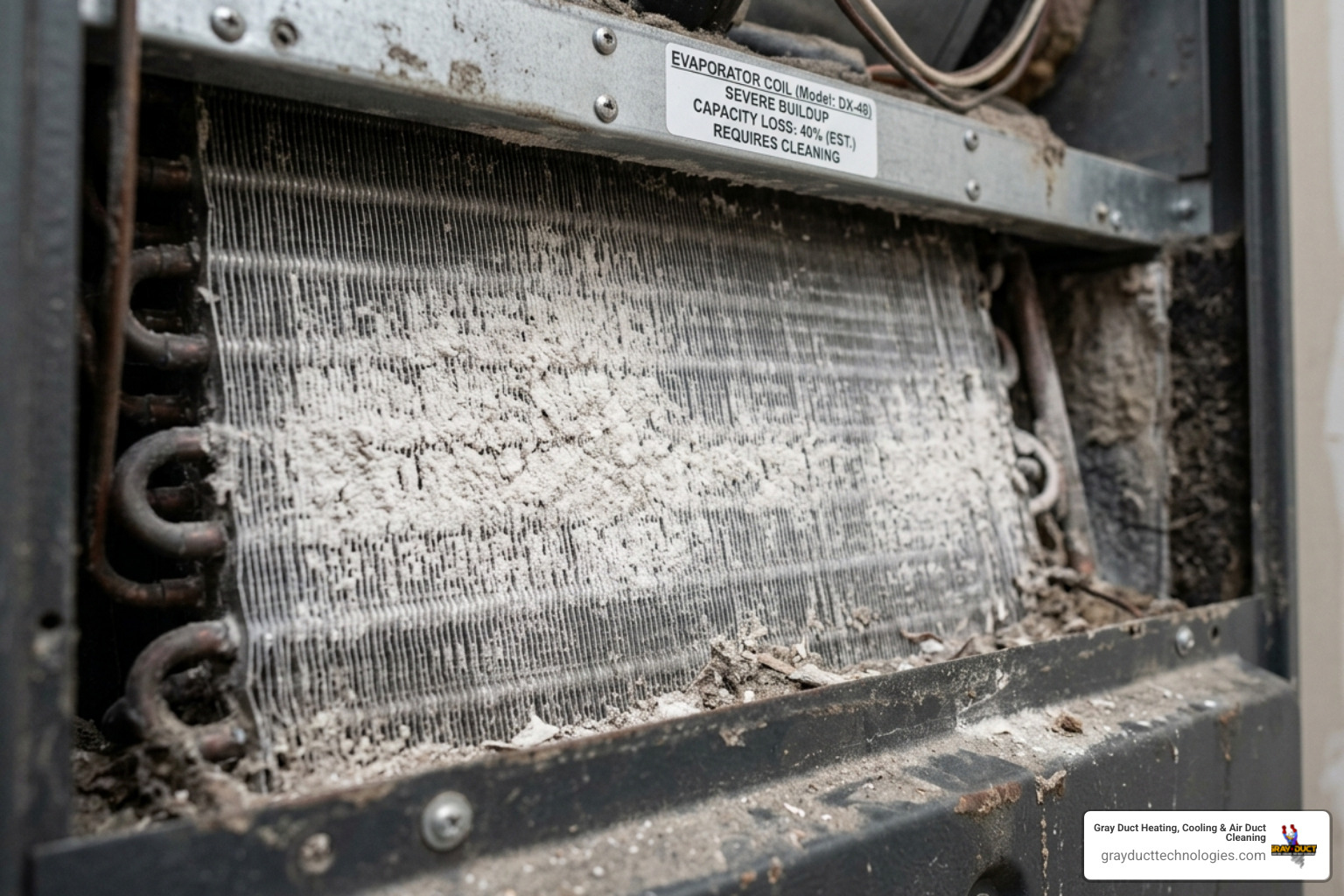
This debris doesn’t just sit there; it can also reveal or exacerbate existing issues. For example, heavy dust accumulation often highlights areas where air is escaping. It is a great time to Detect and Fix Ductwork Leaks because the dust acts like a tracer, showing exactly where your heated or cooled air is leaking into your attic or crawlspace.
Consequences of Neglecting Your HVAC System During Construction
Ignoring your HVAC system during a remodel is a recipe for energy waste. Research shows that 25 to 40 percent of the energy used for heating or cooling a home is wasted when contaminants clog the system. In the Twin Cities, where our winters are harsh and our summers are humid, that waste adds up quickly.
Furthermore, the physical integrity of the ducts is often compromised during construction. Vibrations from power tools or accidental bumps from contractors can loosen joints. Up to 30% of air can be lost through these worn areas or poorly connected ducts.
| HVAC Component | Performance with Clean System | Performance with Contaminated System |
|---|---|---|
| Evaporator Coil | 100% Heat Exchange Efficiency | 30-40% Capacity Loss |
| Airflow Volume | Optimal (Per Design) | 20-30% Reduction |
| Energy Consumption | Standard Utility Rates | 15-25% Increase in Bills |
| Filter Lifespan | 3 – 6 Months | 1 – 2 Weeks (During Reno) |
To combat these losses, many homeowners in Minneapolis look into Duct Sealing in Minneapolis MN to ensure that once the system is cleaned, the air actually reaches the rooms it’s intended for.
Proactive Strategies to Protect Your Ductwork During a Remodel
Prevention is always better than a cure. If you are planning a project in Plymouth or Eagan, you can take steps to minimize the “dust bomb” effect.
- Seal the Registers: Use professional-grade plastic sheeting or magnetic vent covers to block every supply and return vent in the work area.
- System Shutdown: Whenever high-dust activities like sanding or demolition are happening, turn the HVAC system completely off. Running the fan during these times is an invitation for debris to enter the lungs of your home.
- Establish Negative Pressure: Use window fans to blow air out of the construction zone, creating a vacuum that prevents dust from drifting into the rest of the house.
- Isolate the Area: Use heavy-duty plastic barriers to wall off the renovation zone from the living quarters.
- Protect the Insulation: If you have exposed ducts, ensure they are properly wrapped. This is also an ideal time to consider Duct Insulation in Minneapolis MN to improve overall thermal efficiency.
Post-Renovation Recovery: When to Schedule Professional Cleaning
Once the contractors have packed up their tools and the final coat of paint is dry, it’s time for the “deep clean.” According to EPA guidelines and NADCA standards, air duct cleaning is highly recommended after any major renovation that produces significant dust.
We suggest a thorough visual inspection first. Shine a flashlight down your return vents; if you see “snowdrifts” of white drywall dust or piles of sawdust, your system is compromised. Don’t wait for the furnace to start making strange noises. Scheduling a professional Air Duct Cleaning ensures that the fine particulates are removed using high-powered, HEPA-filtered vacuums that pull the debris out of your home entirely. This is just as important for businesses as it is for homes, which is why we also provide Air Duct Cleaning for Commercial Buildings throughout the Twin Cities metro.
Beyond Cleaning: HVAC Upgrades and Reconfigurations
A renovation is often the best time to look at the “big picture” of your home comfort. If you are adding square footage to your Chanhassen home or changing the layout of your Maple Grove kitchen, your old ductwork configuration might no longer be efficient.
Consider these factors:
- System Sizing: Does your current furnace have the “oomph” to heat a new sunroom addition?
- Duct Rerouting: Moving a wall often means moving a duct. This is the perfect opportunity to optimize the path the air takes, reducing friction and noise.
- Energy Efficiency: While the walls are open, it’s much easier to Detect and Fix Ductwork Leaks or install high-efficiency air cleaners that protect your system from future dust.
Frequently Asked Questions about Renovations and HVAC
Should I run my AC during a kitchen remodel?
We strongly advise against it. Running your AC or furnace during active construction pulls airborne debris directly into the blower motor and coils. This leads to motor strain and can cause the system to overheat. If you need climate control, use portable “spot coolers” or space heaters in the living areas and keep the central system off until the dust settles.
How often should I change filters during construction?
During a heavy remodel, you should check your filter every 2–3 days. Construction dust can load a filter by up to 50% in a single week. We recommend using mid-range MERV-rated filters during the project to capture particles without over-restricting airflow, then switching back to high-efficiency filters once the ducts have been professionally cleaned.
Can drywall dust permanently damage my furnace?
Yes. Drywall dust is highly abrasive. If it gets into the bearings of the blower motor, it acts like sandpaper, causing premature wear. It can also coat flame sensors and igniters in your furnace, leading to “no-heat” calls in the middle of a Minnesota winter. It can also cause moisture to pool on coils, which may lead to mold growth if left unaddressed.
Conclusion
At Gray Duct Heating, Cooling & Air Duct Cleaning, we’ve made it our mission to help Twin Cities homeowners breathe easier after their dream renovations are complete. As a family-owned business serving communities from Apple Valley to Woodbury and everywhere in between, we understand the local climate and the specific challenges our homes face.
Our certified, in-house technicians don’t just “vacuum out” your vents; we provide a comprehensive cleaning of the entire air path, ensuring your system runs at peak efficiency as we head into the 2026 season. Don’t let construction debris cancel out the joy of your new home upgrade. If you’ve recently finished a project or are about to start one, reach out to us for a professional Air Duct Cleaning and let us help you clear the air.
